
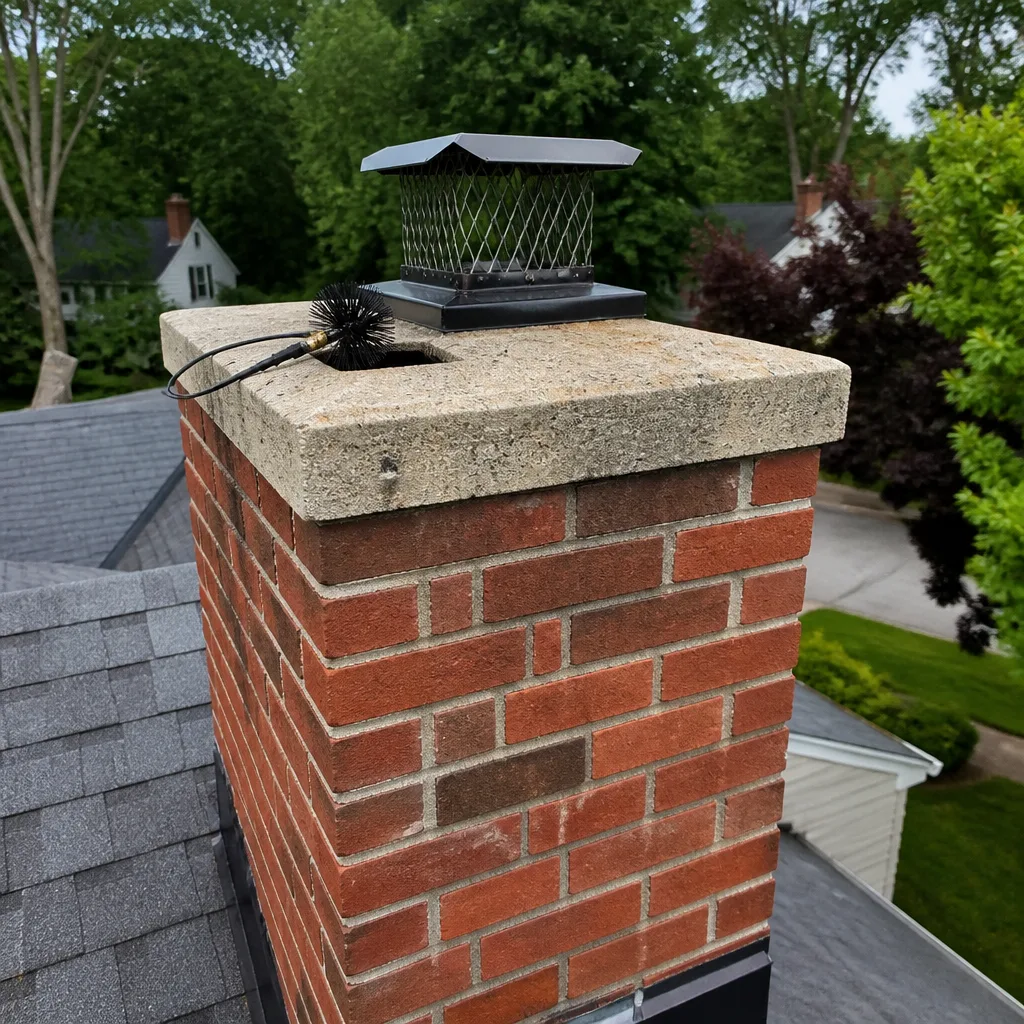
 Sweep & inspection
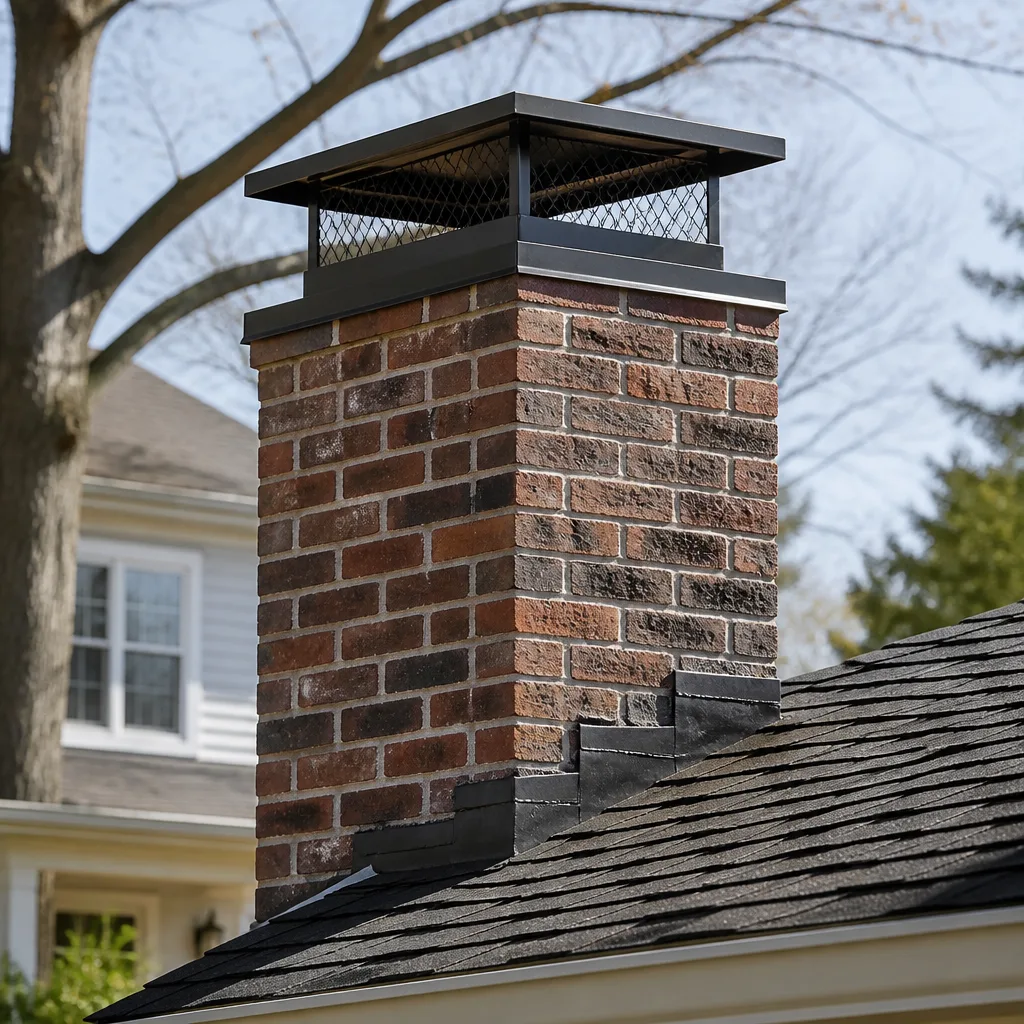 Caps & crowns
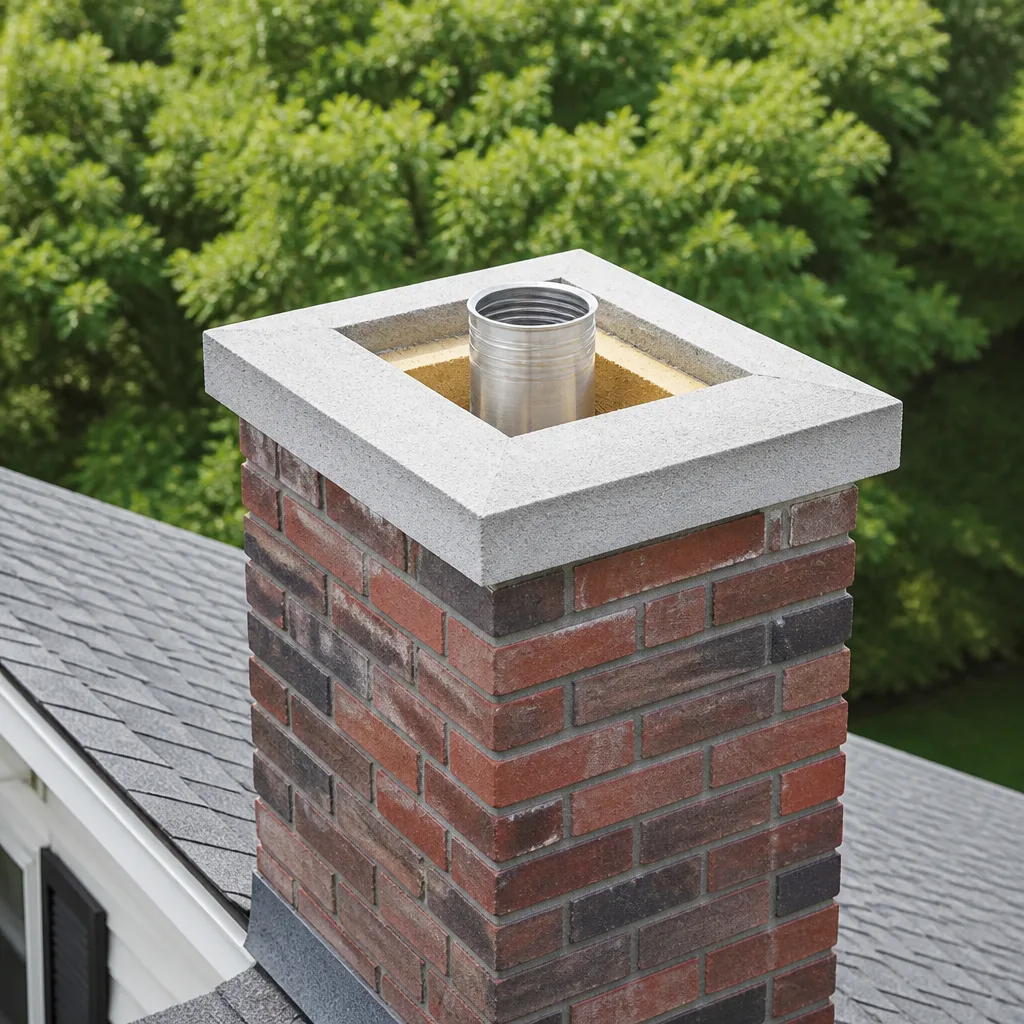 Flue relining
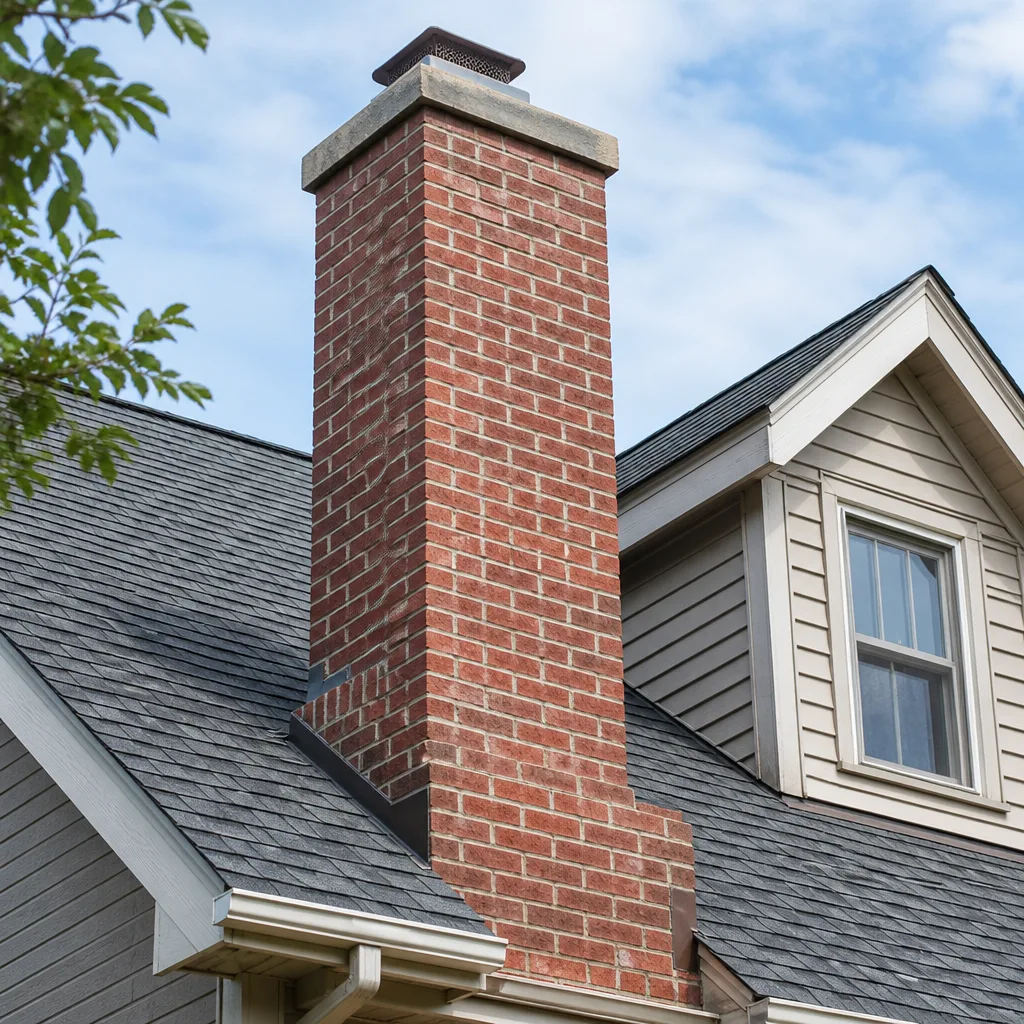 Masonry repair
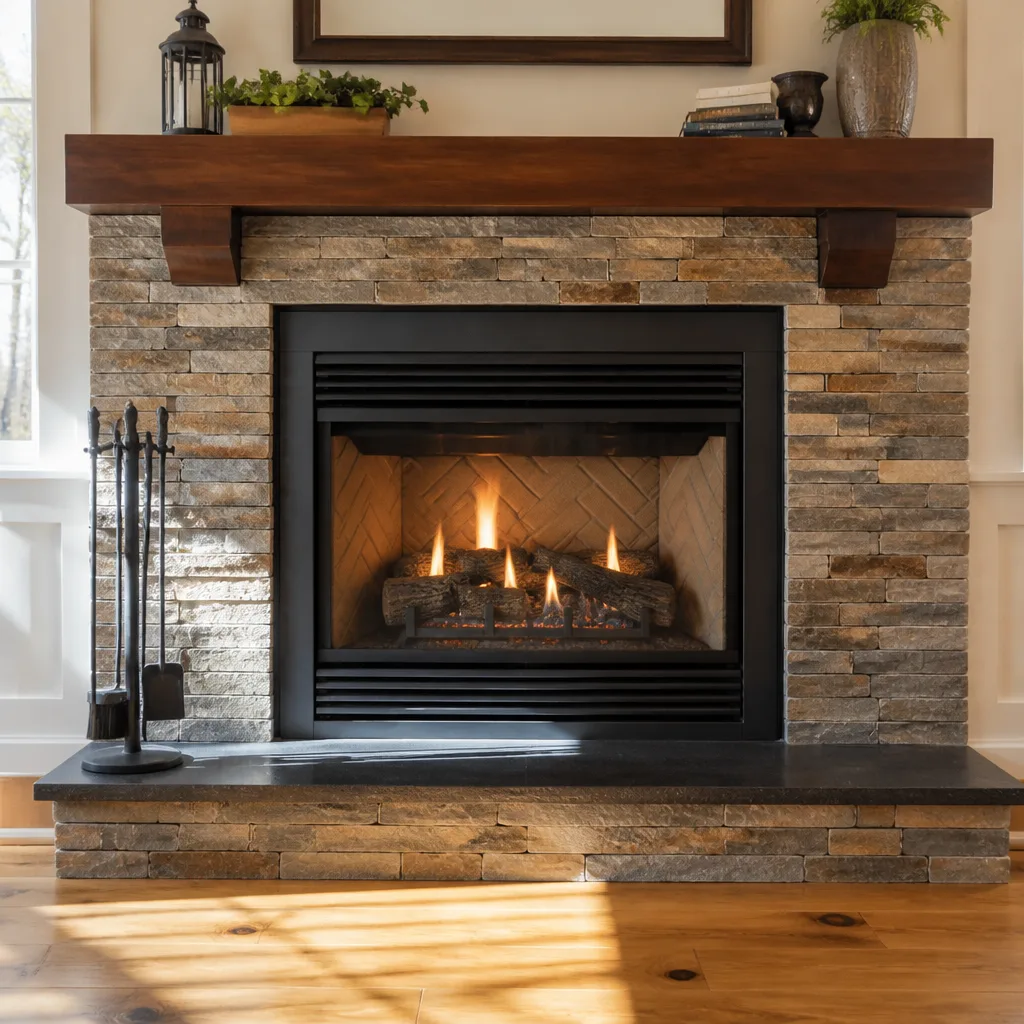 Gas fireplace service
Level 1 sweep and inspection to the NFPA 211 annual standard - flue, crown, cap, and flashing checked and photographed
Chimney sweep logs do not sweep chimneys. They loosen some creosote - which then falls where a brush and vacuum still have to collect it.
Fast, Reliable Chimney Sweep Across Granite Hills
A chimney sweep in Granite Hills typically costs between $189 and $329 for a standard wood-burning fireplace or freestanding stove system, and most jobs are completed in one visit. Granite Hills homes aren’t like the cookie-cutter subdivisions west of us – the chimneys here are taller, older, and far more varied, which means a sweep often uncovers exterior hardware damage alongside routine creosote buildup. We know the properties off Ashwood Road, the ranch homes along Willow Bend, and the custom builds tucked into the hills above Granite Hills Drive. Call (855) 362-1450 for a free estimate, and Noel Carranza or one of our certified techs will walk you through what your system actually needs.
Why Oakleaf Chimney Sweep Is Granite Hills’s Preferred Chimney Sweep Company
Granite Hills homeowners call us because we show up with the repair capability to fix what we find, not just a brush and a receipt. Our Chimney Sweep team sees the same recurring issues across 92021: undersized flues in original masonry fireplaces, sagging dampers in mid-century ranches, and bent spark-arrestor screens on the tall exterior chimneys that face the Santa Ana wind corridor. When we find a cracked flue tile or a damaged cap, we can address it on the spot instead of handing you a referral card and a follow-up bill.
As a full-service chimney and ventilation specialist, Oakleaf handles three connected fire-safety services under one roof: chimney sweeping, chimney repair, and dryer vent cleaning. One call covers every fire-safety vent in your home. Granite Hills residents who heat with wood during colder foothill nights and also run a dryer are exposed to two separate lint-and-creosote risks that most single-service companies never mention in the same visit.
Noel Carranza built Oakleaf around a simple position: homeowners would rather pay once for competence than twice for separate visits. That philosophy matters more in Granite Hills than almost anywhere else in East County because the housing stock is older, the installs are non-standard, and the wind does real damage to exterior components.
Styles & brands we work with
Fireplace Cleaning in Granite Hills
Fireplace Cleaning in Granite Hills means more than brushing out last season’s ash. Homes here were built between the 1950s and 1980s, and many fireboxes have original firebrick with hairline cracks that collect soot and creosote faster than newer refractory panels. A thorough cleaning includes removing creosote from the smoke shelf, vacuuming the firebox, cleaning the damper assembly, and checking the throat area where the flue transitions – a spot that traps debris in older masonry fireplaces and can restrict draft on windy foothill nights.
What We Remove and Why It Builds Fast Here
Creosote in Granite Hills chimneys dries brittle during our long, hot summers. That’s actually good news during a sweep because brittle first-degree creosote comes loose cleanly with mechanical brushing. The danger is when it doesn’t get swept: dried creosote that stays in place through another full heating season re-glazes under high heat and becomes the dense, tarry third-degree deposit that’s far harder to remove and far more likely to ignite.
When Granite Hills Homes Need It Most
We book most Granite Hills cleanings between September and November, before the overnight temperatures drop enough for regular wood burning. But a fireplace that’s used heavily through winter often needs a second, lighter cleaning in January or February, especially if the wood hasn’t been seasoned a full year. If you’re burning pine or eucalyptus from your own oak property, expect faster creosote accumulation and schedule accordingly.
Chimney Services in Granite Hills
Chimney Services in Granite Hills start with a real assessment of the system, not a one-size-fits-all sweep. The semi-rural properties on larger lots often have multiple appliances venting into separate flues or a single chimney with multiple clay liners. Each flue needs individual inspection because the conditions inside them differ: a wood-burning fireplace flue accumulates creosote, while a gas appliance flue in the same chase may have corrosion or condensation issues from the temperature differential between our hot summer days and cooler nights.
Level 1 and Level 2 Inspections
A Level 1 inspection is the standard annual check when the appliance, fuel type, and usage pattern haven’t changed – we examine the accessible portions of the chimney, confirm the flue is clear, and check the cap and spark arrestor. A Level 2 inspection goes deeper when something has changed: a new stove, a gas conversion, a weather event, or a chimney that’s been back-drafting. Given how many Granite Hills chimneys are older, taller, and exposed to Santa Ana winds, we recommend Level 2 if the chimney hasn’t been evaluated in several years or if you’ve recently bought the property.
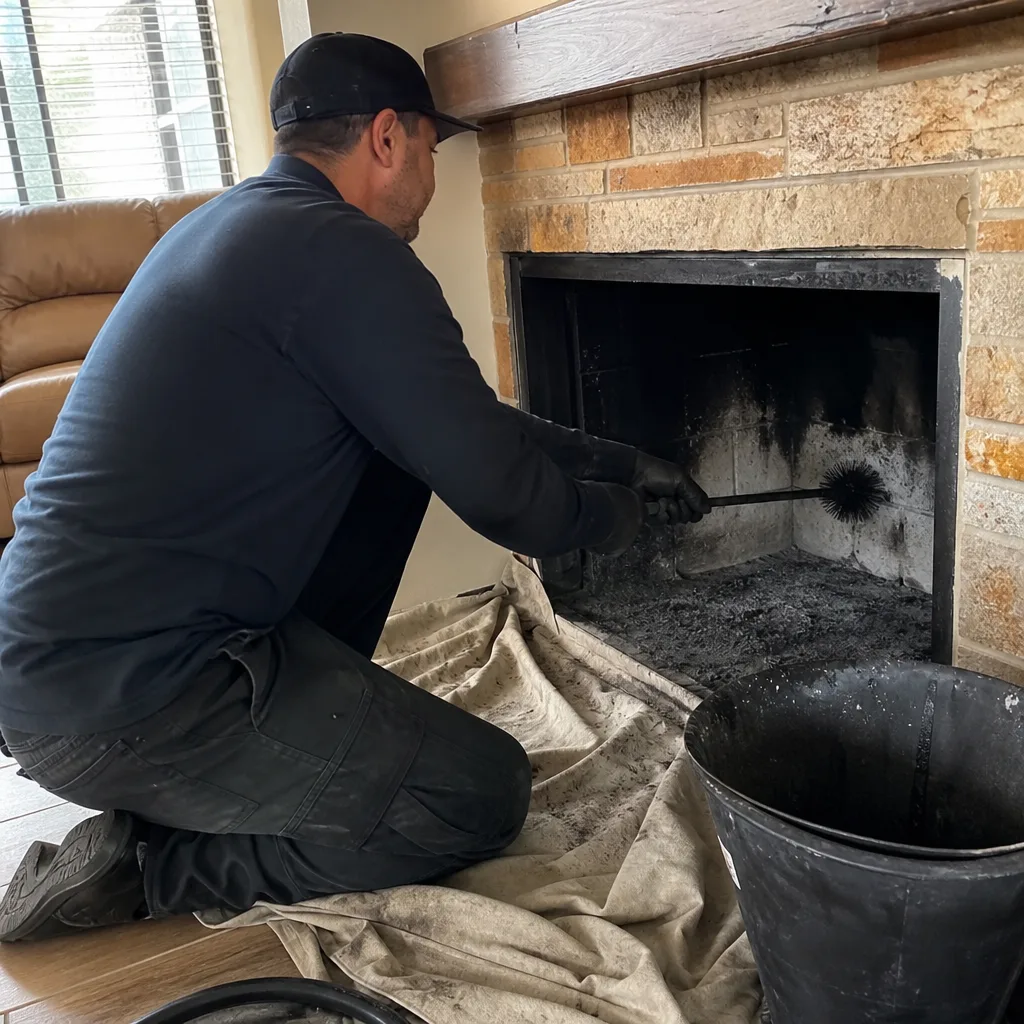
Exterior Hardware and Cap Integrity
In Granite Hills, a chimney sweep is never just a flue cleaning. The tall exterior chimneys on ranch and custom homes catch the full force of Santa Ana winds, which regularly loosen cap fasteners, bend spark-arrestor screens, and shift flashing where the chimney meets the roofline. A sweep that ignores exterior hardware can leave you with a firebox draft problem that persists even after a perfectly clean flue.
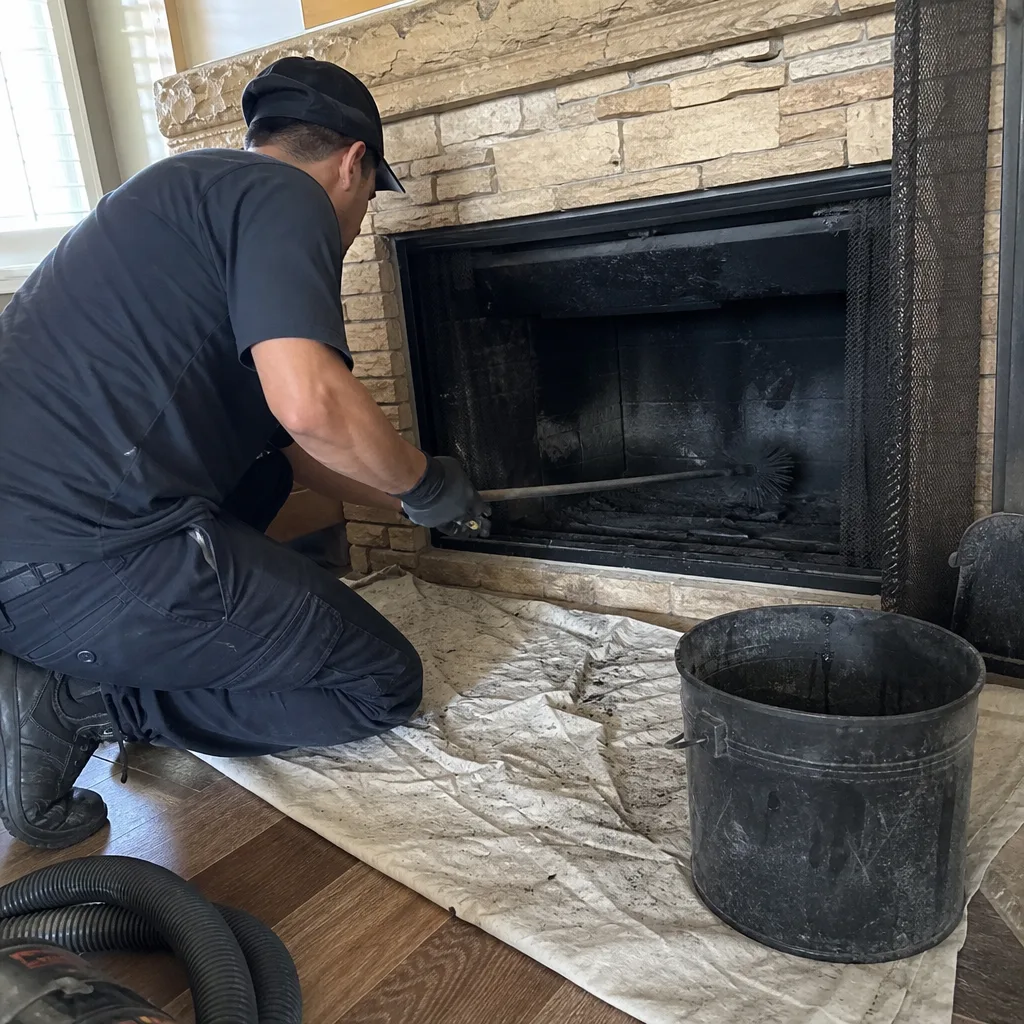
What happens when you call
- 1
A real person answersNo phone trees — you reach a local pro.
- 2
You get an upfront price rangeHonest numbers before anyone is dispatched.
- 3
A background-checked tech heads outLicensed & insured, dispatched right away.
- 4
You approve before work beginsNothing starts until you say go.
Trusted Brands We Service in Granite Hills
We use DuraFlex, HeatShield, and Copperfield components when a Granite Hills chimney needs Gelco repair in Granite Hills or restoration. These are the materials professional chimney contractors specify, not hardware-store substitutes. DuraFlex liner systems allow us to reline flues that have fractured clay tiles without tearing apart your masonry. HeatShield liner restoration can rebuild a damaged flue without the cost of a full relining: we’ll tell you which your situation actually needs, and we never recommend a reline when a resurfacing will do the job. Copperfield caps and flashings handle the wind loads we see on Granite Hills’s exposed ridge lines far better than thin-gauge generic replacements. When we stock parts for local service, we keep these brands on the truck so a repair identified during a sweep doesn’t require a second trip.
See the difference
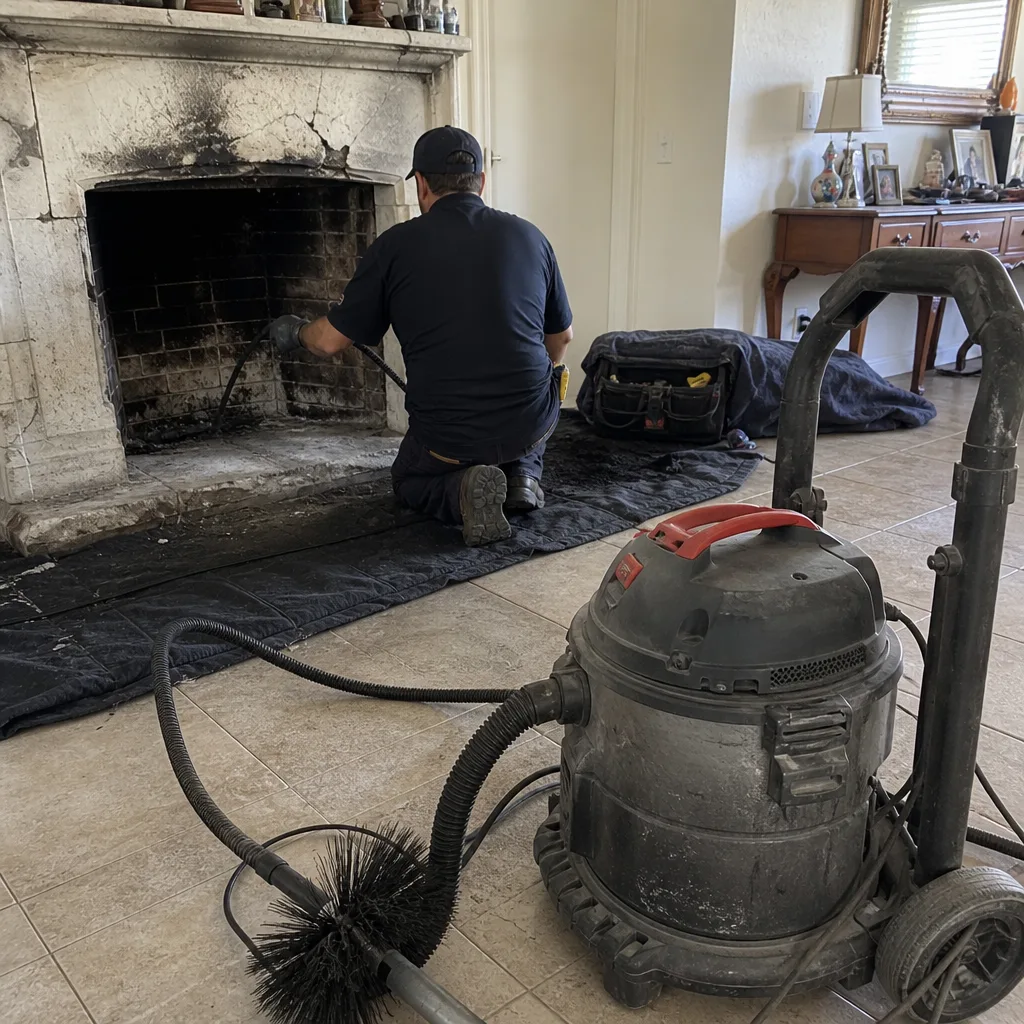 Before
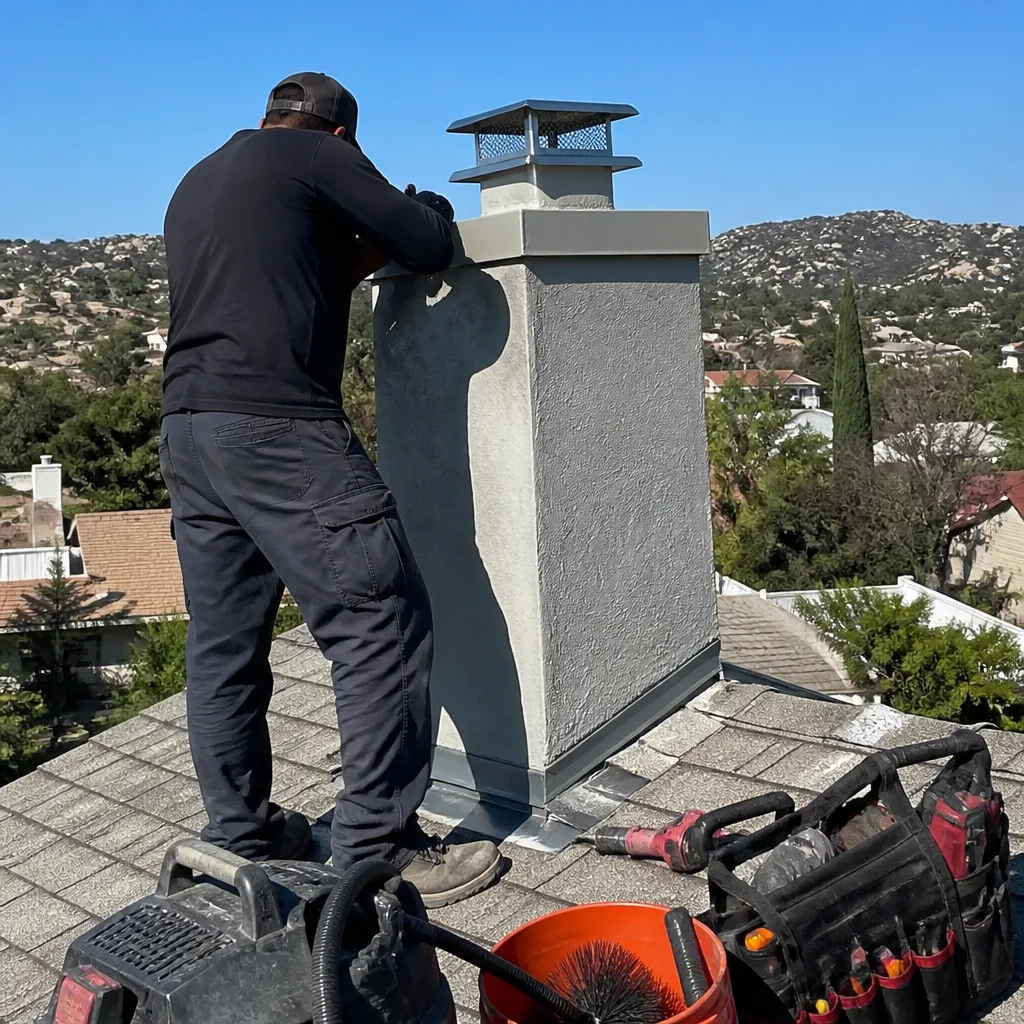 After
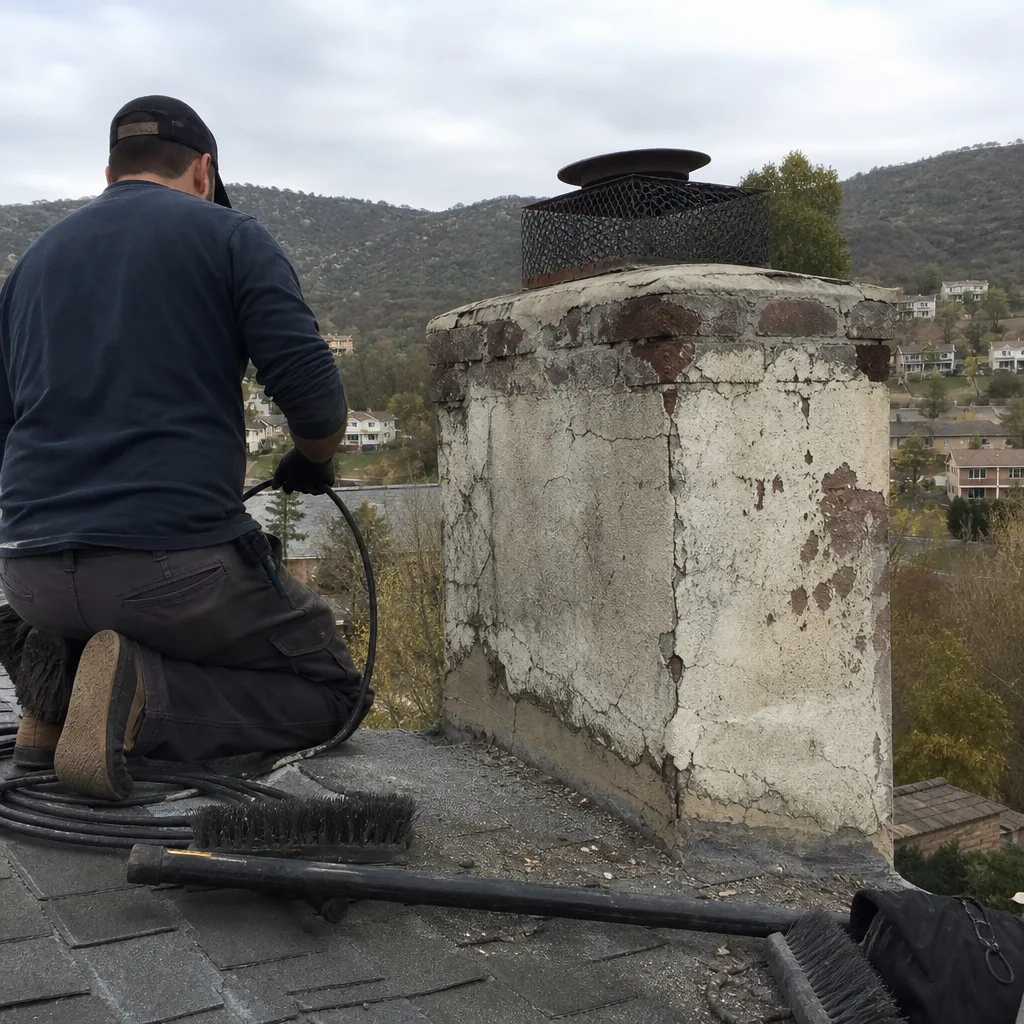 Before
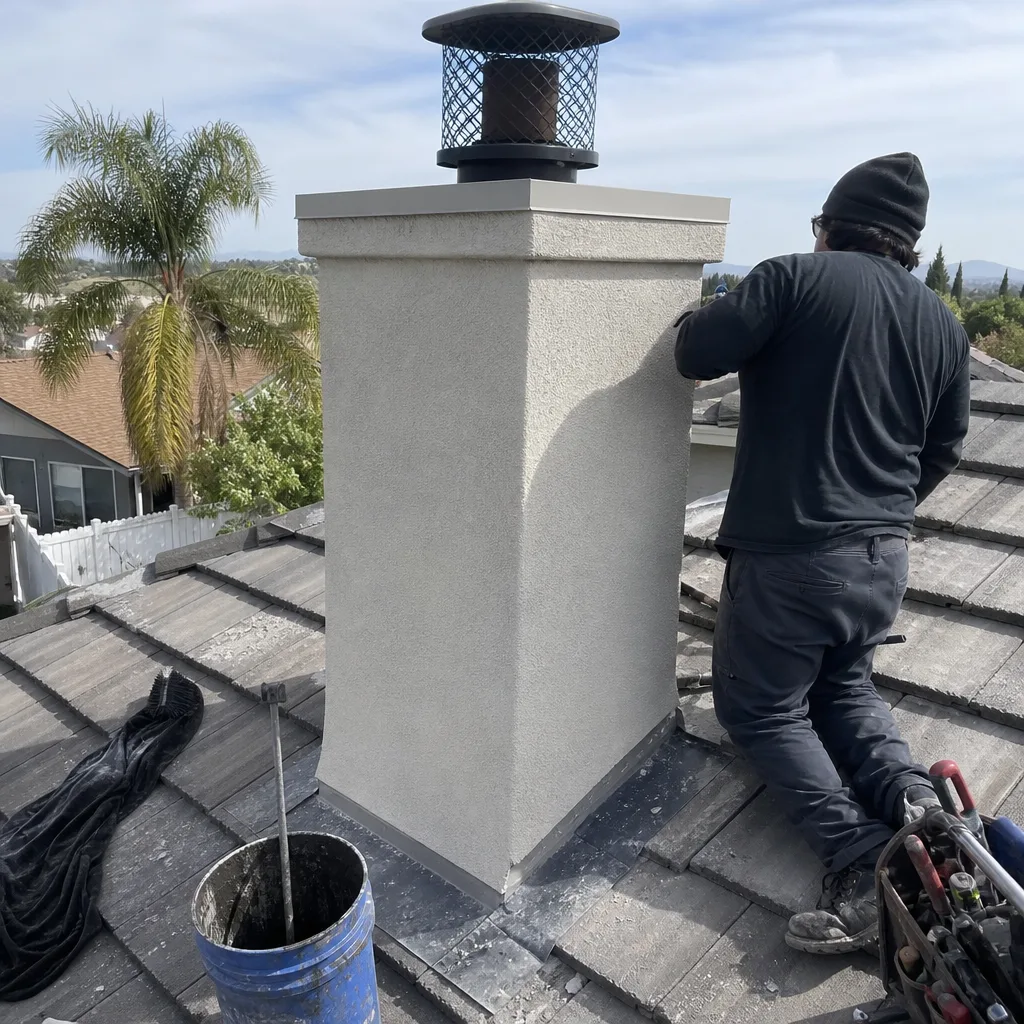 After
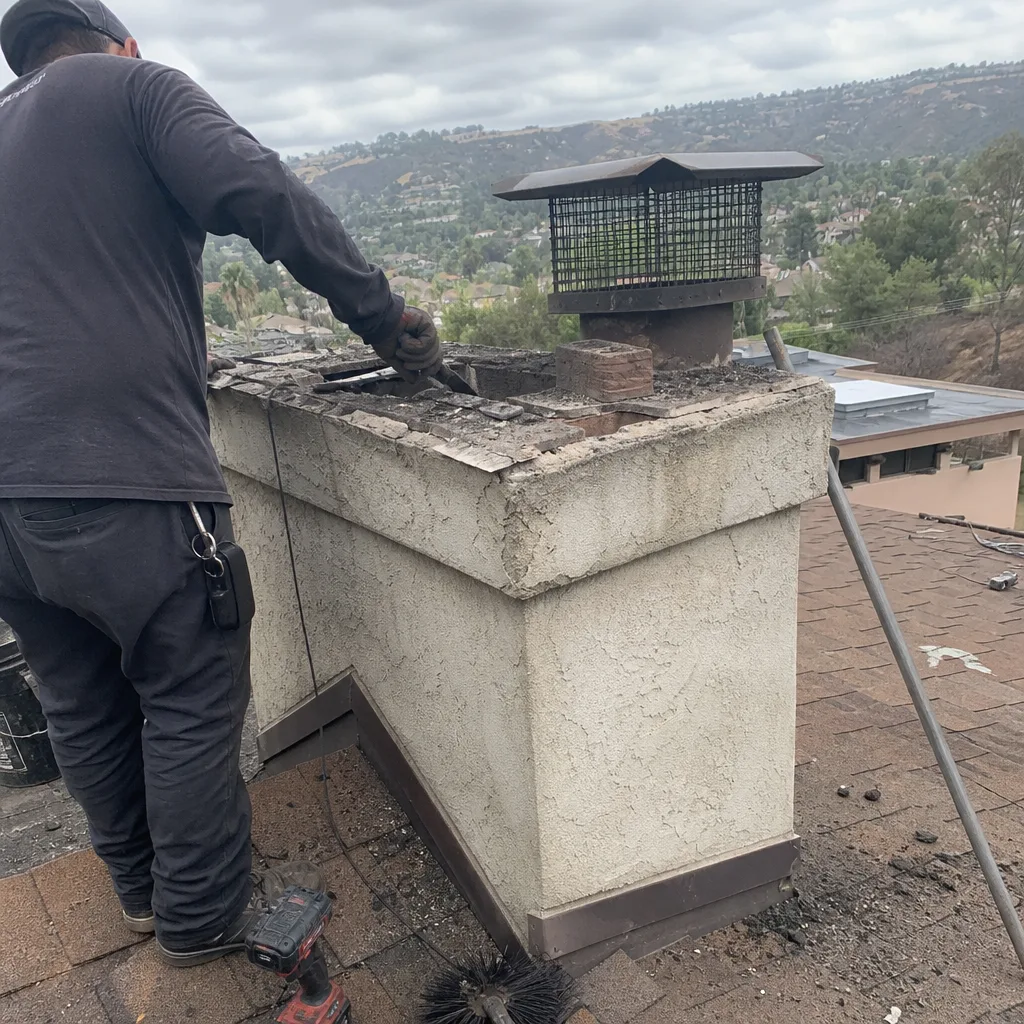 Before
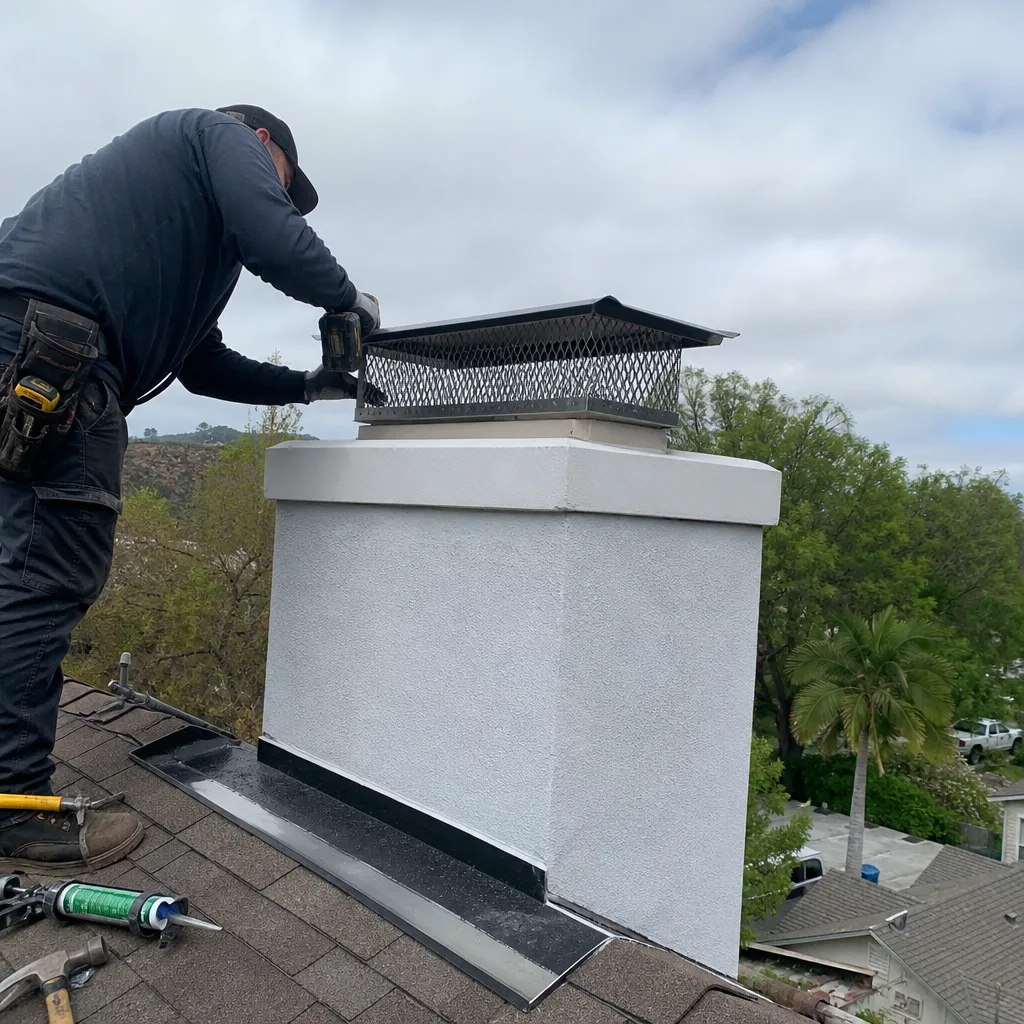 After
Common Chimney Sweep Problems We See in Granite Hills Homes
- First-degree creosote in undersized flues: Mid-century masonry fireplaces in Granite Hills often have flues that are too small for the firebox opening. That restricted draft leaves creosote deposits on flue walls quicker than a properly sized system, and a standard brush sweep without a deeper look can miss early glazing until it reaches third-degree and requires HeatShield resurfacing.
- Wind-damaged spark arrestors and caps: Santa Ana events regularly bend or dislodge spark-arrestor screens on tall exterior chimneys around the rural-residential pockets off Greenfield Drive and Ashwood Road. A bent screen restricts draft and leaves embers uncontained during wildfire season, so we check exterior hardware on every sweep.
- Cracked crowns and failing caps on 1970s – 80s prefab chimneys: Many custom builds in Granite Hills used prefab chimney systems from that era, and the original caps and crowns are now failing. Water intrusion causes spalling in the smoke chamber, and a sweep alone won’t fix it – but our repair capability can.
- Dampers that don’t seal: The dry, windy climate accelerates wear on cast-iron dampers, especially when summer heat expands metal joints and winter fires stress them again. A sagging or warped damper makes a fireplace back-draft on cold evenings even after a clean sweep, and it should be corrected during the same visit.
Pricing for Chimney Sweep in Granite Hills, CA
A standard chimney sweep for a wood-burning fireplace in Granite Hills runs $189 – $279. Freestanding wood stoves with exterior chimneys typically run $229 – $329 because the stovepipe, chimney flue, and exterior cap all need separate attention. A Level 1 inspection is included with the sweep. A Level 2 inspection, which we recommend for older Granite Hills systems or any property you’ve recently purchased, adds $75 – $150 depending on system height and access. Repairs like cap replacement, spark-arrestor screens, or damper correction are quoted before we start, and we’ll show you the damage on camera so you can see exactly what you’re paying to fix. Call (855) 362-1450 for an exact quote for your Granite Hills home – estimates are free, and Noel Carranza will personally review any unusual system.
We Also Serve Cities Near Granite Hills
If you’re just outside Granite Hills, we regularly work in Chimney Sweep in Granite Hills and the surrounding East County communities. Our service area includes Bostonia, Crest, Winter Gardens, and El Cajon. The same team and the same trucks cover the whole region, so you get the identical repair capability and the same professional product line no matter which side of the 8 you’re on.
Serving Granite Hills, CA — Our Local Coverage Area
We’re based in the Granite Hills area and know this community well. Use the map below to see our service coverage — if you’re nearby, we can almost certainly help.
FAQs About Chimney Sweep in Granite Hills
Schedule a sweep once per year if you burn seasoned hardwood for a typical winter season, but Granite Hills homes that burn softwood like pine or eucalyptus or that fire the stove on most cold nights often need a second cleaning mid-season. The dry summer heat in 92021 dries creosote until it’s brittle, which makes annual removal effective, but if that same deposit is left for two or three seasons it glazes into a much harder, more dangerous layer. Call (855) 362-1450 and we’ll help you set a schedule based on what you burn and how often.
A sweep on a freestanding wood stove with an exterior chimney should check the stovepipe, the flue, the damper, the chimney cap, the spark-arrestor screen, and the flashing at the roofline. Granite Hills’s Santa Ana winds routinely damage those exterior components, and a bent spark-arrestor screen or a loose cap will cause draft problems even when the flue itself is clean. We also look at whether the stovepipe segments are seated correctly, since older connector pipes in ranch homes often separate over years of heating cycles.
Yes, prefab chimneys from the 1970s and 1980s are common in Granite Hills custom builds, and many have unusual flue dimensions that require on-site evaluation before sweeping. The flue tiles or metal liners in those systems are often proprietary to the original manufacturer, and using an oversized brush risks damaging them. We evaluate the system with a Level 2 inspection first, then sweep with equipment sized to the actual interior and material, not a generic kit. Call (855) 362-1450 for a free assessment if you’re not sure what your prefab system has.
First-degree creosote is a dusty, flaky deposit that brushes off easily – most annual sweeps in Granite Hills remove exactly this. Third-degree creosote is dense, shiny, and tar-like, the result of repeated burning cycles glazing earlier deposits into a fuel-rich layer that ignites readily and burns hot enough to crack flue tiles. Given Granite Hills’s dry summers and cooler winter nights, homeowners often switch between occasional cold-weather fires and months of disuse, which lets creosote build and dry in alternating layers. That’s why we flag early glazing during a Level 2 and recommend HeatShield restoration rather than leaving a third-degree deposit in place for one more season.
Yes, a converted fireplace still needs an inspection because the flue and chimney structure haven’t changed even though the fuel source did. Gas inserts produce lower-temperature exhaust and more moisture, which can accelerate corrosion in older metal liners and interact with existing creosote in ways that a wood fire never did. Granite Hills homes with gas conversions often have original masonry or prefab chimneys that were never designed for gas venting, and a Level 2 inspection confirms the liners are sized and sealed correctly. We’ll also check that the gas flue is clearly separated from any other appliance in the same chimney chase.
If you’re in Granite Hills and need a sweep, a repair, or a straight answer about what your chimney actually needs, call (855) 362-1450. Noel Carranza and the Oakleaf team serve the entire 92021 area and the surrounding East County communities. Estimates are free, the work is done by the same specialist who inspects it, and you’ll never be upsold on a reline when a HeatShield resurfacing will do the job. One call covers every fire-safety vent in your home.
Written by Noel Carranza, Owner at Oakleaf Chimney Sweep.