Last updated October 31, 2026
 Sweep & inspection
 Caps & crowns
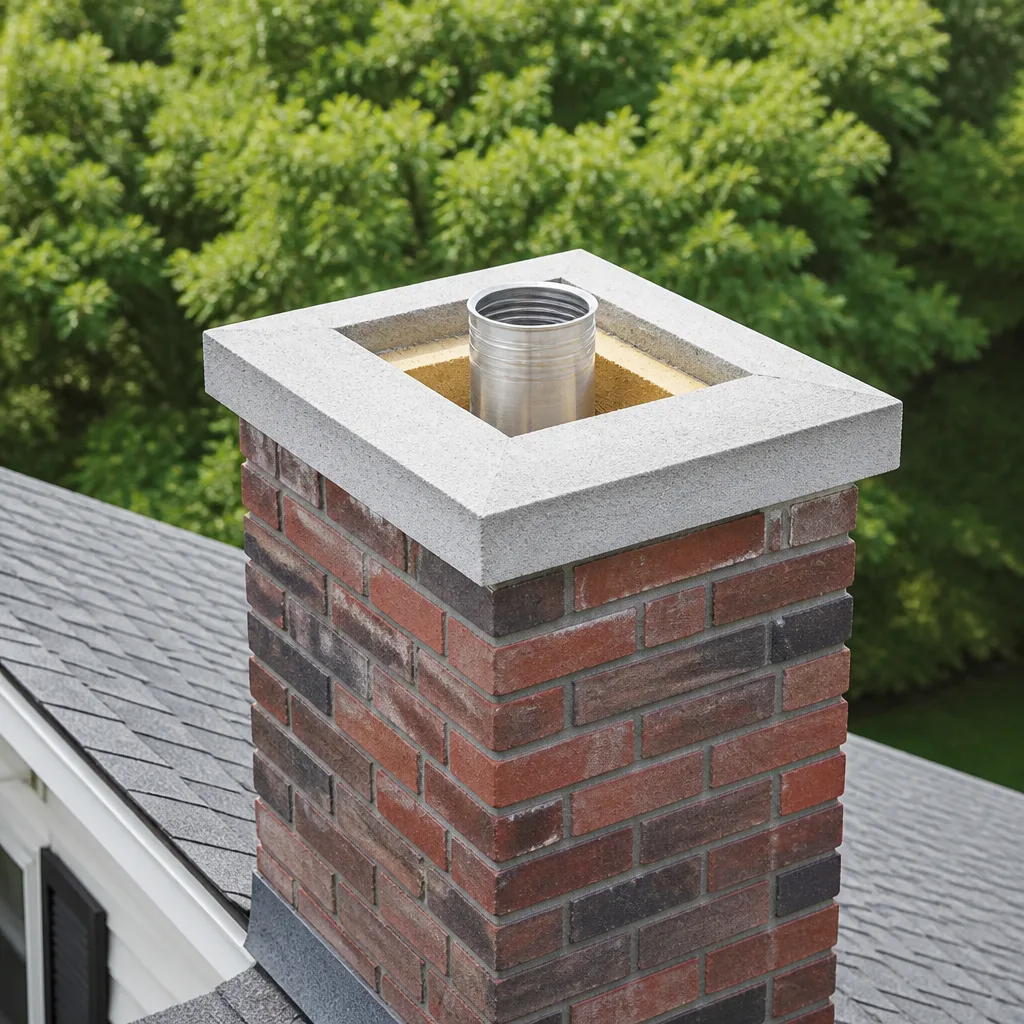 Flue relining
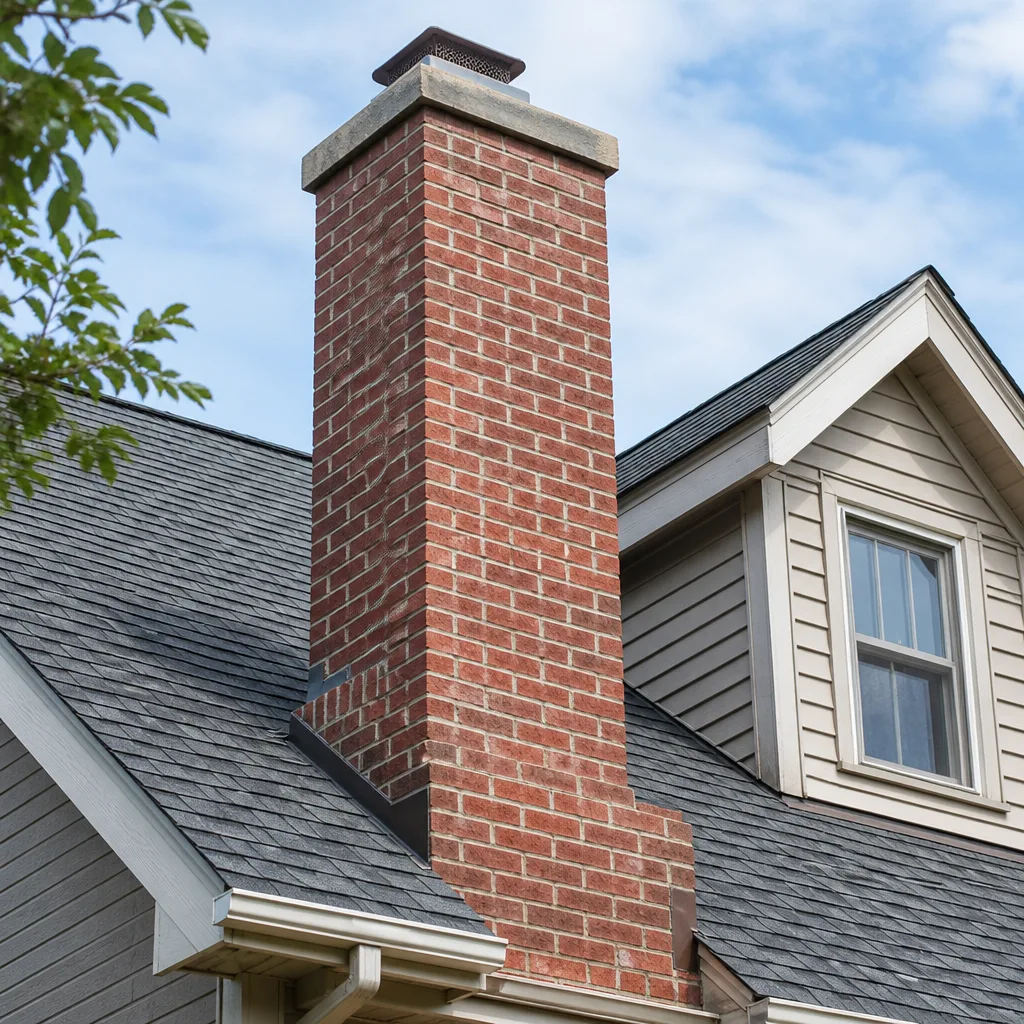 Masonry repair
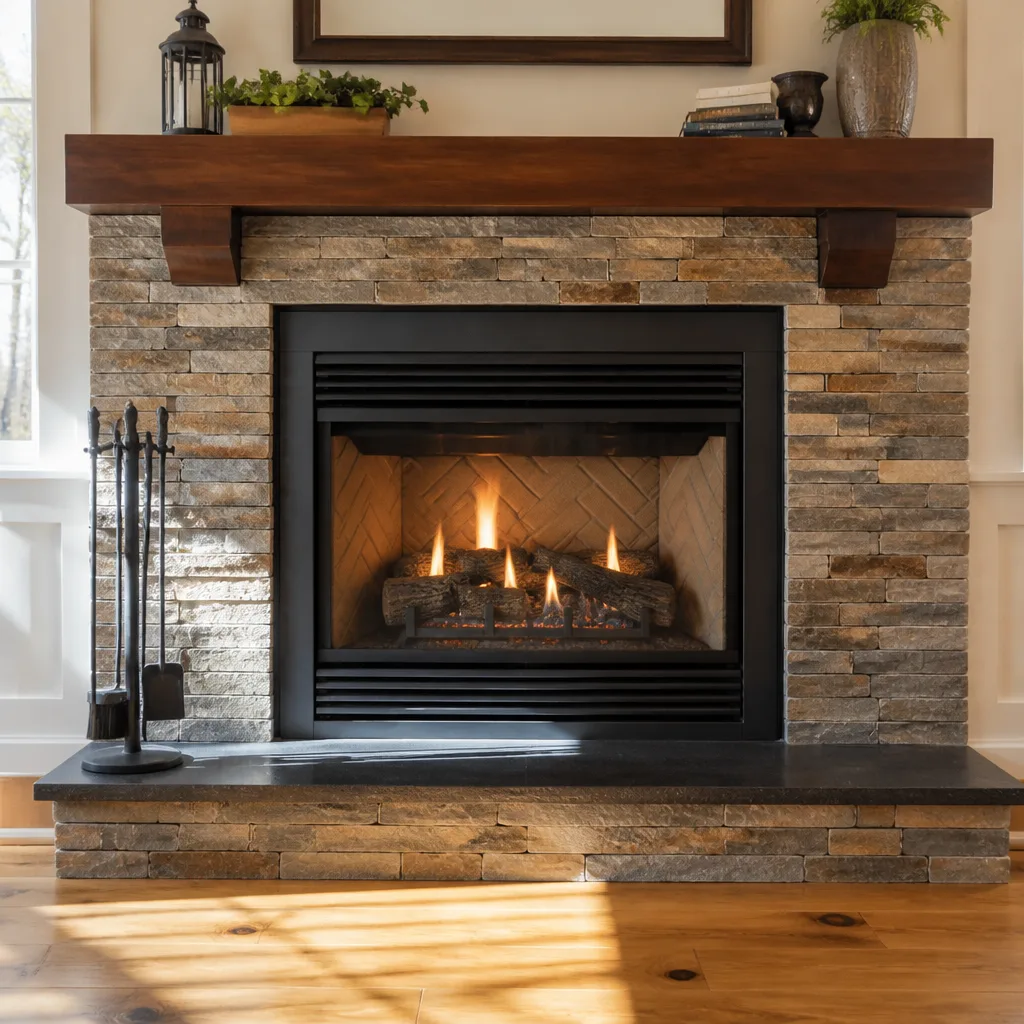 Gas fireplace service
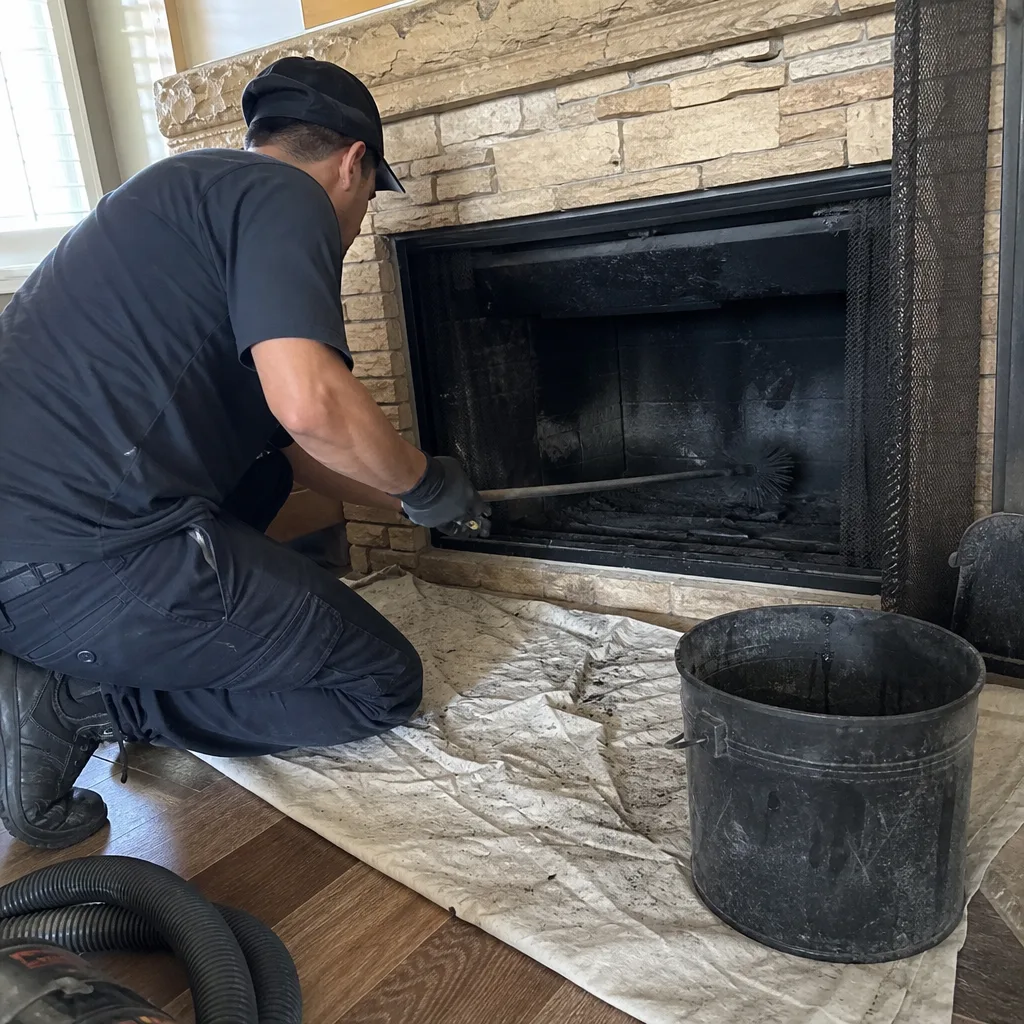
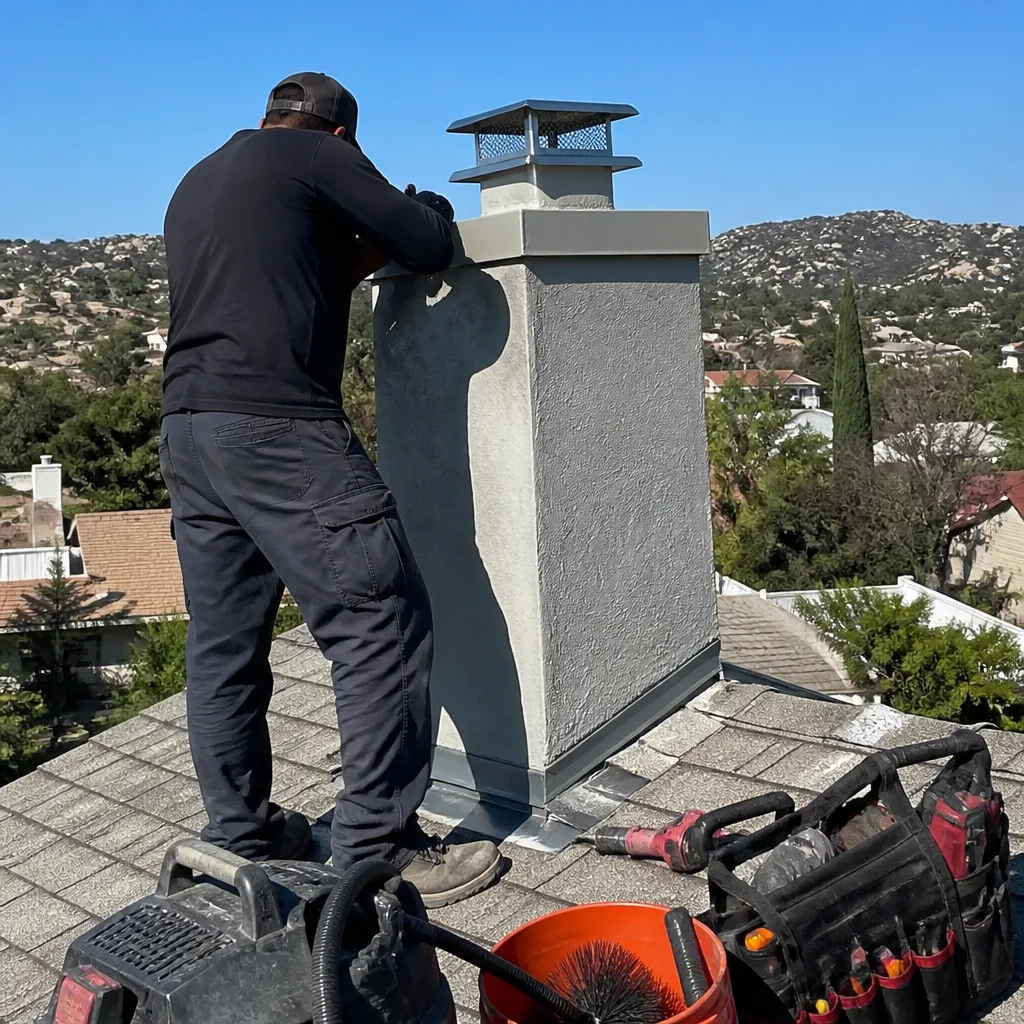
Level 1 sweep and inspection to the NFPA 211 annual standard - flue, crown, cap, and flashing checked and photographed
Chimney sweep logs do not sweep chimneys. They loosen some creosote - which then falls where a brush and vacuum still have to collect it.
The Complete Chimney Sweep Guide for Escondido Homeowners
A fireplace used only 8 to 10 times a year doesn’t have a low-risk chimney. It has a different kind of risk. Infrequent burning at low temperatures is exactly how stage-two creosote forms fastest, and Escondido’s dry air and wildfire seasons add their own complications that generic chimney guides never mention. This guide explains what’s actually happening inside Escondido flues, when maintenance is genuinely necessary, and what a proper sweep should include before you pay for one.
Styles & brands we work with
Quick Answer
A professional chimney sweep in Escondido typically costs $165 to $285 for a standard Level 1 inspection and cleaning of a single flue, and should be done once a year even if the fireplace is only used occasionally. The sweep should include a full visual inspection of the flue lining, smoke chamber, damper, firebox, and chimney cap, not just a brush run through the flue. If damage is found, get the repair quote from the same company that did the inspection so the work doesn’t get deferred to a second visit.
Table of Contents
- Why Escondido Chimneys Fail Differently Than Coastal or Mountain Homes
- How Often Should You Sweep a Chimney in Escondido?
- What a Proper Sweep Inspection Actually Covers Beyond the Flue
- Level 1 vs. Level 2 Inspections: What Escondido Homeowners Need
- Wildfire Ash Infiltration: A Distinct Escondido Debris Problem
- Understanding Creosote Stages and Why Infrequent Burning Creates Glaze
- DIY Sweeping vs. Professional Equipment: What Actually Matters
- Common Mistakes to Avoid
- When to Call a Professional
- Frequently Asked Questions
- The Bottom Line
Why Escondido Chimneys Fail Differently Than Coastal or Mountain Homes
Escondido sits in a semi-arid climate that gets roughly 15 inches of rain on average, and that number has dipped significantly during recent drought years. Chimneys in wet climates rot from the outside in. Chimneys in dry inland climates like Escondido tend to degrade from the inside out, and the failure mechanisms look different from what national chimney guides describe.
The first difference is humidity, or the lack of it. In humid climates, creosote deposits stay soft and tar-like. A brush cuts through them without much resistance. In Escondido, where winter air is dry and fires are usually burned for ambience rather than heat, the deposits that form inside the flue bake into a hard, glazed surface. This is stage-three creosote, and it doesn’t brush off. It requires mechanical removal or chemical treatment, which is a different cleaning process than what a bargain sweep operator will attempt.
The second factor is temperature swing. Escondido regularly swings 30 to 40 degrees between daytime highs and overnight lows. That thermal cycling causes flue liner materials to expand and contract daily during the burning season. Clay tile liners, which are standard in older Escondido homes built before the mid-1980s, develop hairline cracks under this stress. Stainless steel liners hold up better, but only if the cap and crown above them are keeping moisture out.
The third factor is how Escondido homeowners actually use their fireplaces. Most burns are short, 2 to 3 hours in the evening, and the damper gets closed as soon as the visible flame dies down. When the fire isn’t producing active flame, the draft slows, the flue cools quickly, and combustion particles condense on the liner walls instead of carrying out the top. That condensed film hardens fast in dry air. We’ve pulled chip samples from Escondido flues that look like black glass, and every one came from a home where the owner said they barely used the fireplace.
How Often Should You Sweep a Chimney in Escondido?
The National Fire Protection Association, currently at NFPA 211, sets the baseline recommendation: chimneys should be inspected at least once a year and cleaned as needed based on what the inspection finds. That recommendation doesn’t distinguish between a wood stove used daily in Vermont and a fireplace used 12 evenings a year in Escondido, but the practical guidance for Escondido homeowners is simple.
- Wood-burning fireplace used regularly during winter: sweep once a year, ideally in late September or early October before the first burn of the season.
- Wood-burning fireplace used only occasionally, 5-15 burns per year: sweep once a year. The lower burn frequency means each individual fire runs cooler and dirtier, which creates more deposits per burn than a hot, established fire.
- Gas fireplace or gas insert: sweep the venting every 1-2 years. Gas produces no creosote, but it does produce acidic condensate that corrodes vent connectors, and spiders and dust accumulate in gas logs and pilot assemblies.
- Unused chimney: a full sweep isn’t necessary, but an annual inspection still matters. Unlined or damaged flues that sit unused are where animals nest, and rainwater can seep through crown cracks without you ever seeing evidence inside.
The scheduling question in Escondido matters. If you sweep in March after the burning season, you replace the cap and have a clean flue all summer, then start burning again in November without a re-check. If you sweep in October, you catch the debris that accumulated over the dry summer, including the remains of any animals that sought shade in the chimney. We recommend the October timing for most Escondido homes.
What a Proper Sweep Inspection Actually Covers Beyond the Flue
A chimney sweep is a cleaning process, but a worthwhile one is also a full visual inspection of every accessible component. The flue is the obvious part, and it’s where most soot and creosote accumulates. But the flue is rarely the only point of failure, and in some Escondido homes it isn’t even the most important one.
Smoke chamber. This is the angled section above the firebox where smoke narrows before entering the flue. It’s an Escondido-specific weak point because many homes in the area were built with corbeled brick smoke chambers, meaning the brick steps inward in a rough pyramid. That stepped surface catches creosote and ash, and the deposits in the smoke chamber are harder to reach and easier to miss than flue deposits. During a sweep, the smoke chamber should be brushed or vacuumed separately, not assumed to be clean because the flue above it is.
Damper. The damper is the metal or cast-iron door directly above the firebox. It rusts in coastal air and seizes in dry climates that coat it with creosote. A damper that doesn’t fully open restricts draft and forces smoke back into the room. A damper that doesn’t fully close lets conditioned air escape up the chimney all summer. The sweep should test the damper’s full range of motion.
Firebox joints. The firebox is the brick or refractory panel enclosure where the fire burns. Joints between firebrick and refractory panels crack from direct heat cycling, especially in homes where fires burn hot and fast and then go cold. Cracked firebox joints let heat reach the framing behind the masonry, which is why this is a fire safety item, not just a cosmetic one.
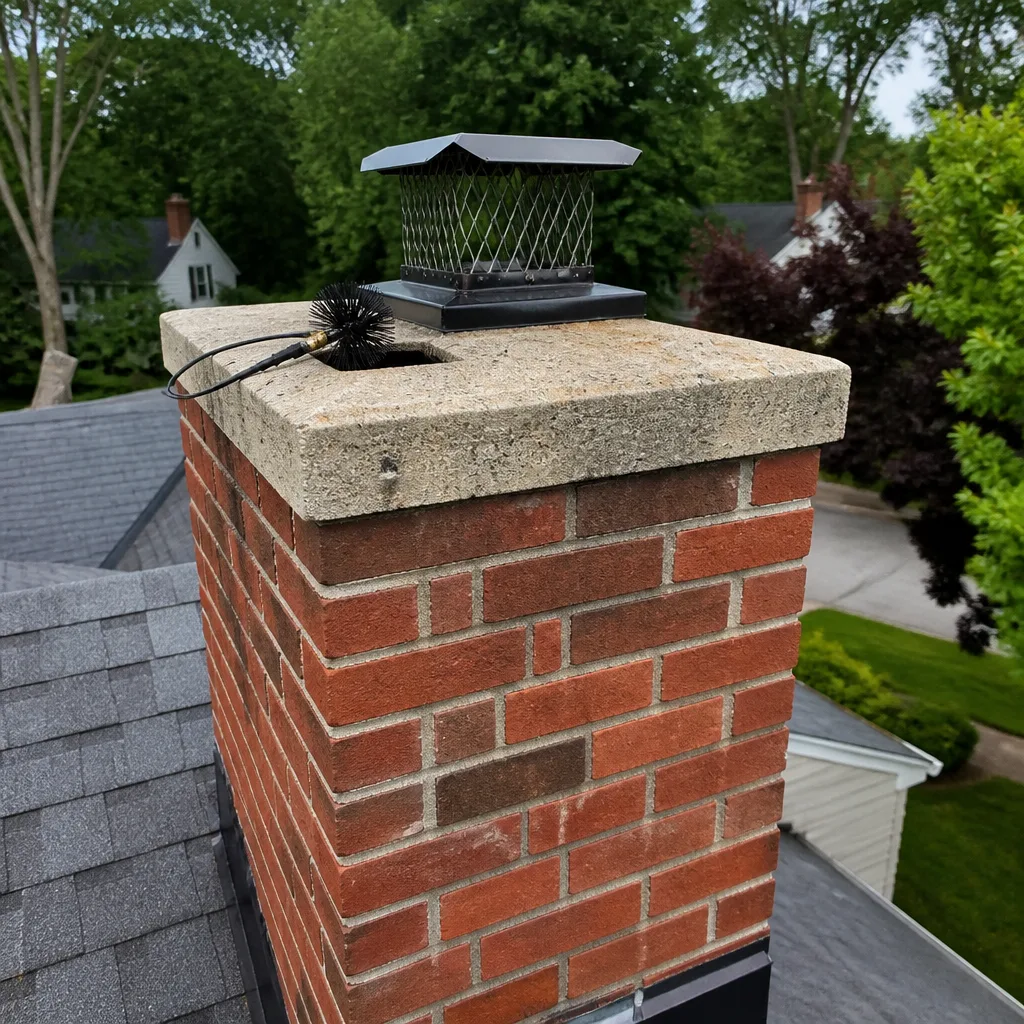
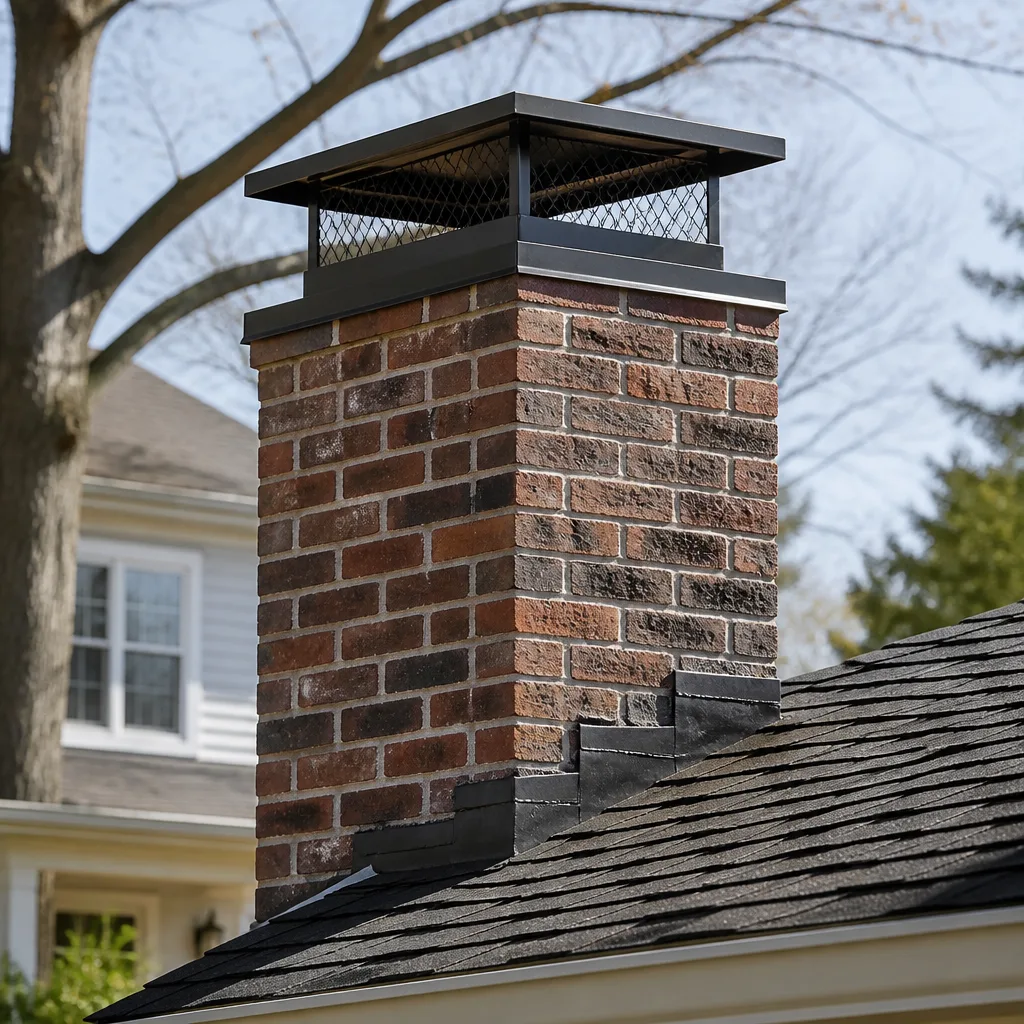
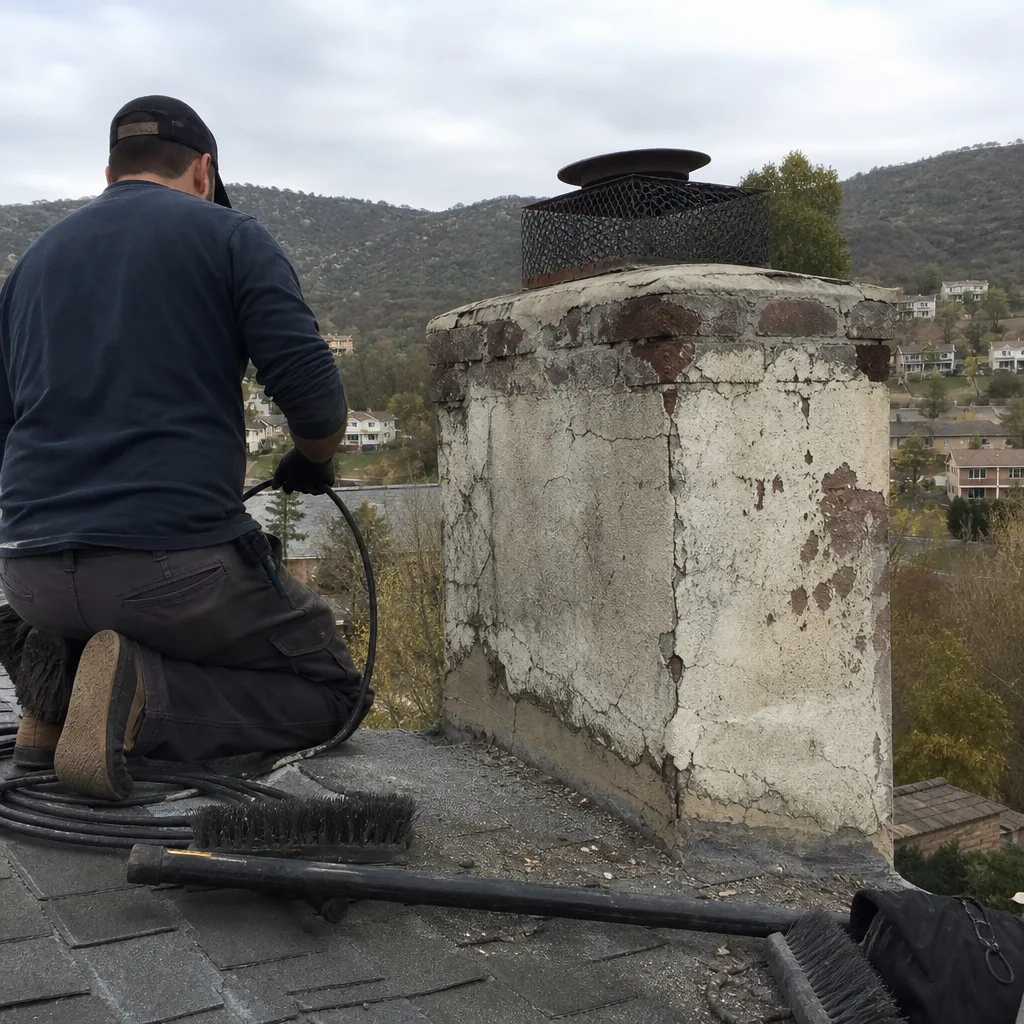
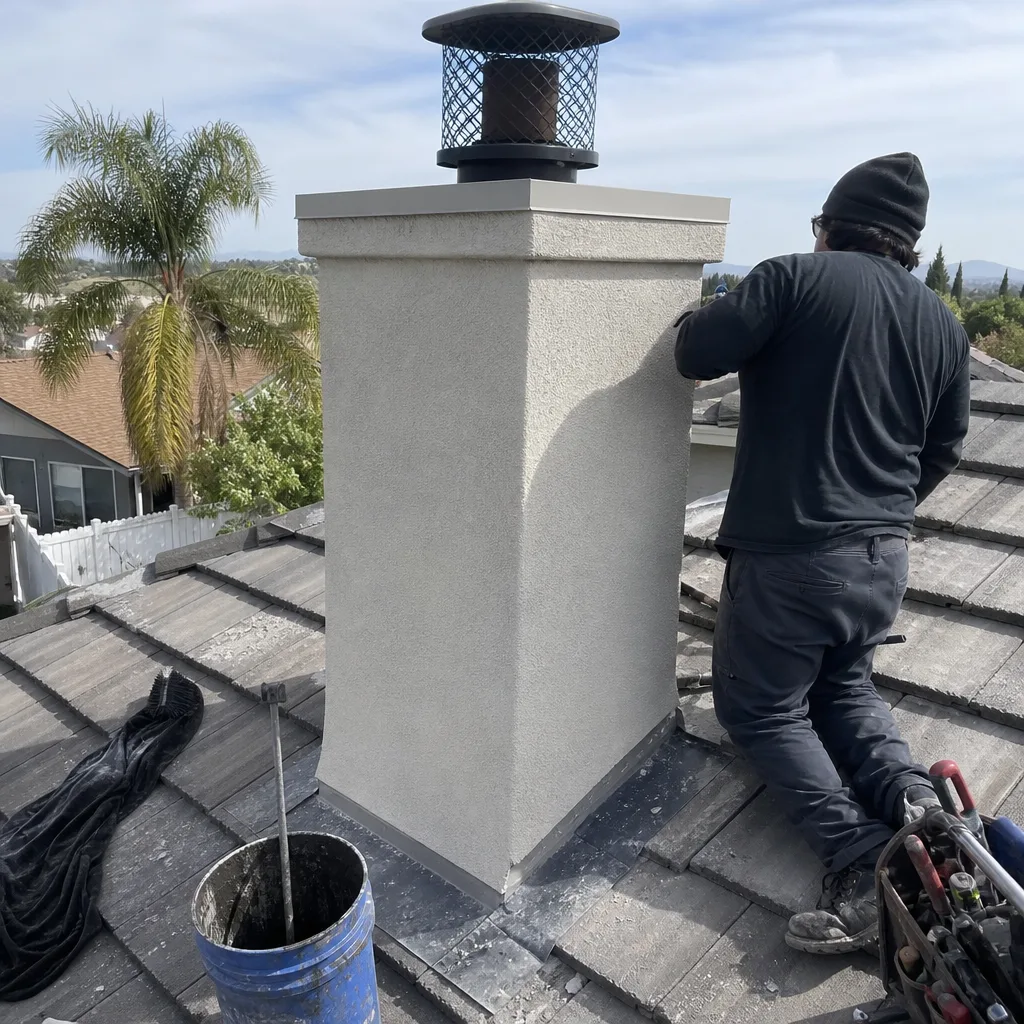
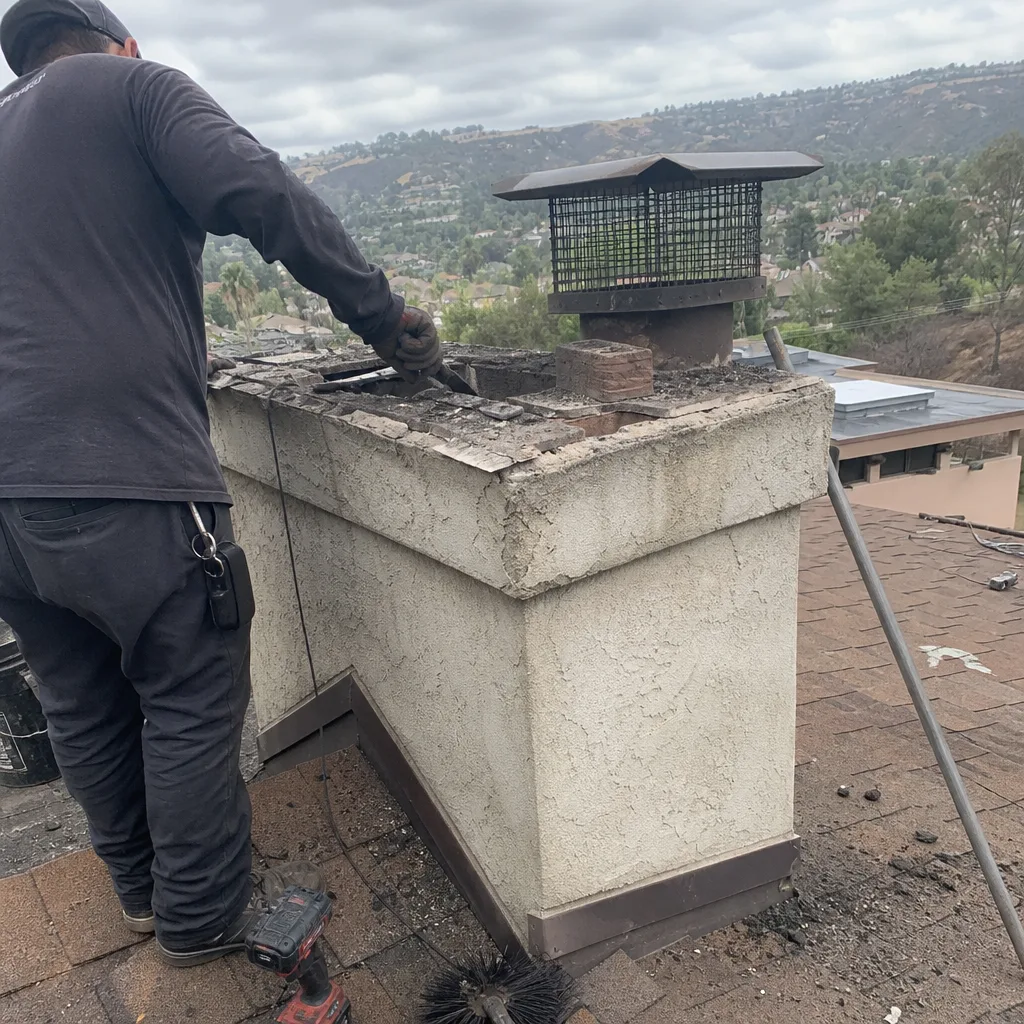
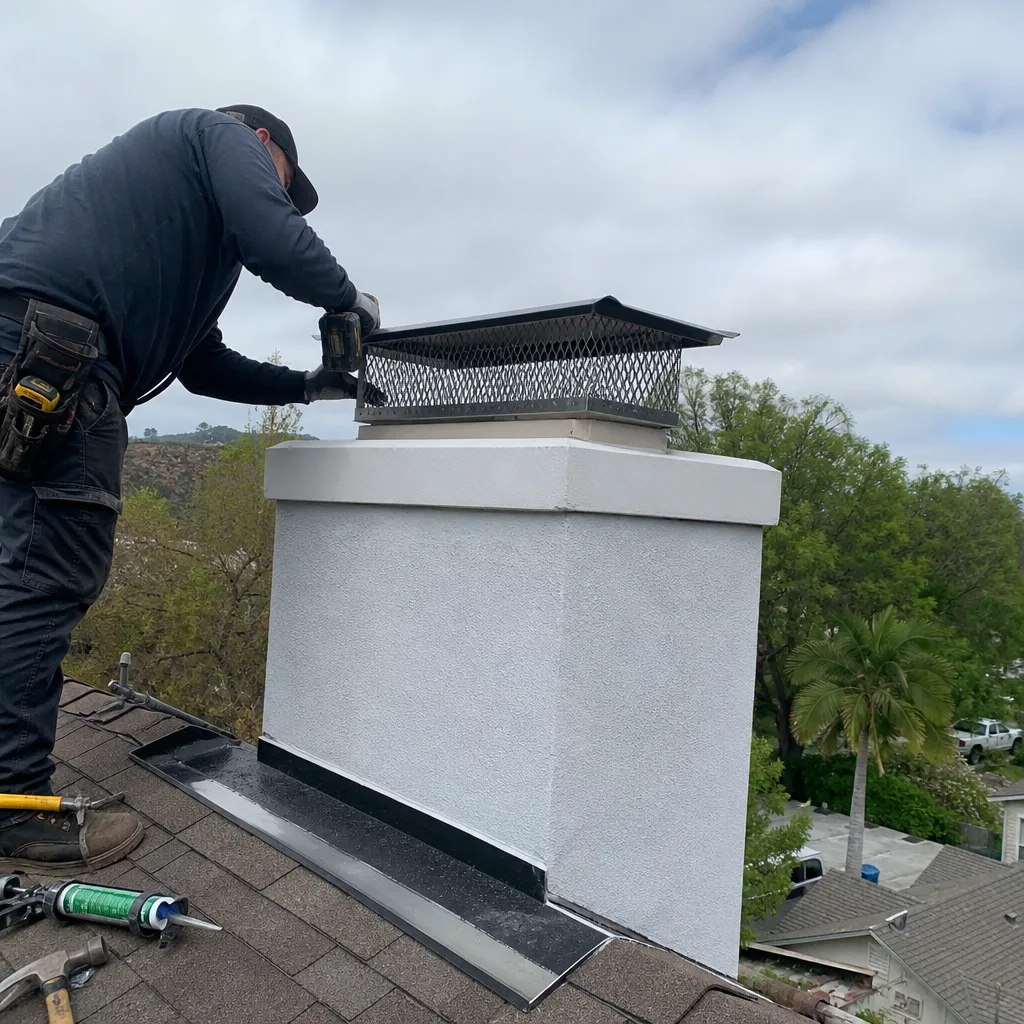
Chimney cap and flue tile crown. The cap keeps rain, leaves, and animals out of the flue. Missing or rusted caps are one of the most common findings in Escondido inspections. The crown is the concrete or mortar surface at the top of the chimney. Cracks in the crown let water seep into the masonry and liner, and over several seasons that water expands and contracts with Escondido’s temperature swings, widening the cracks. Replacement caps are available in stainless steel and copper, and this is where Famco and Gelco components come in. Those are the industry-standard cap products that a professional chimney company stocks, not the thin sheet-metal caps from a home improvement store that rust through in two seasons.
Level 1 vs. Level 2 Inspections: What Escondido Homeowners Need
Chimney inspections fall into three levels, and knowing which one applies saves homeowners from paying for either too little or too much.
Level 1 is the standard inspection delivered with every routine sweep. The technician examines the readily accessible portions of the chimney, including the flue interior as far as can be seen, the damper, the firebox, the smoke chamber, and the exterior cap and crown. There’s no camera work and no removal of chimney components. A Level 1 is appropriate when the chimney has been in continuous service under the same conditions and the homeowner isn’t reporting any problems.
Level 2 adds a video scan of the flue interior and is required in specific situations: when a home is being sold, when the fireplace or chimney has been changed in any way, when a chimney fire or other malfunction has occurred, or when an earthquake, wind event, or other external event may have damaged the structure. Southern California seismic activity makes Level 2 inspections more relevant here than in most of the country. A tremor too mild to damage walls can still crack a clay flue liner that was already under stress.
Level 3 involves removing portions of the chimney structure to access concealed areas. It’s reserved for cases where a serious hazard is suspected and Level 1 or Level 2 inspection cannot confirm or rule it out.
For a homeowner scheduling a routine sweep in Escondido, Level 1 is usually sufficient. If the home is going on the market, or if the chimney hasn’t been used in 5+ years, or if the home is more than 30 years old and has never had a camera inspection, request a Level 2. The incremental cost is a fraction of the expense of repairing concealed flue damage later.
Wildfire Ash Infiltration: A Distinct Escondido Debris Problem
Escondido sits downwind of some of the most active wildfire corridors in California. The Cedar Fire, Witch Creek Fire, and more recent regional blazes blanketed North County with ash that did more than settle on cars and patios. It entered chimney systems.
Ash from wildfire smoke is finer and lighter than wood-stove ash. It carries through open chimney caps, especially spark-arrestor caps with mesh that filters larger debris but doesn’t block fine particulate. That ash settles inside the flue, on the smoke shelf, and along the damper ledge. When the next fire burns, heat rises and the fine ash circulates instead of simply sitting. The result is a dust-choked flue even in a chimney that hasn’t accumulated much creosote from burning.
There’s a second mechanism too. Wildfire embers can ignite a poorly maintained chimney from the top down, entering through a missing or damaged cap and smoldering in the creosote. In high-fire-risk zones, a dirty flue isn’t just a fire hazard when you light a log. It’s a fire hazard when a neighboring wildfire is blowing toward your home.
For Escondido homeowners, the practical takeaway: if a regional wildfire produced visible ash fall at your home, the chimney needs an inspection even if you haven’t used the fireplace that season. Wildfire ash is chemically different from wood-burning ash. It’s drier, more alkaline, and more prone to clumping against flue walls when it encounters warm air from a pilot light or a brief burn.
Understanding Creosote Stages and Why Infrequent Burning Creates Glaze
Creosote develops in three stages, and the stages describe both quantity and consistency.
Stage one is a fine, flaky soot that brushes off easily. It forms in any flue under normal burning conditions.
Stage two is a thicker, tar-like crust with visible shine. It builds when fires burn at lower temperatures, when wood isn’t fully seasoned, or when the damper is closed before the fire has burned completely down. Stage two requires more aggressive brushing or rotary tooling to remove.
Stage three is glazed creosote: a hard, shiny, tar-like coating fused to the flue liner. It forms when stage-two deposits are repeatedly heated and cooled without being removed, especially in dry climates where the moisture that would keep them soft has evaporated out. Glazed creosote is highly flammable and cannot be removed with a standard wire brush.
The Escondido connection: most fires burned in Escondido are short-duration ambience fires on cool evenings. They don’t reach the sustained high temperatures that push combustion byproducts fully out of the flue. The homeowner watches the visible flame die, closes the damper, and walks away. The flue cools within 20 minutes. That cooling process repeatedly bakes whatever was deposited during the burn cycle. After 8 to 12 such burns, a thin layer of stage three glaze has formed even if the total creosote volume looks minimal. This is why annual sweeping matters more for casual burners than for the homeowner who burns hot fires every night. The heavy user may build more volume, but the casual user builds a more dangerous surface.
DIY Sweeping vs. Professional Equipment: What Actually Matters
Home improvement store chimney sweeping kits exist, and for a homeowner with a single-story home, an easily accessible roof, and a straight flue with light soot, they work acceptably. But Escondido homes rarely fit those conditions.
Many Escondido chimneys are on two-story homes with tile or steep-pitch roofs that make ladder access genuinely dangerous. Working on a roof without fall protection that is 20 feet above a concrete patio is not a weekend project. The safety caveat here is not a soft disclaimer. People are injured and killed every year falling from roofs while performing maintenance tasks they underestimated.
Beyond access, there’s an equipment gap. Professional sweeping in 2026 involves rotary brush systems with flexible rods, HEPA-filtered vacuums that keep ash from entering the living space, and inspection cameras that document flue condition before and after cleaning. A store-bought brush cleans the flue of loose soot. It doesn’t remove stage-two or stage-three deposits. It doesn’t inspect the smoke chamber. It doesn’t document anything for insurance records.
The material issue matters too. If a homeowner is using a wire brush from a retail kit, and the flue liner is already cracked, that brush can snag and worsen the crack. A professional sweep knows what the liner material is before touching it. If the home has a prefabricated metal chimney, a wire brush is the wrong tool entirely, and using one damages the liner surface.
There’s also the repair reality. When a professional sweep finds a damaged cap, cracked liner section, or deteriorated crown, repair capacity matters. Oakleaf Chimney Sweep handles chimney repair on the same service call, using professional materials including Copperfield components and HeatShield liner restoration compound. HeatShield can sometimes rebuild a damaged flue interior without a full relining, which saves thousands of dollars on homes where the liner has surface erosion but remains structurally sound. That kind of repair decision requires a camera inspection and a technician who can tell the difference between resurfacing and relining.
Common Mistakes to Avoid
- Skipping the sweep because the fireplace is “barely used.” Infrequent burning at low temperatures is precisely what creates glaze. A chimney that burns 10 times a year still needs an annual sweep.
- Closing the damper to “keep the heat in” while the embers are still glowing. Embers produce combustion byproducts. Closing the damper too early shortens the effective burn cycle and accelerates creosote buildup inside the flue.
- Hiring a sweep who doesn’t inspect the cap and crown. The flue can be spotless while a cracked crown is leaking rainwater into the chimney structure year-round. A sweep that’s only a brushing isn’t a sweep.
- Burning unseasoned wood because “it’s what we have.” Wet or green wood burns at lower temperatures and produces more particulates, which is the exact recipe for stage-two creosote even in a hot-burning Escondido fireplace.
- Assuming a gas fireplace never needs service. Gas inserts accumulate dust, spider webs, and acidic condensate. At minimum, the venting and burner need inspection every 2 years.
- Ignoring wildfire season. Ash from regional fires settles in flues through caps and screens. If your neighborhood got visible ash fall, the chimney needs to be checked.
- Treating dryer vent cleaning as an afterthought. Lint clogs dryer ducts the same way creosote clogs flues, and lint fires are one of the leading causes of home fires. Dryer vent cleaning belongs on the same annual schedule as a chimney sweep, especially in Escondido where dry air makes lint even more combustible.
When to Call a Professional
A chimney professional is worth the call whenever any of these conditions apply: you smell smoke in the house during or after a fire, you can see flaky black deposits falling into the firebox, the fireplace hasn’t been swept in 2+ years, the chimney cap is missing or visibly rusted, you see water stains on the ceiling near the chimney, or you’re buying or selling a home with a fireplace. For repair concerns beyond sweeping, chimney repair should be evaluated by the same company that did the inspection, so no time is lost re-explaining the problem to a second contractor. Oakleaf Chimney Sweep offers free estimates in Escondido. Call (855) 362-1450 to schedule a sweep or inspection.
Frequently Asked Questions
A standard Chimney Sweep service with Level 1 inspection typically runs between $165 and $285 for a single flue in Escondido, with higher costs for second flues, difficult roof access, or homes with heavy creosote buildup. The price should include the full inspection described above, not just a brushing. Call (855) 362-1450 for a specific quote.
Not necessarily. A cracked clay tile liner that has separated usually does require relining, but surface erosion and minor cracking can sometimes be addressed with HeatShield liner restoration, which rebuilds the flue interior with a ceramic compound at a fraction of the cost of a new stainless liner. The only way to know which category your condition falls into is a camera inspection.
Once a year is the right schedule even for occasional use. Infrequent fires burn cooler and dirtier, leaving deposits that bake into glaze in Escondido’s dry air. The fact that you use it rarely doesn’t reduce creosote risk, it changes the type of deposit you’re forming.
As covered in The Complete Guide to Chimney Cleaning in Escondido, creosote accumulates, hardens, and becomes a fuel source inside the flue. A hot fire can ignite it, producing a chimney fire that reaches temperatures high enough to crack liners and ignite surrounding framing. Meanwhile, unnoticed cap and crown damage lets water in, which degrades the masonry from inside and can make the entire chimney structure unsafe over time.
Yes, if you choose a company that specializes in both. Oakleaf handles chimney sweeps and dryer vent cleaning as connected fire-safety services. Both systems carry combustion byproducts out of your home, both clog with flammable material, and both should be on the same annual maintenance calendar.
Yes, and low rainfall makes it more important in one way. With fewer rain events, dry debris like leaves and fine wildfire ash accumulate in the flue instead of being periodically washed out. A cap with a proper spark arrestor is the primary barrier against debris, animal entry, and ember intrusion during wildfire season.
The Bottom Line
Escondido’s dry climate, wildfire exposure, and casual burning habits create a creosote and debris profile that generic chimney guides don’t address. The fireplace that sits unused for 10 months and burns 8 nights in December is not low-maintenance. It’s the chimney most likely to develop hardened glaze that a brush won’t remove. Annual sweeping with a full inspection that covers the flue, smoke chamber, damper, firebox, cap, and crown is the correct maintenance schedule for Escondido. Paired with dryer vent cleaning on the same service call, that schedule covers every combustion vent in the home. The inspection tells you what needs fixing, the repair capability determines whether it’s minor or major, and the call is the same either way: (855) 362-1450.
Written by the team at Oakleaf Chimney Sweep, serving Escondido since 2016. Explore more guides & resources on our blog.
See the difference
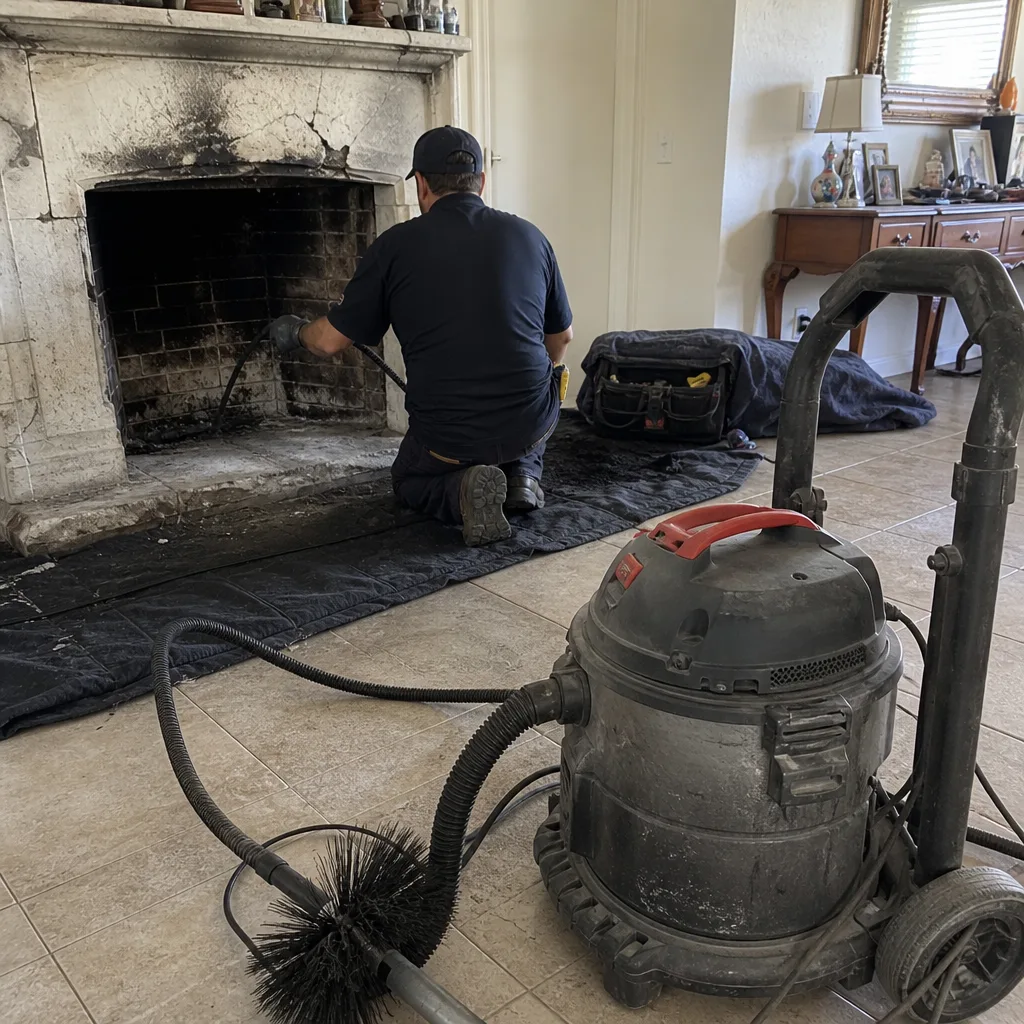 Before
 After
 Before
 After
 Before
 After