

Last updated October 31, 2026
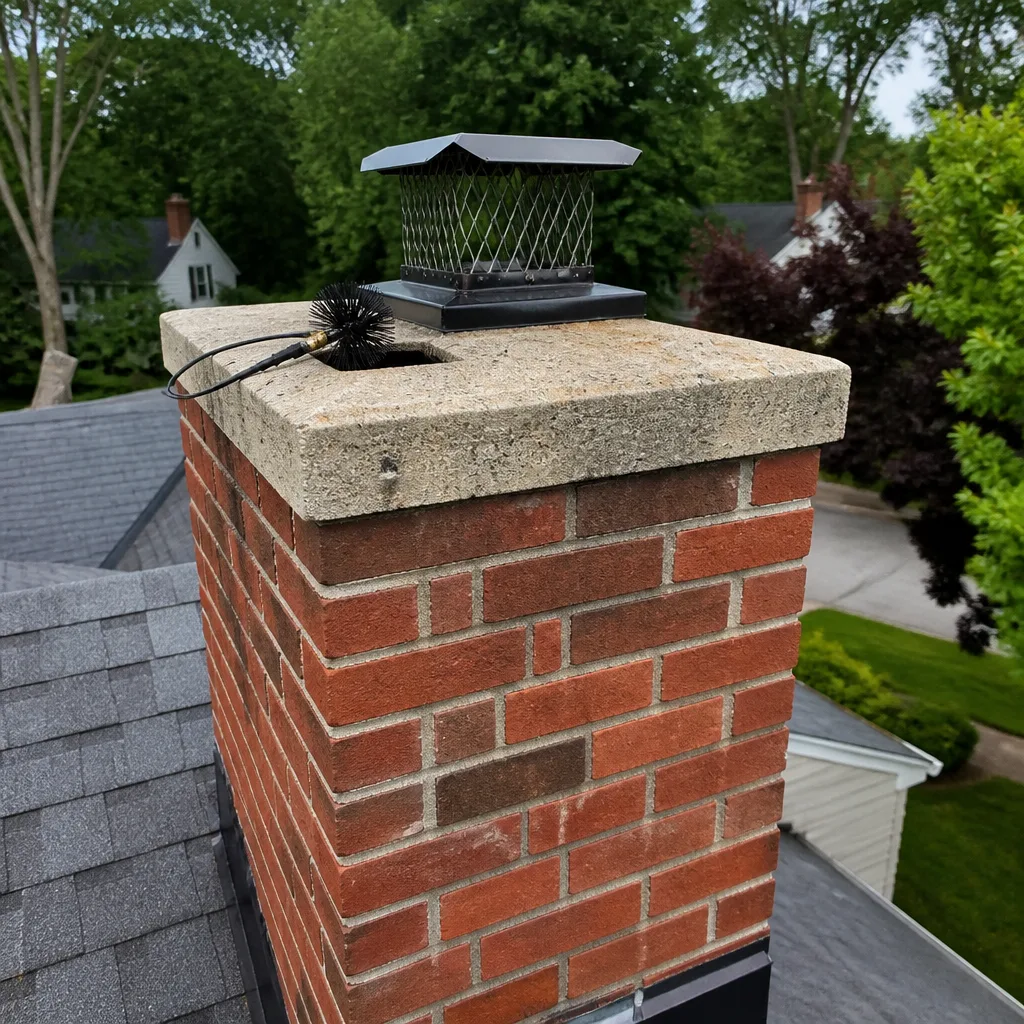 Sweep & inspection
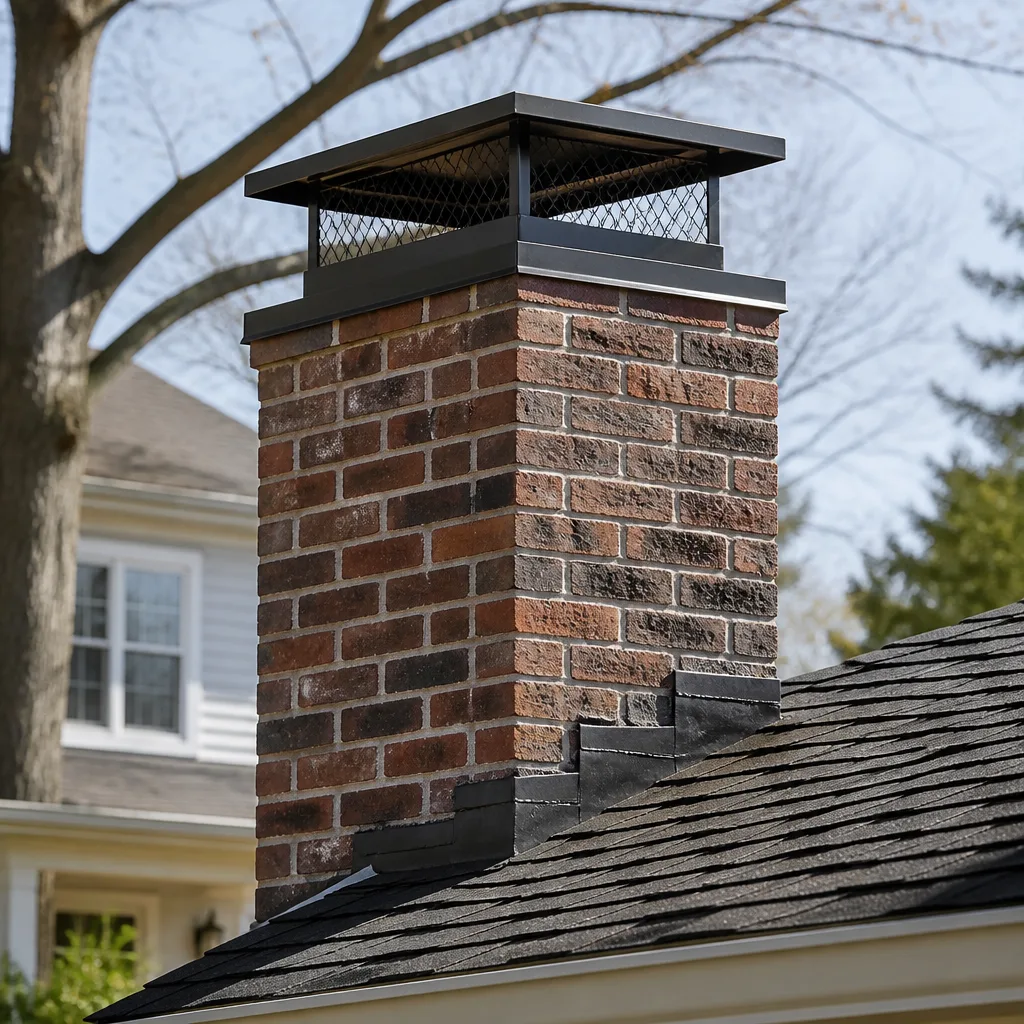 Caps & crowns
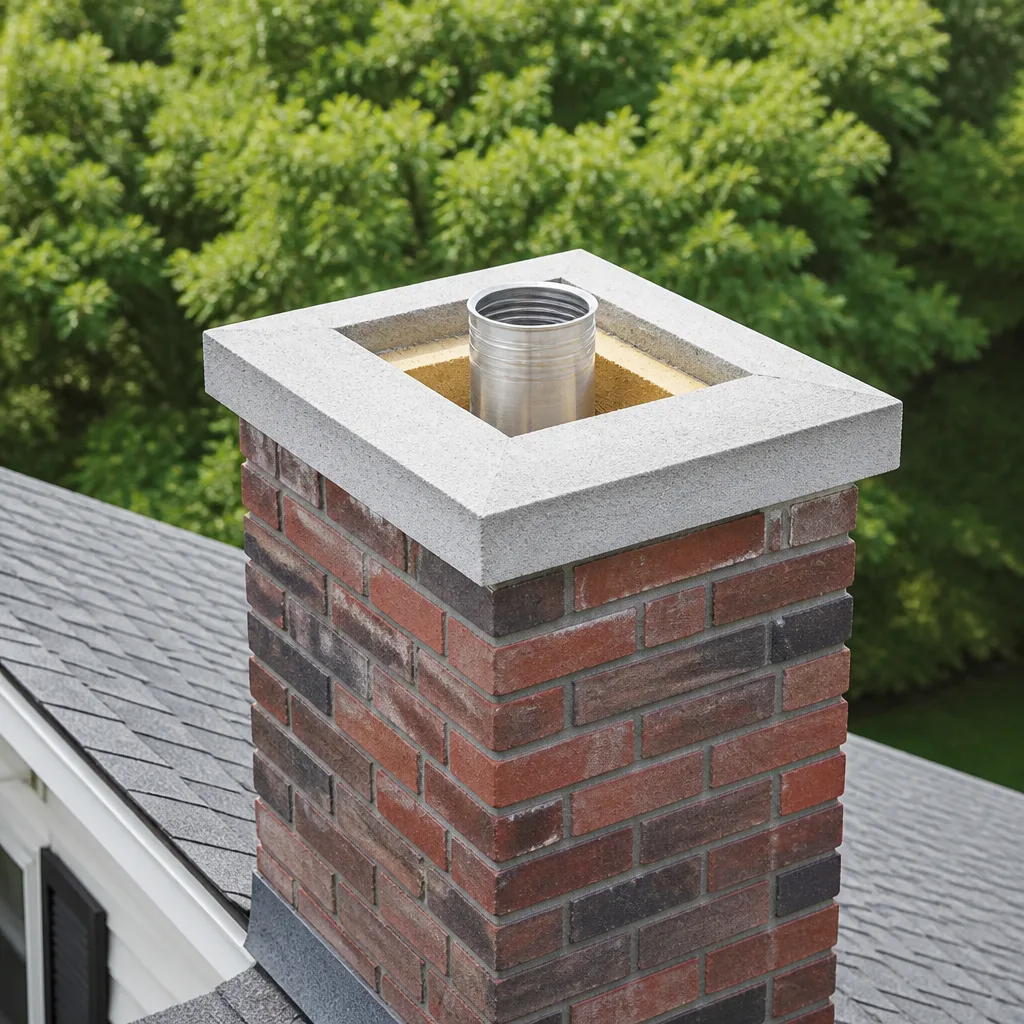 Flue relining
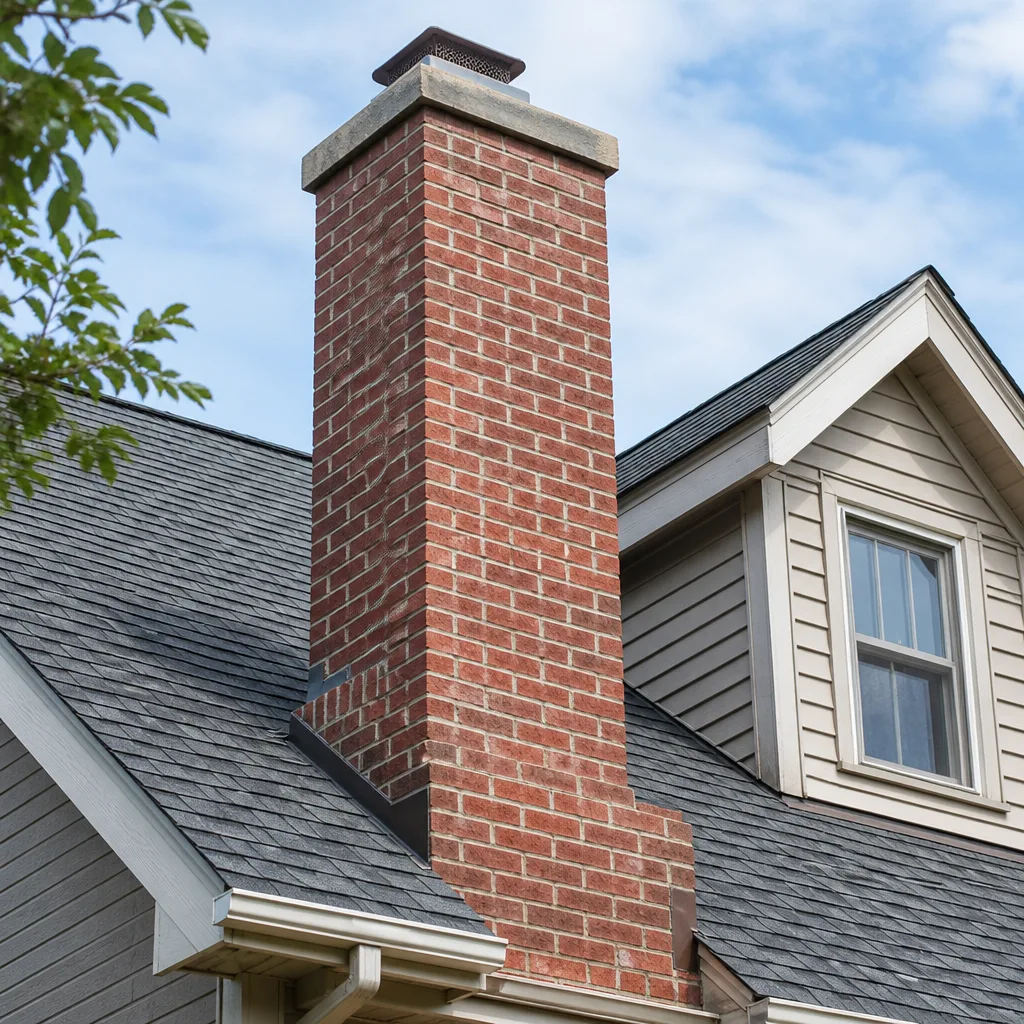 Masonry repair
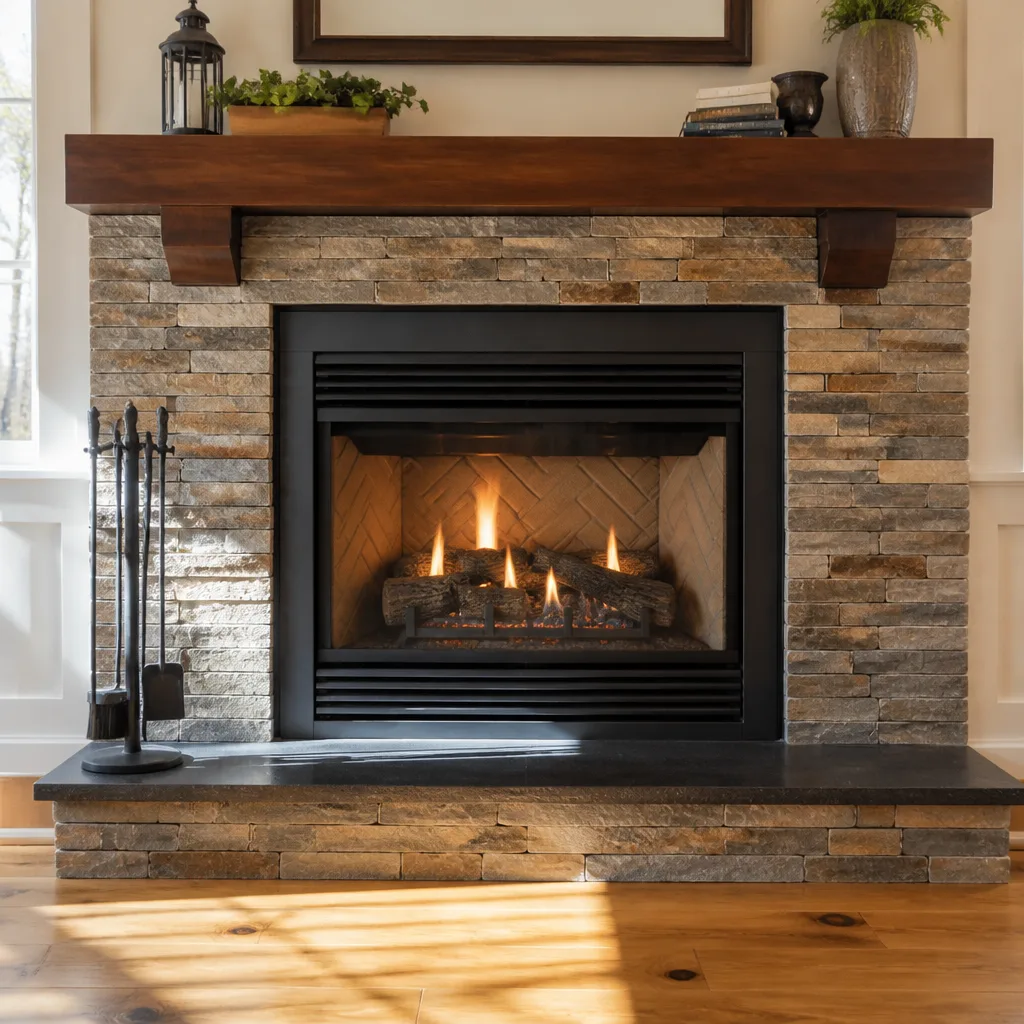 Gas fireplace service
Level 1 sweep and inspection to the NFPA 211 annual standard - flue, crown, cap, and flashing checked and photographed
Chimney sweep logs do not sweep chimneys. They loosen some creosote - which then falls where a brush and vacuum still have to collect it.
The Complete Guide to Chimney Cleaning in Escondido
A chimney used just four times last winter can still fail a CSIA Level 1 inspection. That’s the reality in Escondido, where mild winters and occasional fires create a specific set of flue conditions most homeowners never see coming. Creosote doesn’t build by volume here, it builds by chemistry. And the wildlife that moves into an unused flue during eight months of dormancy doesn’t care how rarely you strike a match. This guide covers what actually happens inside Escondido chimneys, why low-use fireplaces develop glaze-stage creosote faster than you’d expect, and what a legitimate cleaning should include before you pay for one. For more guides & resources, see our full blog.
Quick Answer
Chimney cleaning in Escondido typically costs $180 to $340 for a standard sweep and inspection, and it should include a camera check of the flue liner, not just a brush run. Because Escondido’s dry, mild climate leads to dormant fireplaces for most of the year, the real risks are glazed creosote, wildlife nesting, and hidden liner damage rather than heavy soot. A professional sweep every year, or every cord of wood burned, keeps your flue safe.
Styles & brands we work with
Table of Contents
- Why Low-Use Fireplaces in Escondido Develop Glaze Creosote Faster
- What a Complete Chimney Cleaning Actually Includes
- The Difference Between a Camera Inspection Pass and an Actually Clean Flue
- Escondido Wildlife and Your Chimney: Swifts, Squirrels, and Liner Damage
- Why Repair Capability During a Sweep Changes What Gets Found
- What You Should Have in Hand After a Legitimate Cleaning
- How Often Should You Clean a Chimney in Escondido?
- What Chimney Cleaning Costs in Escondido
Why Low-Use Fireplaces in Escondido Develop Glaze Creosote Faster
Most homeowners assume creosote buildup is a function of how often you burn. More fires, more creosote. That logic works in cold, humid climates where fireplaces run nightly for months. It fails in Escondido, where a fireplace might get lit a dozen times between November and February and then sit idle until Thanksgiving rolls around again.
Here’s what happens. Escondido’s inland air is dry, especially during fall and winter when Santa Ana conditions push humidity into the single digits. Wood burned in dry air produces a hotter, faster burn at first, but it also produces a finer, stickier particulate. That particulate deposits on the flue wall in thin layers. When the fireplace cools and sits unused for weeks, those layers bake onto the clay or metal liner under residual heat and low humidity. The result is a hard, shiny coating, stage 2 glazed creosote, which is more difficult to remove than the puffy, flaky stage 1 creosote common in high-use, humid-climate chimneys.
Our own sweep calls across Escondido reflect this. We routinely find glazed sections in fireplaces where the homeowner insists they only burned “a few times last year.” It’s not that they’re wrong about their burn habits. It’s that low-frequency, low-humidity burning creates a different creosote chemistry than what national guides, written mostly for cold-climate consumers, describe. A single brushing passes over the surface and leaves the hard glaze behind. Removing it takes rotary loop tools or chemical treatment, which is exactly the kind of step a sweep-only company with a brush and a vacuum won’t have in the truck.
The takeaway for Escondido homeowners: don’t benchmark your cleaning schedule against burn frequency alone. The calendar matters more here than the match count.
What a Complete Chimney Cleaning Actually Includes
A complete chimney cleaning is a process, not a single pass with a brush. Here’s the sequence a professional follows, step by step, and what each step is actually for.
- Visual inspection of the exterior and crown. Before anything goes inside the flue, the crown, cap, and brick face get checked for cracks, spalling, or missing mortar. In Escondido, the freeze-thaw cycle that destroys crowns in colder climates is rare, but UV exposure and the occasional heavy rain still break down crown sealant over time.
- Interior inspection with a camera. A camera run maps the liner’s condition before cleaning. This establishes baseline damage and tells the sweep where the brush needs extra attention. Camera-first also protects you from being blamed for cracks that were already there.
- Mechanical sweeping of the flue. A properly sized brush, either wire or poly depending on liner type, runs the full length of the flue. For glazed creosote, this step gets repeated or supplemented with a rotary loop attachment.
- Smoke chamber and damper cleaning. The smoke chamber, the angled section above the firebox, collects more creosote per square inch than any other part of the system. Sweep-only operators often skip it because it’s awkward to reach. A complete cleaning does not.
- Firebox cleaning and ash removal. The firebox gets vacuumed and wiped down. This is where you’ll see the difference between a company that hauls away debris and one that leaves a fine layer of dust on your hearth.
- Post-cleaning camera verification. A second camera pass confirms the flue walls are actually clear, not just brushed. This is the step that separates a real cleaning from a guess.
- Written documentation. You get a record of what was done, what was found, and what the inspection level was. More on this below.
If any of these steps is missing, you didn’t get a complete cleaning. You got a brush run.
The Difference Between a Camera Inspection Pass and an Actually Clean Flue
Camera inspections are standard now. Every company offers one, or claims to. But here’s what most Escondido homeowners don’t realize: a camera can only see the surface it’s pointed at. If that surface is coated in a thin layer of creosote or dust, the camera records that layer, not the liner underneath.
The order of operations matters. A sweep who runs the camera before brushing and then calls it good after the brush pass hasn’t actually verified anything. The pre-brush camera run shows what’s visible through the soot. The post-brush camera run is the one that reveals hairline cracks, spalled flue tiles, or a deteriorated mortar joint. Without a brush first, the camera misses exactly the defects it’s supposed to find.
We’ve seen this in Escondido repeatedly. A homeowner tells us they had a camera inspection last year and got a clean bill. We run the brush, run the camera again, and find a cracked flue tile that the previous inspection couldn’t see because it was hidden behind a season of creosote. The previous company didn’t lie. They just looked through a dirty window and recorded what they saw.
Require the sequence. Brush first, camera second. If a company runs the camera only before the sweep, ask them to run it again after. A complete cleaning includes that verification step, and any reputable sweep will show you the post-cleaning footage on the spot.
Escondido Wildlife and Your Chimney: Swifts, Squirrels, and Liner Damage
Escondido sits in chaparral and coastal sage scrub territory. The same habitat that makes the city’s hillsides green in spring also supports a dense population of chimney swifts, tree squirrels, and raccoons. All three species see an unused flue as prime real estate.
Chimney swifts are federally protected under the Migratory Bird Treaty Act, which matters for scheduling. If swifts nest in your flue during spring and summer, they cannot be disturbed until the young have fledged. That’s a legal constraint, not a preference. A sweep who shows up in May, finds an active swift nest, and cleans anyway is violating federal law. The correct response is to document the nest, schedule a return visit after the birds leave, and install a proper cap to prevent recurrence.
Squirrels are a different problem. They don’t build protected nests like swifts do. They bring in twigs, leaves, and food debris, which clogs the flue and creates a combustible mass. Squirrel debris burns hot and fast if it ignites. But the larger issue in Escondido is the access point. A squirrel in the flue means there’s a gap in the cap or crown somewhere. If the chimney is cleaned but the access point isn’t fixed, the squirrels return within weeks.
Both terra cotta and stainless liner systems take damage from wildlife activity. Terra cotta tiles crack under impact. Stainless liners hold up better physically, but nesting material can obstruct airflow and create a hot spot. A complete cleaning in Escondido includes looking for animal entry, not just animal debris. If the sweep doesn’t ask how long it’s been since your cap was checked, they’re missing half the picture.
Why Repair Capability During a Sweep Changes What Gets Found
There’s a structural problem with the sweep-only business model, and it shows up during the visit. When a company only cleans chimneys, they have no incentive to look hard for damage, and no capability to fix it if they find it. Every crack they report is a job they can’t do. That creates a subtle pressure to see less.
A full-service chimney company operates differently. If we find a cracked crown or a deteriorated mortar joint during a sweep, we can quote the repair and complete it. We use materials like Copperfield crown sealer and Olympia Chimney components because those are the brands professional chimney contractors specify, not hardware-store substitutes. The repair isn’t a referral to someone else. It’s a solution on the same truck.
This matters in Escondido specifically because of the age of the housing stock. Many homes in the older neighborhoods, the areas around downtown, the Country Club corridor, the streets off Valley Parkway, have chimneys built in the 1970s and 1980s. Those chimneys are forty to fifty years old now. Mortar joints are failing. Terra cotta liner tiles are starting to spall. A sweep-only visit will clean the flue and leave the structural problems untouched. A full-service visit finds them and fixes them.
When you book a cleaning, ask one question: “If you find damage, do you fix it?” If the answer is no, budget for a second contractor and a second visit.
What You Should Have in Hand After a Legitimate Cleaning
A professional chimney cleaning in Escondido ends with paperwork. Not a receipt saying “sweep completed.” Actual documentation. Here’s what it should include.
- The inspection level noted. Most cleanings fall under a CSIA Level 1 inspection, which covers the accessible portions of the chimney. If your chimney has changed recently, a new appliance, a new liner, a change in fuel type, you need a Level 2, which includes the attic, crawlspace, and roof areas.
- What was found. Creosote stage and location, obstructions, wildlife evidence, crown condition, damper function. If the sweep found nothing, the documentation should say so explicitly, not just leave the space blank.
- What was done. Brush type used, whether glaze removal was required, whether the smoke chamber was cleaned, whether the cap was inspected.
- Recommendations with no pressure. If a liner issue was found, you should get a plain-language explanation of what it is, why it matters, and your options. That includes whether repair can safely wait.
- Photos or video. Post-cleaning camera footage is standard now. Ask for it if it isn’t offered.
You should not leave the visit with vague assurances and a bill. If you can’t describe what was found in your own words after the sweep leaves, the cleaning wasn’t documented well enough. The documentation is your record for insurance purposes and for future sweeps who need to know the chimney’s history.
How Often Should You Clean a Chimney in Escondido?
The national standard from the National Fire Protection Association says chimneys should be inspected at least once a year and cleaned as needed. For Escondido’s climate, the practical answer is the same: annual inspection, cleaning based on what the inspection finds.
But the “as needed” part varies. A fireplace burning a cord of wood per year in Escondido’s dry air will need a cleaning every year, regardless of how the creosote looks from the outside. The glaze forms even when the volume is low. A gas fireplace, which burns cleaner, can go longer between cleanings, but the inspection still needs to happen annually because the venting system is still exposed to wildlife and weather.
Dryer vents follow a similar schedule. Lint buildup in a clogged dryer vent is a leading cause of home fires, and it builds regardless of how modern the dryer is. We clean dryer vents as a standalone service because lint fires don’t care whether you also have a fireplace. If you’re scheduling chimney maintenance, ask about vent cleaning in the same call. One visit covers both fire-safety systems.
For Escondido homes with a wood-burning fireplace, the practical schedule is: sweep every year you burn more than half a cord, sweep every other year if you burn less, and inspect annually no matter what. That schedule reflects the local reality that even a rarely used flue accumulates problems while it sits.
What Chimney Cleaning Costs in Escondido
Chimney cleaning prices in Escondido run in a predictable range, but the number depends on what the sweep finds. Here’s a breakdown of the typical line items.
- Standard sweep and Level 1 inspection: $180 to $260. This covers brushing the flue, cleaning the smoke chamber and firebox, and the camera before and after.
- Glaze removal, when required: $80 to $150 additional. Hard, stage 2 creosote needs rotary tools or chemical treatment, and it takes longer than a standard brush pass.
- Level 2 inspection: $250 to $400. Required when the chimney has changed or when a home is being sold. This inspects the attic, crawlspace, and roof exterior.
- Dryer vent cleaning: $120 to $180. A separate service, but many homeowners in Escondido bundle it with their chimney sweep to handle both fire-safety vents in one visit.
These are market rates for the area. A quote significantly below this usually means the sweep is skipping steps, most commonly the smoke chamber cleaning or the post-cleaning camera pass. A quote above it should come with an explanation, either glaze removal, a taller flue, or a Level 2 inspection.
What matters more than the line item is the documentation. The estimate should say what’s included in writing. If the sweep can’t tell you which inspection level you’re getting, treat that as a red flag.
Common Mistakes to Avoid
- Believing a clean chimney means a safe chimney. A flue can be brushed spotless and still have a cracked liner, a failing crown, or a missing cap. The brush removes creosote. It doesn’t inspect structure.
- Skipping the post-cleaning camera pass. Without verification footage after the sweep, you’re paying for a process you can’t confirm. Ask for the before and after on screen.
- Cleaning a chimney with an active bird nest. Chimney swifts are federally protected. A company that cleans a nesting flue is violating the law, and you could be liable along with them.
- Ignoring the dryer vent. Lint fires are a leading cause of home fires, and they build silently inside the vent. A chimney clean doesn’t cover the dryer. Both systems need attention on the same schedule.
- Choosing a sweep based on price alone. The difference between a $99 brush-and-go and a $220 complete cleaning is the smoke chamber, the post-sweep camera, and the documentation. You’ll pay for the difference later.
- Waiting until fall to schedule. Every chimney company in Escondido books solid from October through December. The best time to schedule is late spring or summer, when the flue is dormant and appointments are available.
See the difference
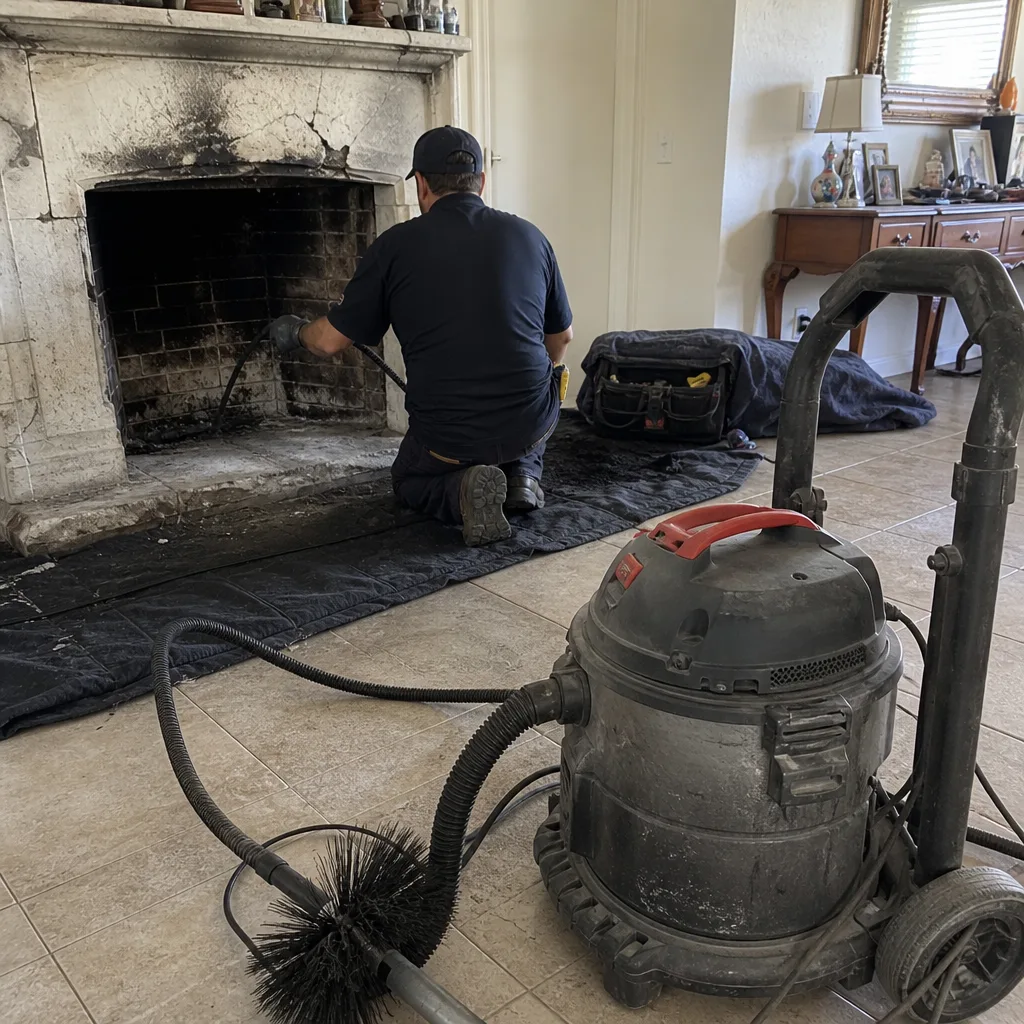 Before
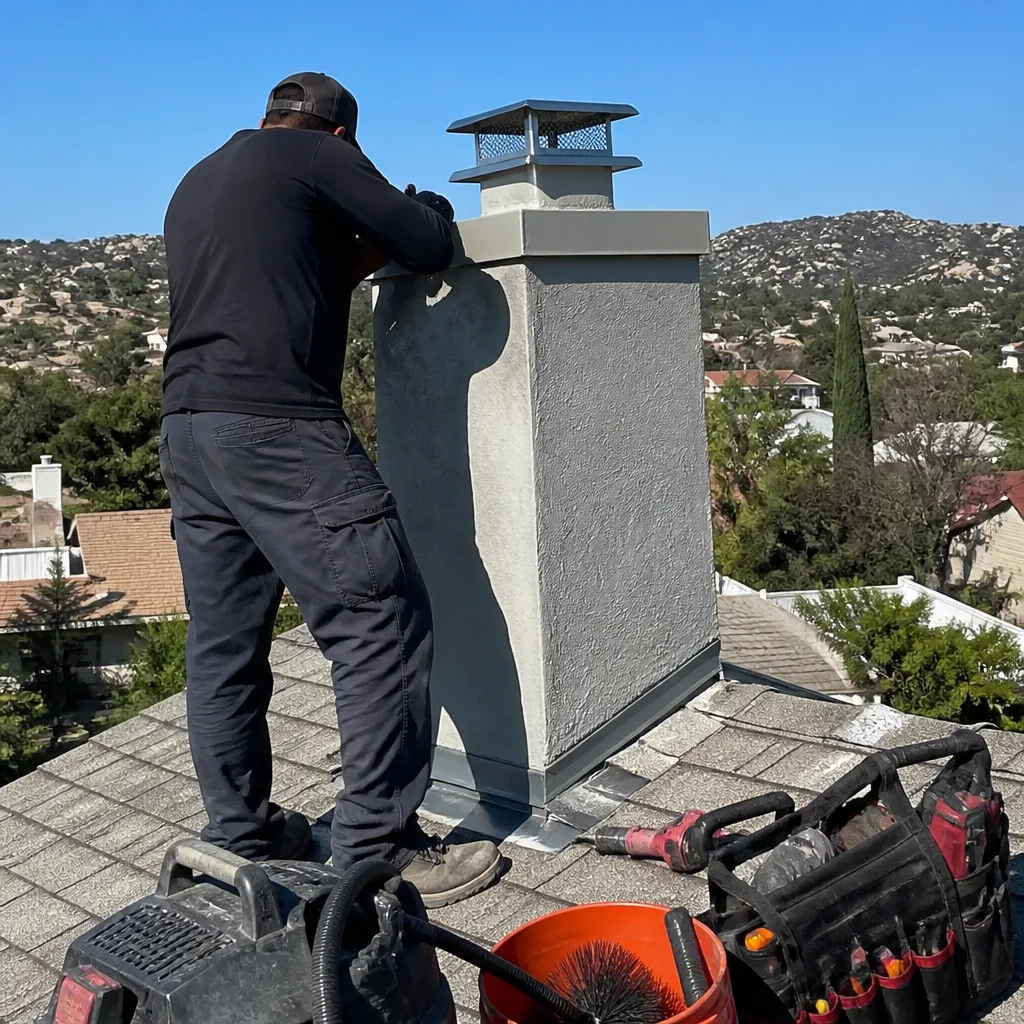 After
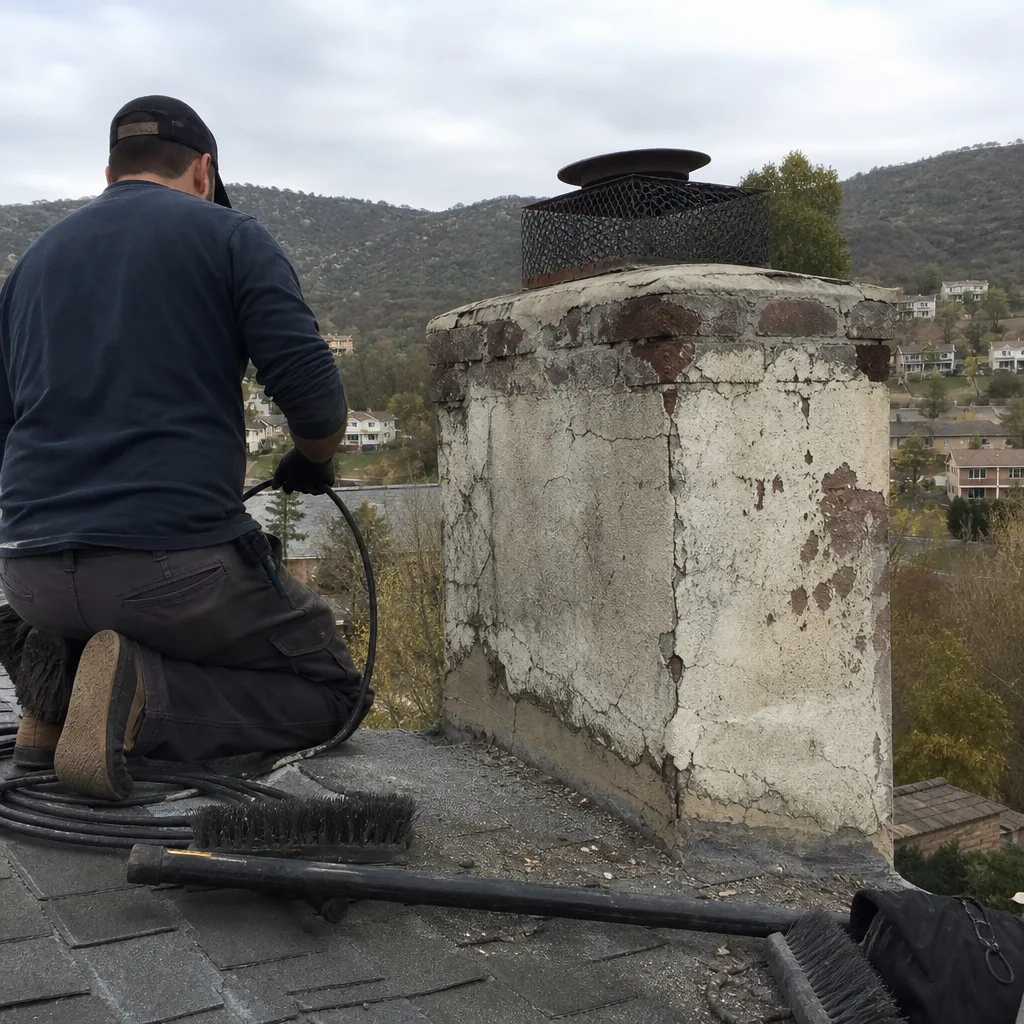 Before
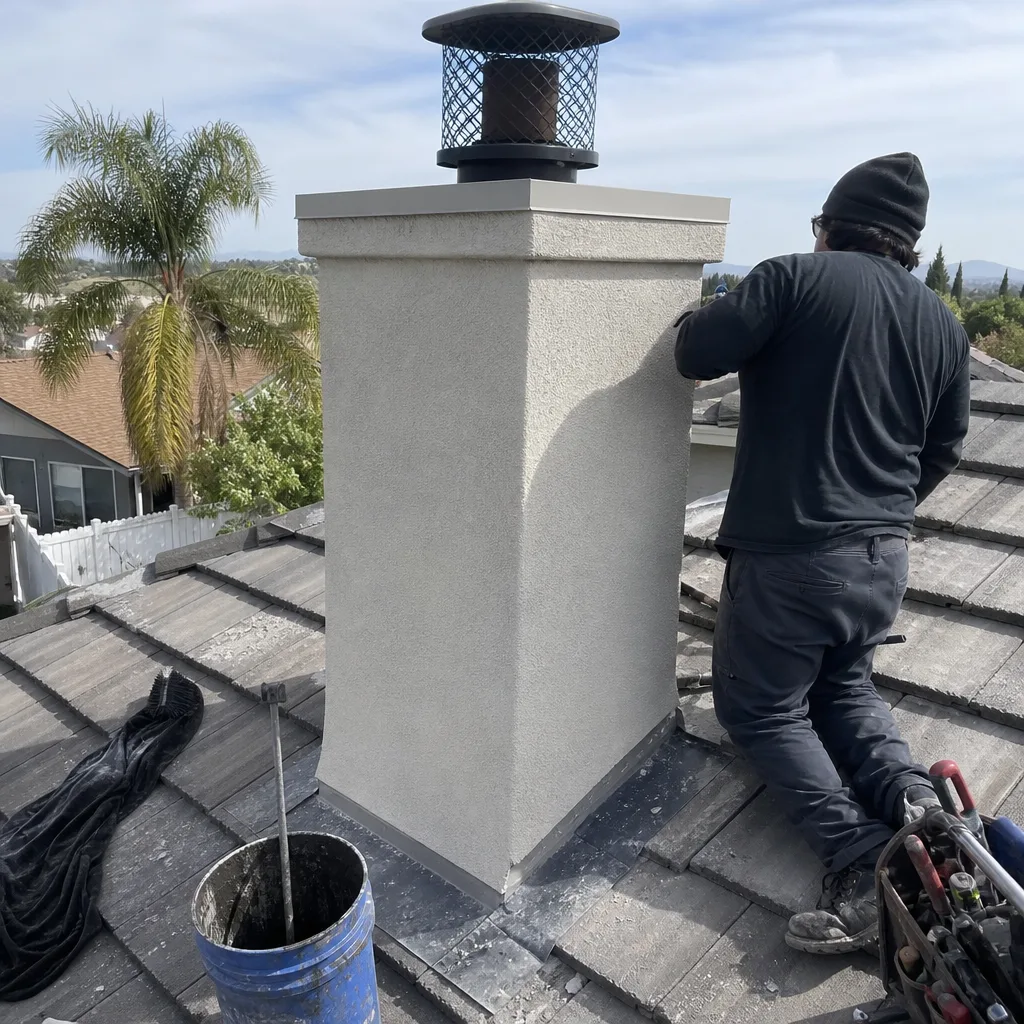 After
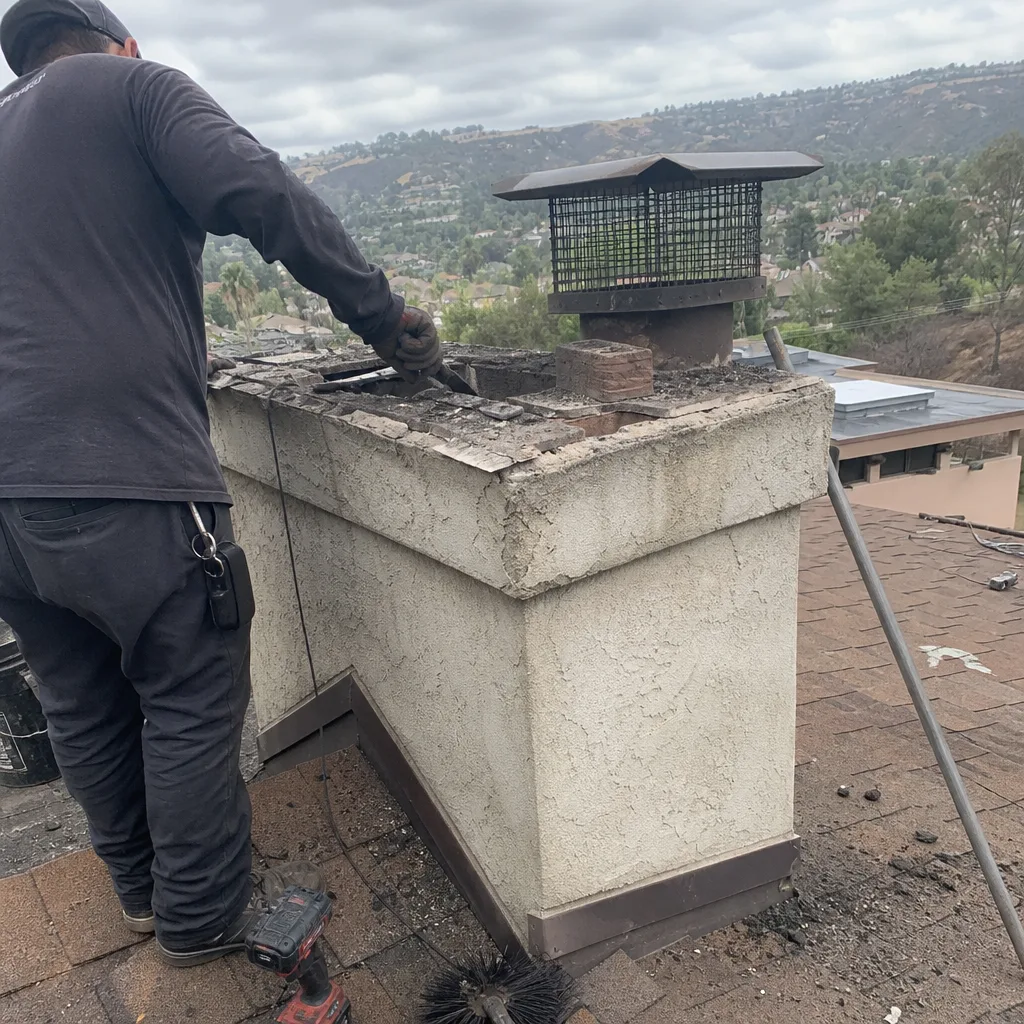 Before
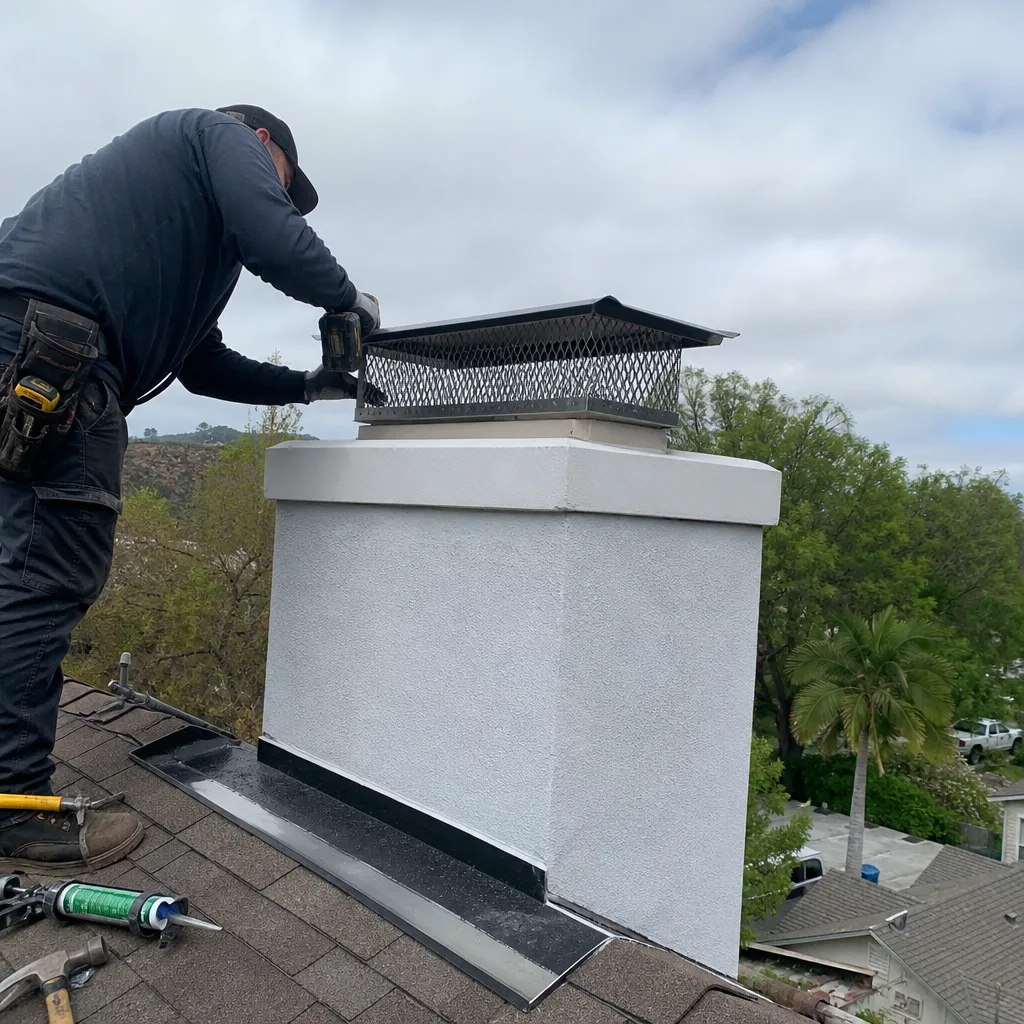 After
When to Call a Professional
Call a professional if you smell smoke in the house after a fire, if you see black staining around the damper or firebox, if you hear animal sounds from the chimney, or if you can’t remember the last time the flue was cleaned. A more urgent call is warranted if you notice a burning smell that persists after the fire is out, which can indicate stage 2 glazed creosote that’s now smoldering in the flue. Don’t wait until fall to address what you’re noticing in spring. Oakleaf Chimney Sweep offers free estimates in Escondido, call (855) 362-1450 to schedule an inspection and get a written quote before the fall rush.
Frequently Asked Questions
A standard chimney sweep in Escondido costs $180 to $260, including a Level 1 inspection and camera verification. Glaze removal, a Level 2 inspection, or wildlife removal adds to the price. Call (855) 362-1450 for an exact quote, estimates are free.
Not necessarily. A cracked liner can sometimes be restored with HeatShield, a ceramic compound that resets the flue surface without removing the existing liner. HeatShield liner restoration is a specialized repair that sweep-only companies don’t offer. A full reline with a DuraFlex stainless system is the right answer when the damage is structural or the liner has shifted. Ask for camera evidence before agreeing to either recommendation.
Annually if you burn half a cord or more per year, every other year if you burn less, and inspected annually no matter what. The inspection catches wildlife entry, crown damage, and liner issues that a cleaning alone won’t reveal.
Creosote builds in stages. Stage 1 is flaky and easy to remove. Stage 2 is glazed and hard, requiring rotary tools. Stage 3 is a thick, caramelized layer that’s a serious fire risk. In Escondido’s dry climate, the progression from stage 1 to stage 2 can happen even with light use. Skipping years moves you up the scale without you seeing any of it from the firebox.
No. The sweep is the mechanical cleaning. The inspection is the documented assessment of the chimney’s condition, including the liner, crown, damper, and cap. A complete service includes both. A company that only sweeps and doesn’t provide inspection documentation isn’t giving you the full picture.
You can buy brushes and rods at any hardware store, but the risk is the flue liner itself. A wrong-size brush scratches a stainless liner. A terra cotta liner with hidden cracks can be damaged further by a clumsy DIY pass. The more serious issue is the high-tension work of checking the crown and cap from the roof, where a fall is a real risk. For the price of a professional sweep, you get the brush work, the camera, and the documentation, and you stay off the roof. Read our DIY vs Professional Chimney Cleaning: The Escondido Homeowner’s Decision Guide before deciding.
The Bottom Line
Chimney cleaning in Escondido is less about burn volume and more about what happens inside a flue that sits dormant for eight months of the year. Glazed creosote forms in low-use fireplaces. Wildlife moves in through damaged caps. Structural problems hide behind a season of deposits. A complete cleaning means brushing the flue, cleaning the smoke chamber, verifying with a camera, and documenting what was found. It also means having repair capability on site, so what gets found gets fixed. One call covers every fire-safety vent in your home, chimney and dryer. For more on our chimney services, visit the Oakleaf Chimney Sweep home page, or check out our Chimney Sweep in San Marcos service area. We also handle Chimney Repair in San Marcos when sweeping uncovers damage. While you’re at it, schedule a Dryer Vent Cleaning in San Marcos visit to cover the other fire-safety vent in your home.
Written by the team at Oakleaf Chimney Sweep, serving Escondido since 2016.