

Last updated October 31, 2026
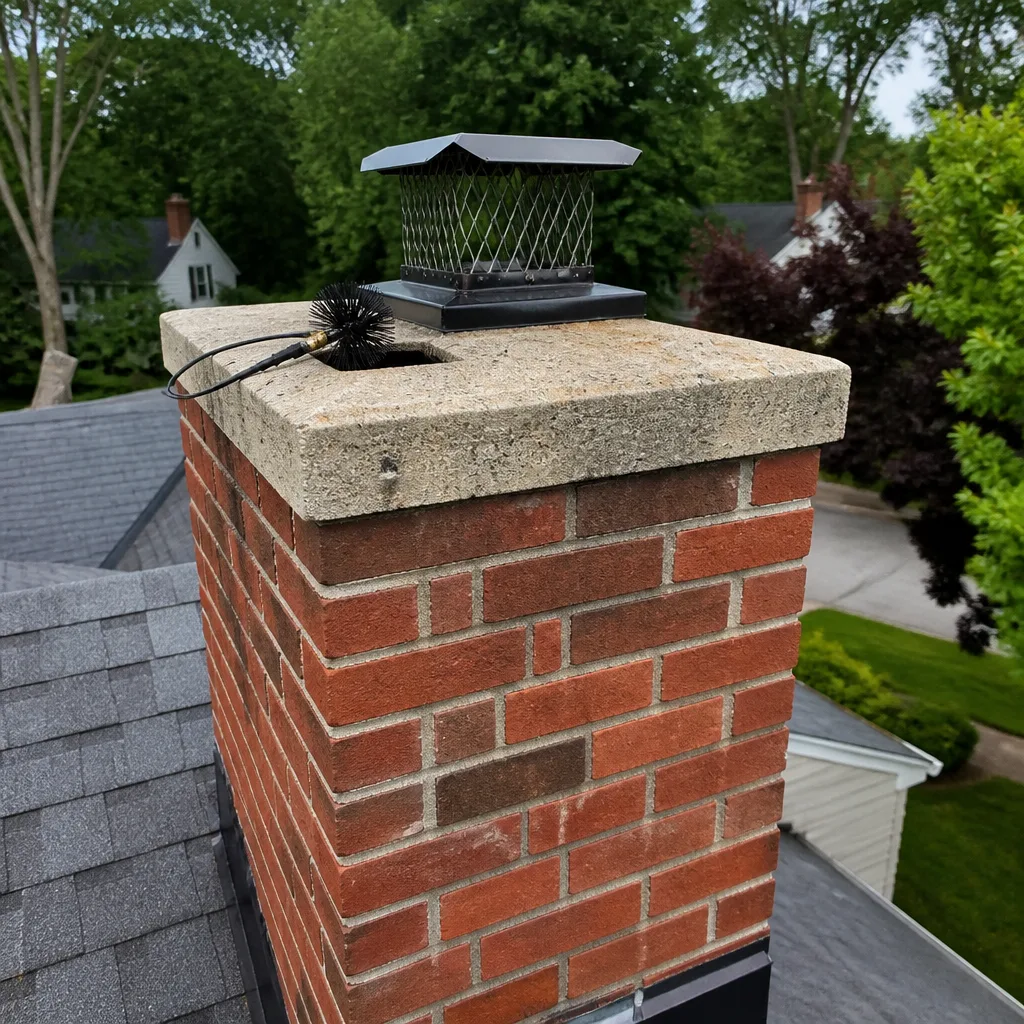 Sweep & inspection
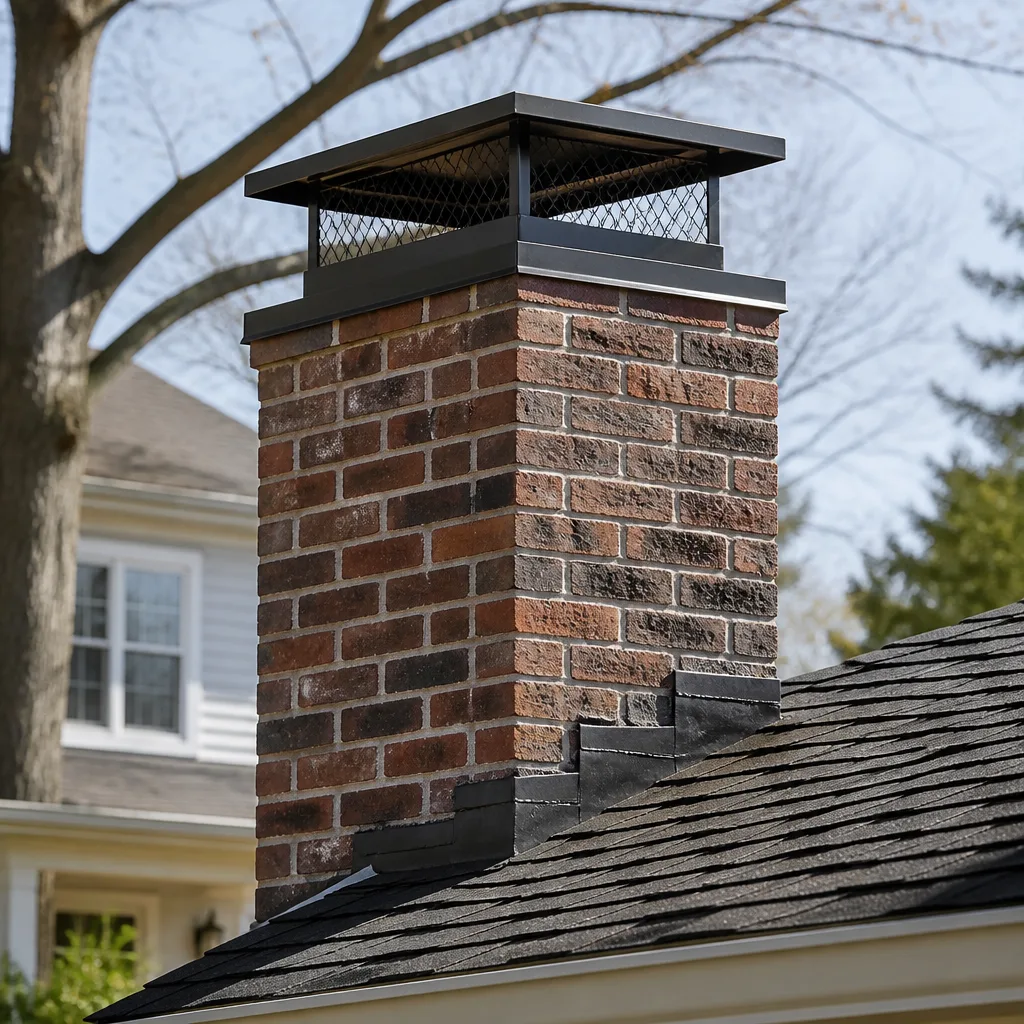 Caps & crowns
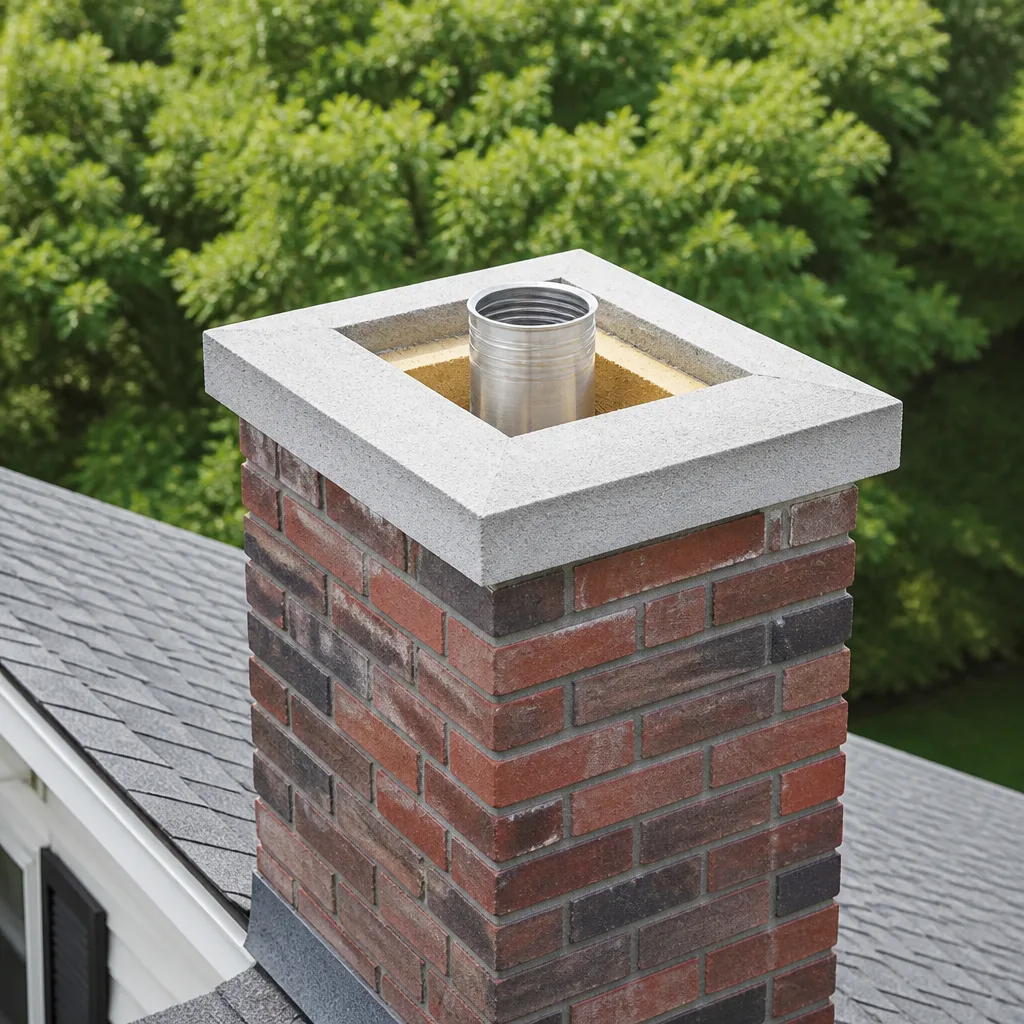 Flue relining
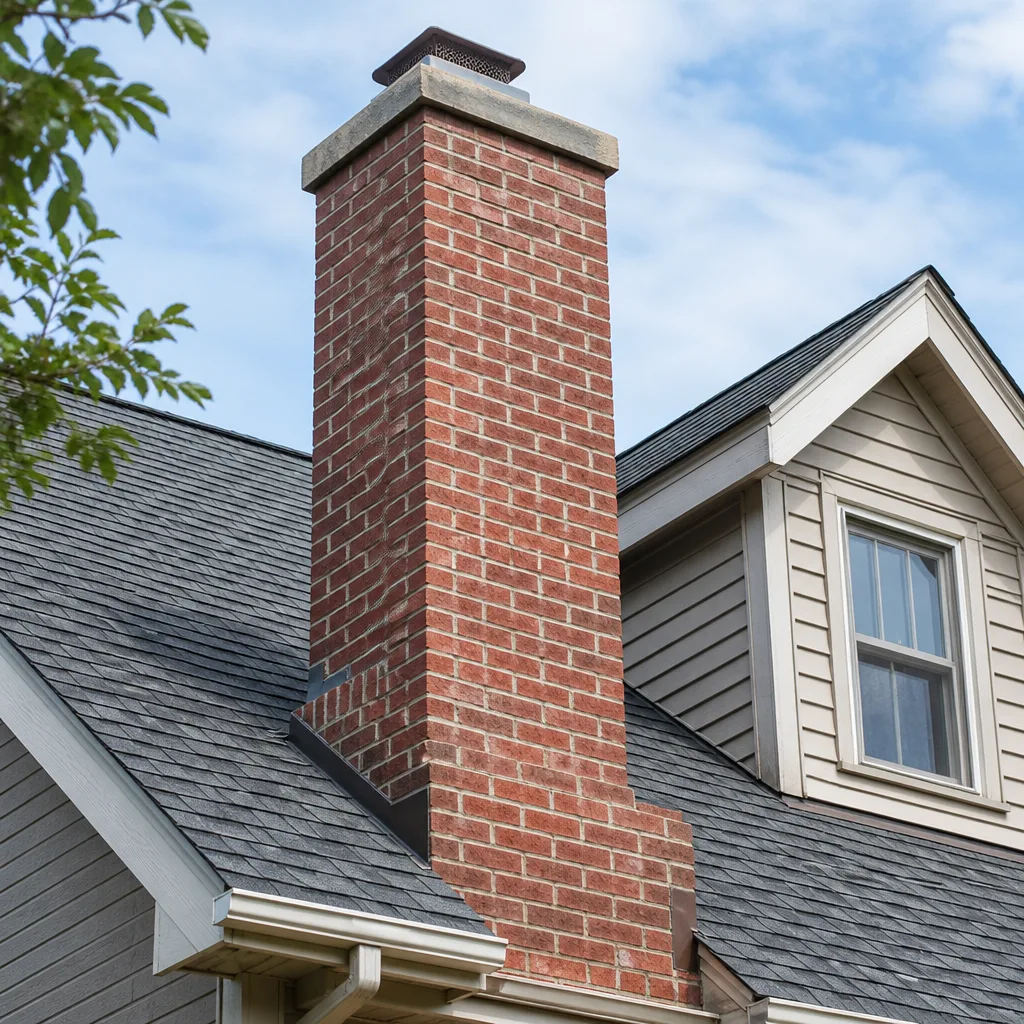 Masonry repair
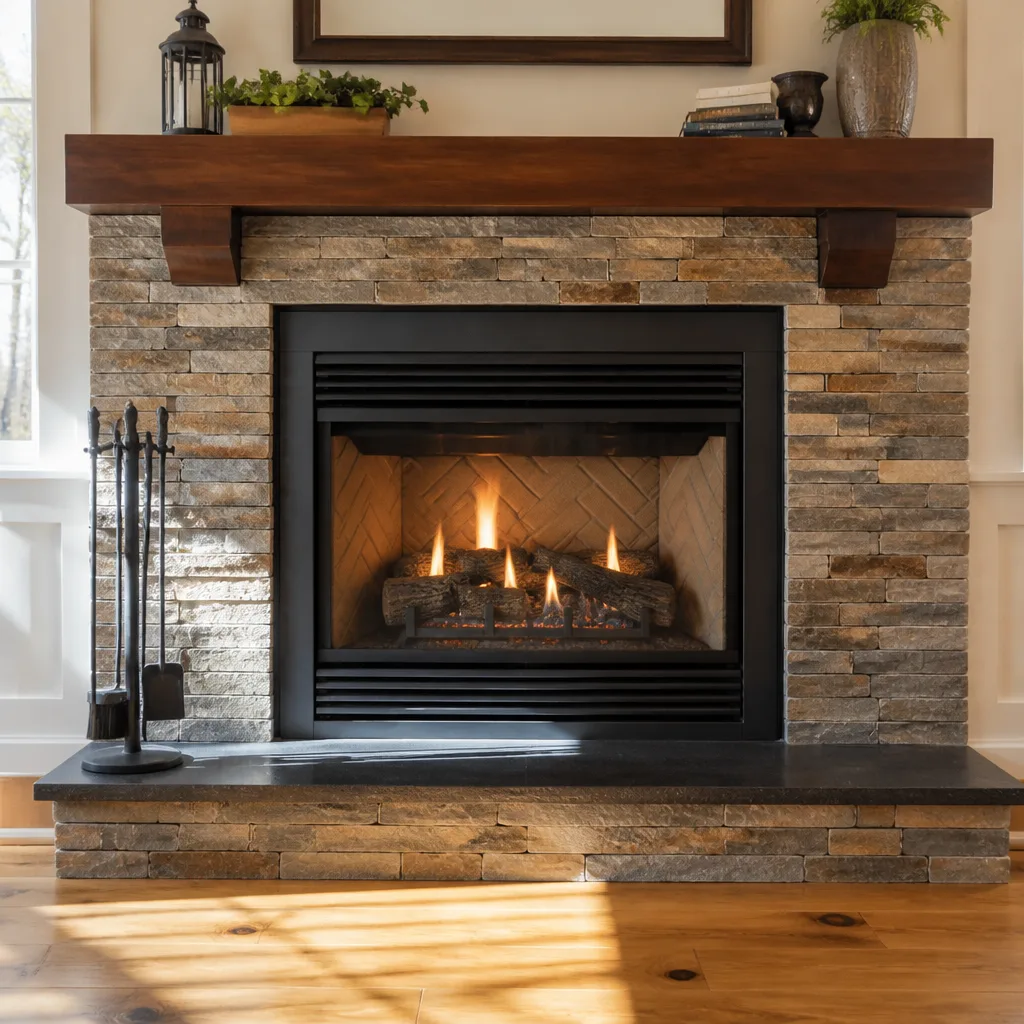 Gas fireplace service
Level 1 sweep and inspection to the NFPA 211 annual standard - flue, crown, cap, and flashing checked and photographed
Chimney sweep logs do not sweep chimneys. They loosen some creosote - which then falls where a brush and vacuum still have to collect it.
DIY vs Professional Chimney Cleaning: The Escondido Homeowner’s Decision Guide
Every fall, hardware store shelves in Escondido fill with chimney brushes marketed as money-savers, and every winter, we get calls from homeowners whose DIY efforts made things worse. The surprising truth: a brush pulled through a flue removes what you can see but tells you nothing about what you can’t. This guide walks through what a competent Escondido homeowner can safely handle, where the real risks hide, and why the DIY-versus-professional question is less about savings and more about sequence. For how to hire a chimney cleaning contractor in Escondido, see our step-by-step guide. You’ll learn what actually happens when a flue gets brushed without a camera inspection first, what equipment costs don’t show on the label, and where the line between maintenance and repair sits.
Styles & brands we work with
Quick Answer
For most Escondido homeowners, the honest answer is a hybrid: handle firebox ash removal and visible damper checks yourself, but leave flue brushing to a professional who runs a camera inspection before and after the work. A DIY brush can dislodge cracked tile fragments or reveal hidden gaps without you ever knowing until smoke backs up into the room. The $150-$300 you might spend on rod-and-brush equipment buys no inspection capability at all.
Table of Contents
- What DIY Chimney Cleaning Can Honestly Handle
- The Equipment Cost Reality Escondido Homeowners Don’t See
- The Sequence Problem: Why Brushing Before Inspecting Is Backward
- Escondido-Specific Risk Factors That Shift the Calculus
- The Hybrid Approach: What You Maintain, What We Handle
- What Professionals See That a Brush Never Will
- When Cleaning Reveals Repair: What Happens Next
- Common Mistakes to Avoid
- When to Call a Professional
- Frequently Asked Questions
- The Bottom Line
What DIY Chimney Cleaning Can Honestly Handle
A homeowner can do three things between professional visits, and all of them happen outside the flue itself. The firebox is fair game. Ash removal with a metal scoop and ash bucket is routine maintenance that needs no special training, and doing it before each burn season gives you a clear view of the firebrick. A damper check is also reasonable: open and close it fully, listen for smooth operation, and look for visible rust or warping. If the damper won’t seat or the handle feels gritty, that’s information worth having before you light the first fire.
The third task is a ground-level crown inspection. Walk around the house with binoculars and look at the concrete crown at the top of the chimney. Hairline cracks you can see from the ground are already larger up close. Spalling, which is concrete chipping away in flakes, means water is getting in. Escondido’s dry summers followed by winter rains create a freeze-thaw cycle that widens these cracks year over year. None of this requires climbing onto the roof. None of it requires touching the inside of the flue.
Here’s the honest boundary: anything below the damper is realistically maintainable by a homeowner. Anything above the damper requires either a ladder, a roof harness, or a camera. The flue is a vertical shaft hiding behind brick or framed chase, and whatever happens inside it is invisible from the firebox. A competent homeowner with a flashlight can spot obvious firebox damage. No homeowner without a camera system can assess flue liner condition. That distinction drives everything else in this guide.
The Equipment Cost Reality Escondido Homeowners Don’t See
Hardware store kits look economical because they price the brush, not the job. A decent rod-and-brush set runs $60-$120, but the rods flex under pressure and the brush itself is sized for a single flue dimension. Buy the wrong diameter and you’re either scraping the liner or leaving half the creosote behind. Add a rotary system with a drill attachment and you’re at $150-$300 for equipment that mimics what professional-grade systems do, minus the torque control and camera feedback.
What that $150-$300 does not buy:
- Inspection capability. No amount of brushing tells you whether the flue liner has cracks, gaps, or missing sections. The brush removes soot. Period.
- Creosote classification. Stage one creosote is flaky soot, stage two is tar-like glaze, and stage three is hardened, shiny, and highly flammable. Only stage one responds well to homeowner brushing. Stage three requires chemical treatment or rotary chains.
- Access to the full flue height. Most DIY brushes reach 15-25 feet before rod flex makes effective contact unreliable. Escondido homes built in the 1980s and earlier often have chimneys running 25-35 feet.
- Documentation. Insurance companies in wildfire-prone San Diego County increasingly ask for proof of professional cleaning and inspection. A receipt for a brush set from a big-box store does not satisfy that requirement.
We use professional product systems, not hardware substitutes. When a liner needs relining, we specify DuraFlex flexible liner systems because they’re what working chimney contractors rely on. When a liner has moderate damage, HeatShield restoration compound can sometimes resurface the flue without a full relining. Homeowner-grade equipment has no equivalent for either path.
The Sequence Problem: Why Brushing Before Inspecting Is Backward
The specific DIY risk professionals flag most isn’t the effort. It’s the order of operations. Here’s what we mean.
Imagine a chimney built in 1978. The clay tile liner has been heating and cooling for nearly five decades. Escondido’s winter temperature swings, occasional seismic activity, and the simple fact that clay tiles expand at different rates than surrounding masonry mean that hairline fractures are likely. A homeowner threads a brush up the flue. The brush catches the edge of a loose tile fragment. The fragment dislodges and drops, landing in the smoke shelf or, worse, wedging itself sideways in the flue. The homeowner sees nothing from below. The firebox still looks clean. The chimney still draws, at first. Then smoke backs up into the living room two months later, and the homeowner is calling us anyway, now with a blocked flue on top of whatever else the brushing missed.
Brushing a flue without inspecting it first is like sanding a wall without finding the studs. The brushing might go fine. Or it might disturb something that was holding, in the wrong direction. A camera run before brushing shows the tile condition, identifies loose sections, and tells us whether mechanical brushing is even safe for that particular flue. Sometimes the correct sequence is inspection, chemical treatment, then gentle brushing. Sometimes it’s inspection, then relining, with no brushing at all because the liner is past saving.
The homeowner who buys a brush online has no way to make that call. The professional who runs a camera first does. That’s the difference, and it’s the reason we run a camera on every sweep before a brush touches the flue.
Escondido-Specific Risk Factors That Shift the Calculus
Escondido sits in a fire-risk zone that changes what seasonal chimney cleaning care means. The city’s location in the San Dieguito River Valley, surrounded by chaparral and dry hillsides, means wildfire preparedness isn’t theoretical. Winds push embers into neighborhoods, and a chimney with creosote buildup or a compromised spark arrestor becomes an ignition point. Insurance carriers writing policies in Escondido and greater San Diego County have tightened documentation requirements. Many now ask homeowners to provide proof of professional chimney inspection before renewal, especially for homes in the higher-risk interface zones.
Escondido’s climate also plays a role. We get hot, dry summers followed by rainy winters. The cycle stresses masonry. Chimneys that look fine in August can develop cracks by February, and water intrusion through a cracked crown or spalled brick accelerates liner deterioration. A flue that was clean last year can have hidden damage this year. The homeowner who only brushes creosote is treating the symptom, not the system.
Older Escondido neighborhoods bring their own factors. Homes in the historic core, particularly those built before the 1960s, often have unlined or partially lined chimneys. Pre-WWII construction sometimes used mortar-parged flues with no clay tile at all. These systems need a professional eye, period. Brushing a parged flue with a stiff wire brush can take the parge coating off the wall and expose raw masonry. The action that feels like cleaning is actually stripping the flue.
Dryer vents belong in the same conversation. Lint buildup in a dryer vent is a house-fire hazard on par with creosote, and Escondido’s dry air makes lint especially volatile. A homeowner can clean the first few feet of a visible dryer duct, but the full run through walls, attics, or crawl spaces needs a professional with a rotary brush and video verification. We treat dryer vent cleaning as a core service, not an add-on, because lint fires don’t care whether the ignition point is a fireplace or a laundry room.
The Hybrid Approach: What You Maintain, What We Handle
The practical answer for most Escondido homeowners is a division of labor. Some tasks are genuinely yours. Others are genuinely ours. The line between them is drawn by equipment, access, and consequence.
Your tasks between professional visits:
- Firebox ash removal. Scoop ashes into a metal container with a tight lid. Store the container outside, away from the house, for at least three days before disposal. Embers survive longer than they look.
- Visible damper checks. Open and close the damper fully each month during burn season. Note stiffness, rust, or failure to seat.
- Ground-level crown and cap observation. Use binoculars or a phone camera on zoom. Look for cracked concrete, missing mortar joints, or a missing spark arrestor screen.
- Burn-season wood storage. Keep firewood at least 30 feet from the house in Escondido’s fire-prone landscape. Elevate it off the ground and cover only the top, not the sides.
Our tasks during annual or semi-annual visits:
- Videoscoped flue inspection. Camera run before and after cleaning to document liner condition and verify no blockages.
- Creosote classification and removal. Stage one gets brushes. Stage two gets chemical treatment. Stage three gets rotary chains and careful scraping, always with an eye on whether the liner can handle it.
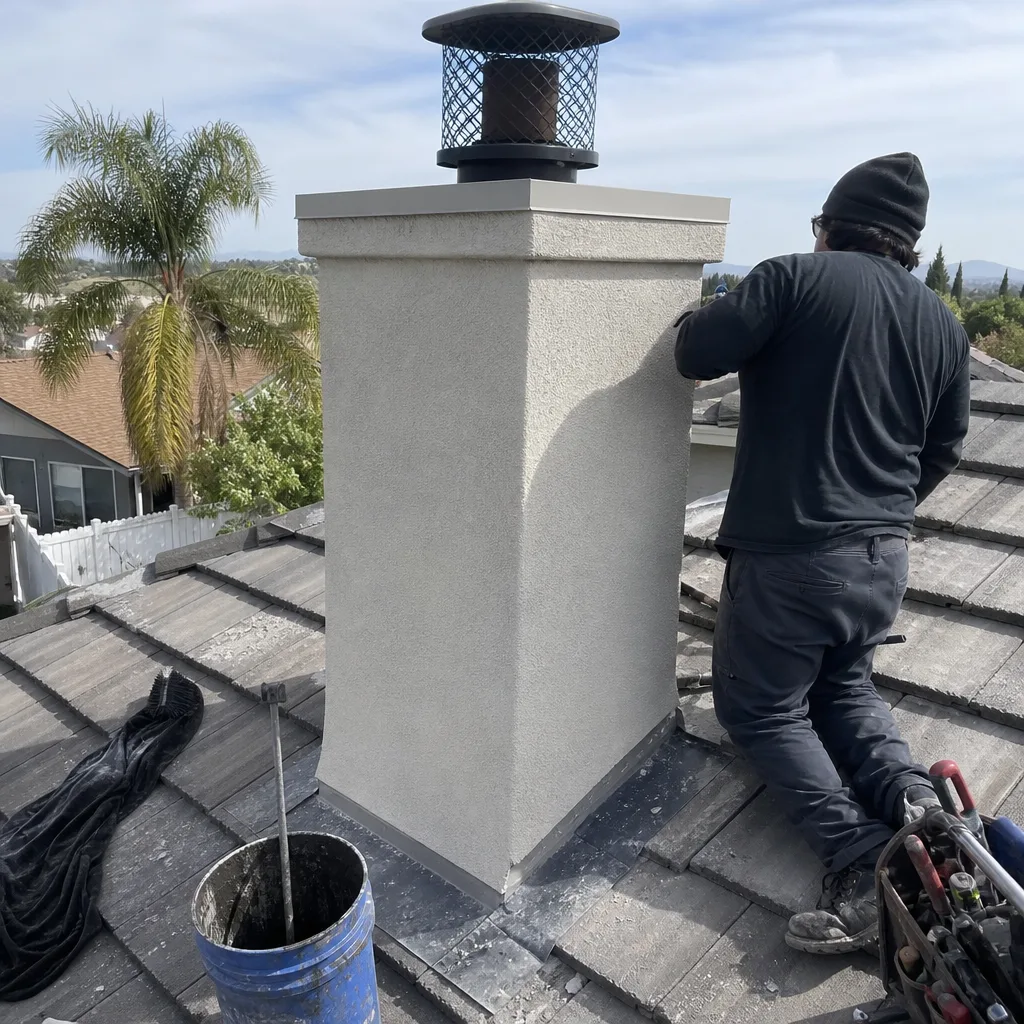
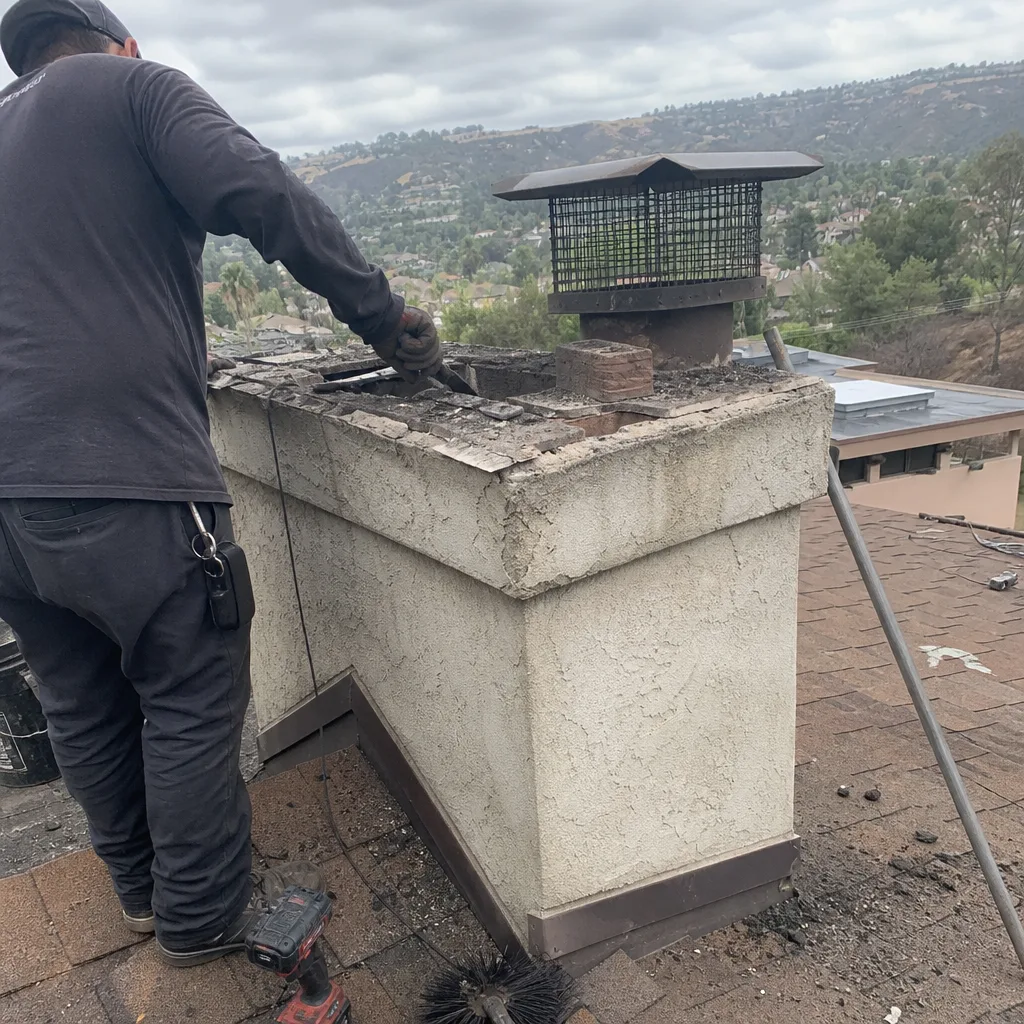
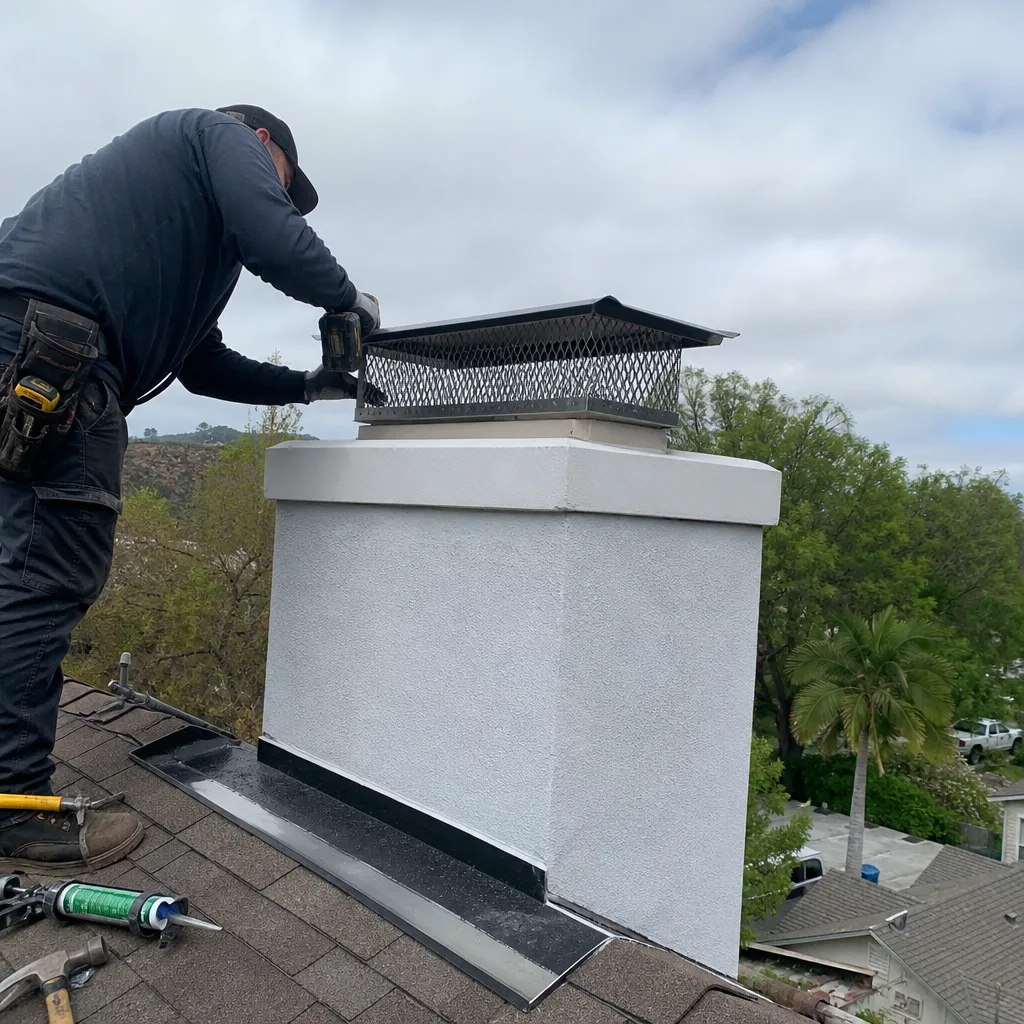
- Crown and cap assessment. Up-close inspection of the concrete crown, mortar joints, and spark arrestor. Repairs are handled with professional-grade components, including Copperfield caps and dampers.
- Dryer vent cleaning. Rotary brush through the full duct run with video verification at the end. This is a fire-safety service, not a courtesy.
The hybrid costs less than people expect. Most Escondido homeowners spend $250-$450 per year on professional chimney service, depending on the flue length and condition. For a detailed chimney cleaning cost breakdown, see our 2026 reference. The $150-$300 saved by skipping it disappears quickly if a damaged liner goes undetected and the repair bill lands in the $3,000-$7,000 range. That’s the equation the equipment price tag never shows.
What Professionals See That a Brush Never Will
We’ve swept chimneys in Escondido for years, and the camera feed tells the real story every time. Here’s what a professional inspection routinely turns up, even in fireplaces that “work fine.”
- Hairline liner fractures. These are invisible from the firebox and often produce no symptoms at all. Over time, heat and moisture widen them into gaps. Carbon monoxide moves through gaps.
- Smoke shelf buildup. The smoke shelf catches debris that the brush can push upward but not remove. Camera inspection shows the pile.
- Improper prior repairs. We’ve found chimney crowns patched with roof tar, flue sections connected with hardware-store stove pipe, and spark arrestors attached with drywall screws. None of it visible from the ground.
- Animal entry. Squirrels, birds, and raccoons use uncapped or damaged caps. A camera sees the nest before smoke pushes it into the house.
- Dryer vent disconnects. Flex duct pulled loose inside a wall cavity, lint pouring into the chase. The dryer still works. The wall is filling with fuel.
None of this is scare-selling. It’s the ordinary reality of flues that haven’t been inspected recently. Escondido’s older housing stock means these findings are more common here than in newer subdivisions. The homeowner who brushes the flue themselves removes some soot. The homeowner who gets a camera inspection learns what’s actually happening inside the system. Those are two different services, and only one of them is available from a hardware store.
This is where Oakleaf Chimney Sweep home fits into the picture. We built the company around the idea that sweeping is only useful when paired with real inspection and real repair capability. We run a camera before and after every sweep, and if we find damage during the cleaning, we have the repair capability to address it on the spot. No referral to a separate contractor, no second visit, no gap between diagnosis and fix.
When Cleaning Reveals Repair: What Happens Next
Every chimney sweep occasionally finds something that needs more than a brush. What separates a professional service from a brush-only operator is what happens in that moment.
Suppose the camera shows a clay tile liner with multiple cracks but the flue is structurally sound. That’s the situation HeatShield liner restoration was built for. We can resurface the inside of the flue with ceramic restoration compound, closing gaps and restoring a smooth, insulated surface without the cost of a full relining. We’ll tell you honestly whether your situation qualifies for HeatShield or whether it needs a full DuraFlex relining instead. The decision comes from the camera footage, not from a preference for the more expensive option.
Suppose the camera shows a damaged cap or damper. We work with Copperfield and Gelco components, industry-standard brands that fit properly and last. Hardware-store substitutes don’t integrate with existing flue dimensions and often fail within a year or two. The professional product choice is the difference between a fix that holds and a fix that becomes next year’s surprise.
And suppose the problem isn’t the chimney at all. A homeowner calls about a smoky fireplace, and the camera reveals the real issue is a dryer vent packed with lint feeding into the same chase. One company, one visit, both problems addressed. That’s why we offer Dryer Vent Cleaning in San Marcos as a standalone service and as part of the same safety conversation. The flue and the dryer vent are both combustion ventilation. They fail for the same reasons and they’re both worth treating seriously.
Repair capability on every sweep call means the specialist who finds the problem can fix it. There’s no gap where the homeowner is left with a written report and a phone number for someone else. That’s the practical difference between a full-service chimney company and a brush-for-hire.
Common Mistakes to Avoid
- Brushing a flue without inspecting it first. A brush can dislodge a loose tile fragment or strip a parged liner. Camera first, brush second, always.
- Using a wire brush on a clay tile liner with existing cracks. The wire catches the crack edges, widens them, and turns a repairable liner into a replacement candidate.
- Skipping the dryer vent because the fireplace draws fine. Lint fires don’t announce themselves. A dryer vent can be 80% blocked and still dry clothes, just slower and hotter.
- Assuming a missing spark arrestor is cosmetic. In Escondido’s wildfire exposure zones, an uncapped chimney is an ember intake. It’s also how squirrels and birds get in.
- Burning green or treated wood to save money. Green wood produces heavy creosote. Treated wood releases chemicals that accelerate liner corrosion. Both lead to problems a brush can’t fix.
- Thinking a chimney that hasn’t been used doesn’t need service. The damage happens whether or not you burn. Water intrusion, seismic settling, and animal activity continue year-round.
When to Call a Professional
Call a professional when you smell smoke inside the house during or after a fire, when you see visible creosote buildup thicker than a nickel, when you hear animals in the chimney, when you’ve never had a camera inspection and don’t know the liner condition, when your insurance company asks for documentation, or when you know the chimney hasn’t been serviced in over a year. In Escondido, the question isn’t whether to have the flue inspected. It’s whether you want to see the footage yourself. Chimney Sweep in San Marcos covers the same protocols, and if you’re in Escondido, Oakleaf Chimney Sweep offers free estimates. Call (855) 362-1450 and we’ll schedule the camera inspection. If you’d like, we’ll walk you through the footage while it’s on the screen so you can see exactly what we’re seeing.
Frequently Asked Questions
Most Escondido homeowners pay between $250 and $450 for a professional chimney sweep with a videoscoped inspection, depending on flue length and creosote stage. The range covers a standard single-flue masonry chimney with stage one or two creosote. Homes with longer flues, stage three creosote, or multiple fireplaces land at the higher end. To get an exact quote for your chimney, call (855) 362-1450. Estimates are free, and the price you’re quoted before booking is the price you pay.
You can remove soft soot from a fireplace with a brush kit, but you cannot inspect the flue, classify the creosote, or determine whether the liner is safe to brush. In Escondido’s older homes, where cracked tiles and unlined flues are common, brushing without a camera inspection can dislodge damage and make a situation worse. The tools for homeowner maintenance are an ash scoop and a flashlight. The flue belongs to a professional with a camera.
The National Fire Protection Association standard is an annual inspection, with sweeping performed when creosote reaches 1/8 inch of buildup or there’s visible glaze. For Escondido homeowners who burn more than three cords per season or burn softwoods like pine, semi-annual sweeping is often justified. Gas fireplaces produce little creosote but still warrant an annual inspection for venting and cap condition. Call (855) 362-1450 to schedule a sweep and inspection on a schedule that fits your burn rate.
Not always. A single hairline crack in an otherwise sound clay tile liner may be a candidate for HeatShield restoration, which resurfaces the flue interior without a full relining. Multiple cracks, gaps, or missing sections typically require a DuraFlex stainless relining. The right call comes from camera footage, not from a preference for either option. We’ll show you the footage and explain why your specific flue falls on one side or the other.
Yes. Lint is highly combustible, and a restricted dryer vent makes the dryer run hotter, which ignites the lint. The leading cause of home dryer fires is failure to clean the vent. The mechanics are similar to creosote: fine particles coat the duct interior, airflow drops, temperature rises, and ignition follows. Dryer vent cleaning deserves the same annual schedule as chimney sweeping. We treat it as a core fire-safety service, not a courtesy call.
Coverage depends on your policy and whether the damage resulted from a sudden event or from deferred maintenance. Most standard policies exclude gradual deterioration. What insurers increasingly care about in Escondido and throughout San Diego County is documentation. A professional inspection report showing the flue was swept and inspected on schedule strengthens any claim. A paper trail of service protects you. A hardware store receipt for a brush set doesn’t. Call (855) 362-1450 to schedule an inspection that produces the documentation your carrier expects.
The Bottom Line
The DIY-versus-professional chimney cleaning decision comes down to an honest dividing line. Homeowners can maintain firebox cleanliness, damper function, and ground-level crown observation. The flue itself, the part that carries smoke and heat through your house, needs a camera before a brush. Escondido’s fire-zone insurance requirements and older housing stock make professional inspection more consequential here than in most markets. The equipment savings from a $150 brush kit evaporate the moment a hidden crack becomes a repair. The smart move is a hybrid: handle the simple tasks yourself, get a professional camera inspection annually, and call Chimney Repair in San Marcos or your local full-service chimney company the moment the footage shows something wrong.
Written by the team at Oakleaf Chimney Sweep, serving Escondido since 2016. Explore more guides & resources on our blog.
See the difference
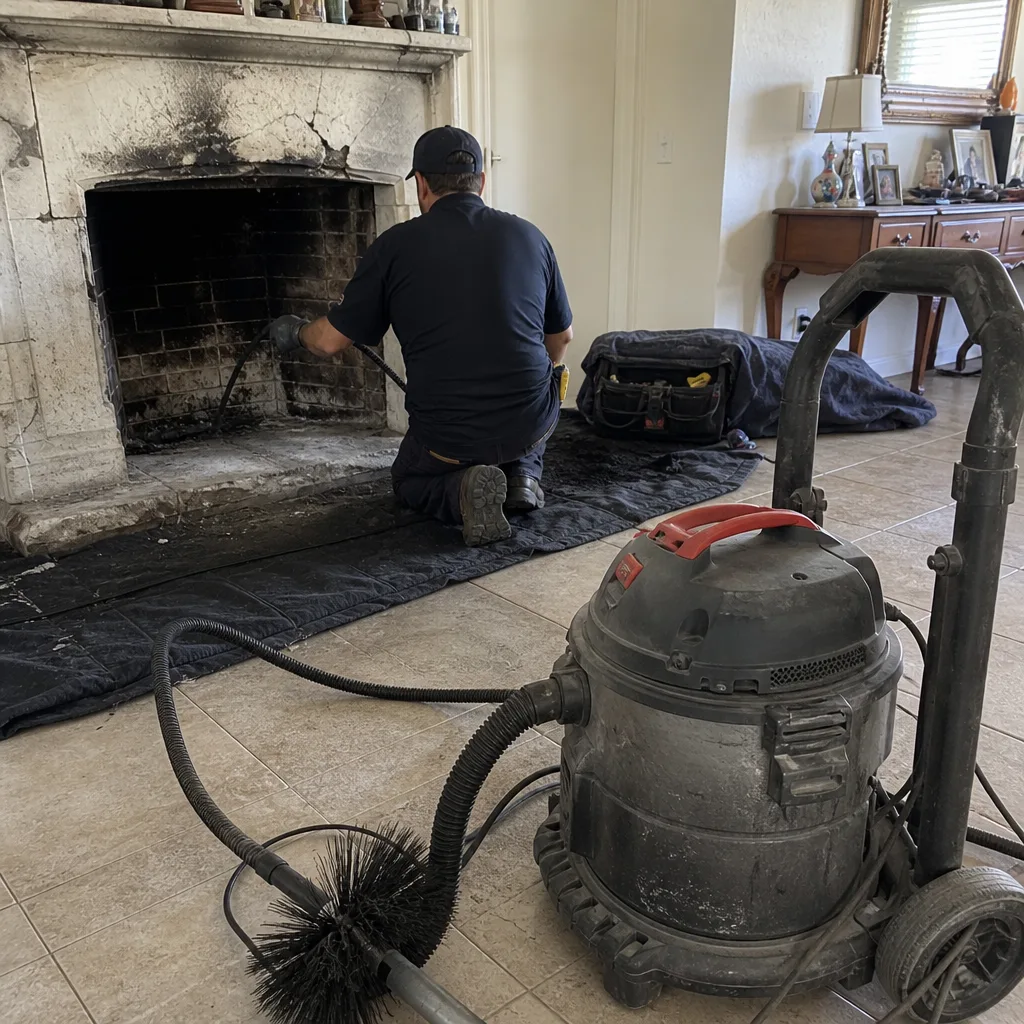 Before
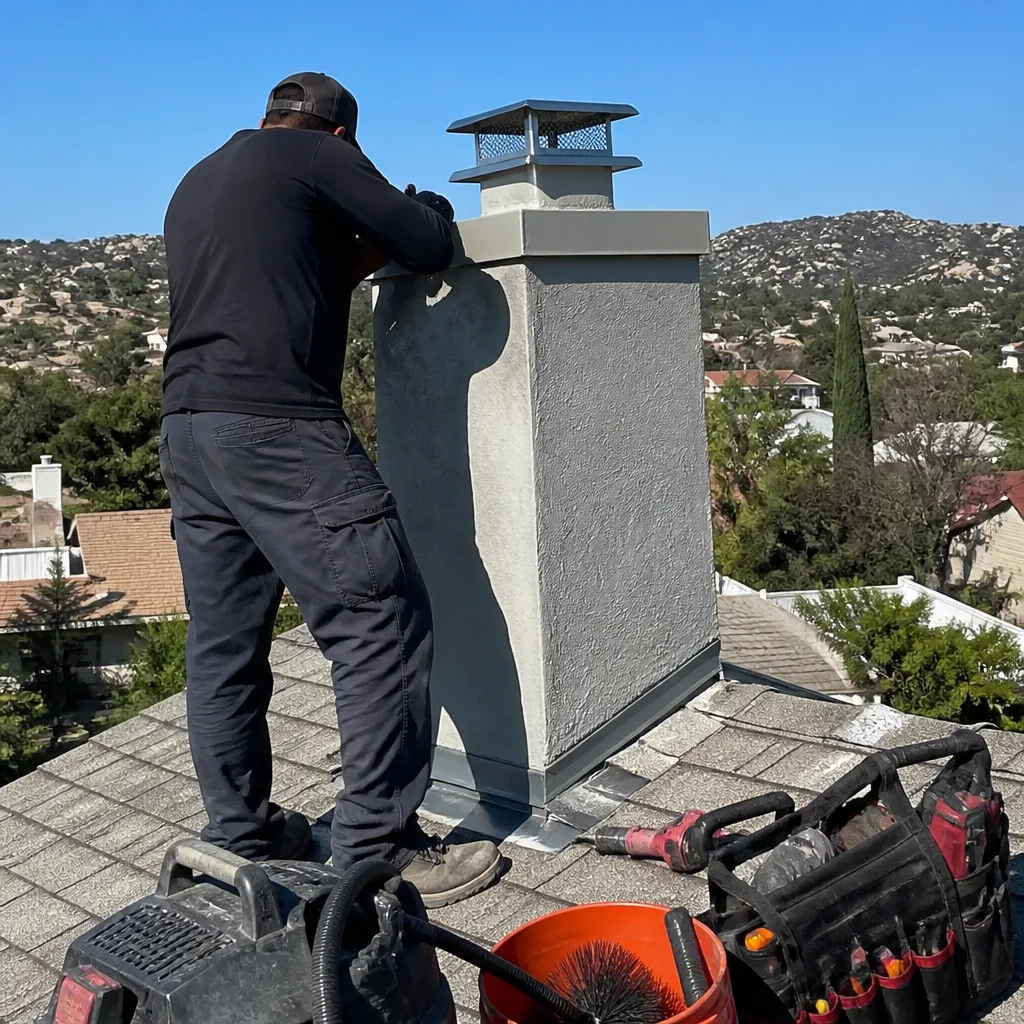 After
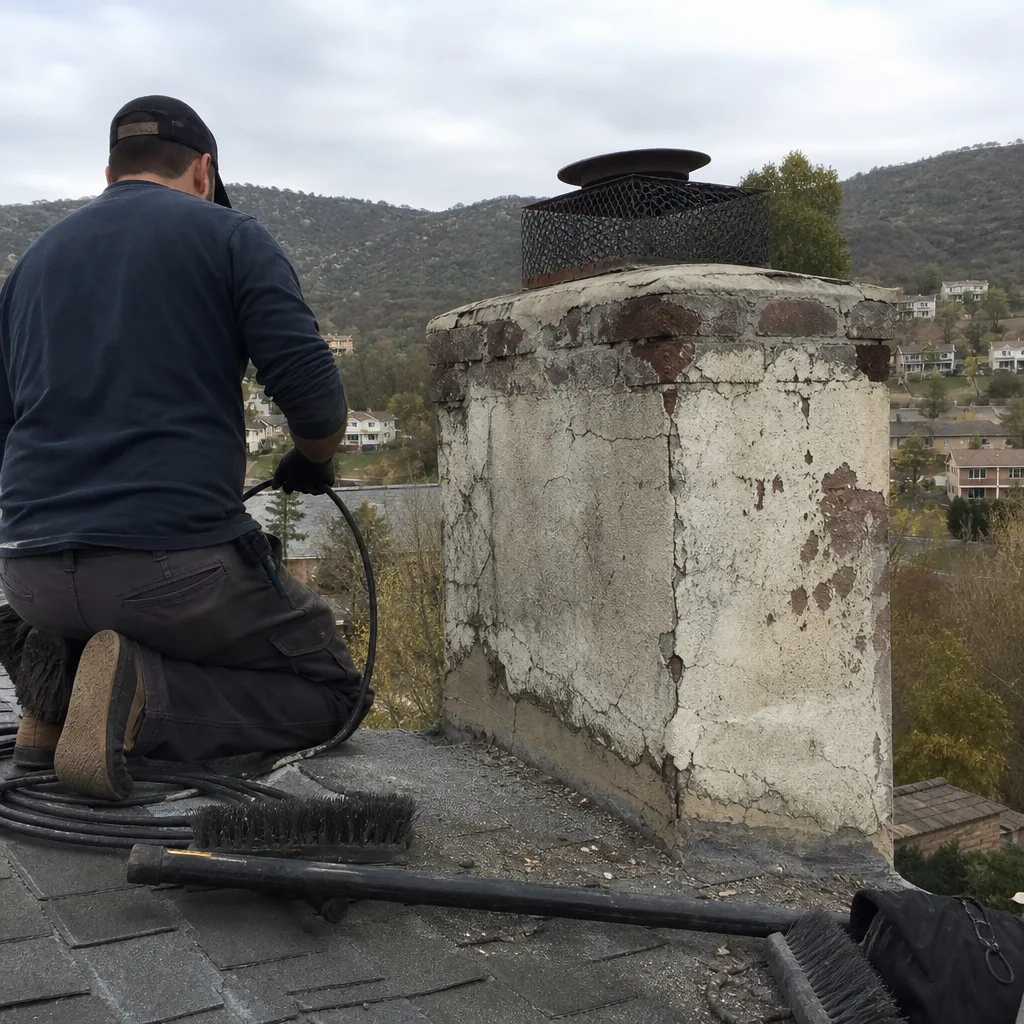 Before
 After
 Before
 After