
Last updated October 31, 2026
 Sweep & inspection
 Caps & crowns
 Flue relining
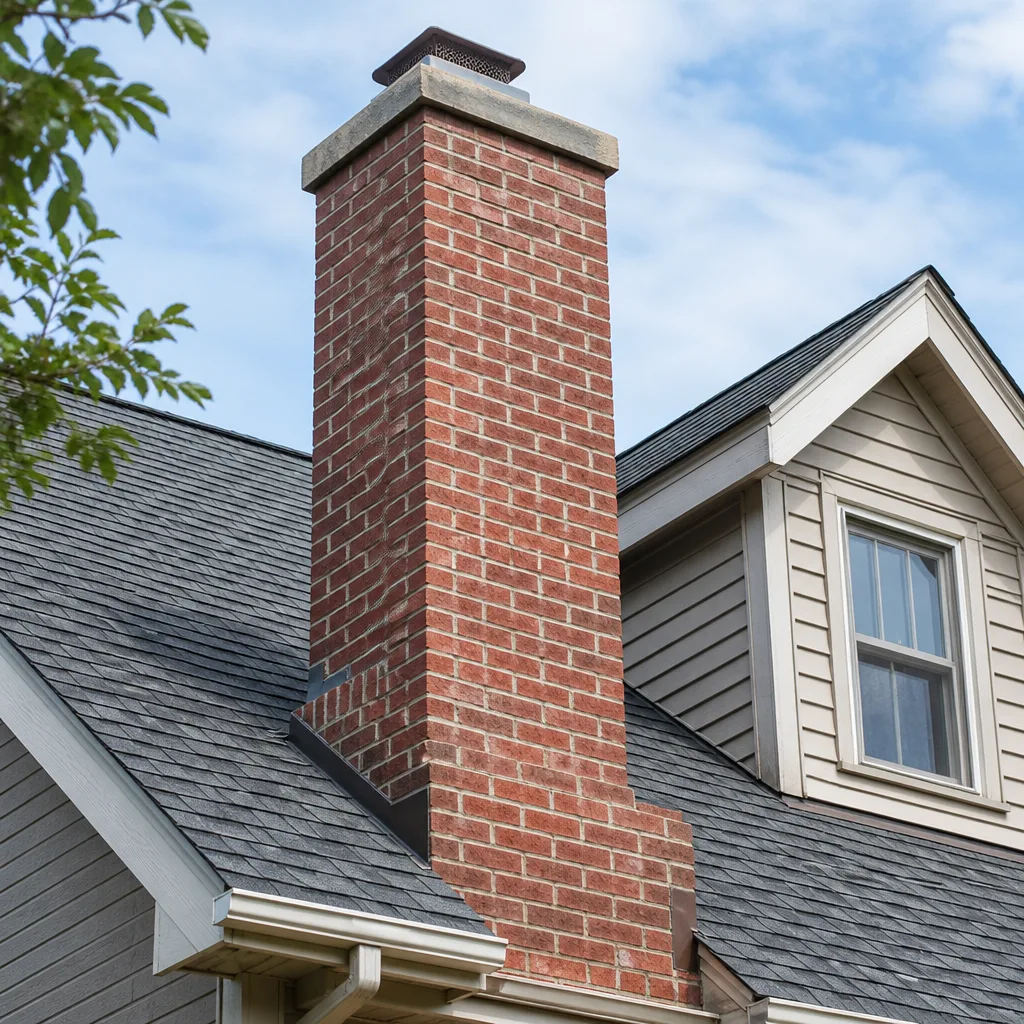 Masonry repair
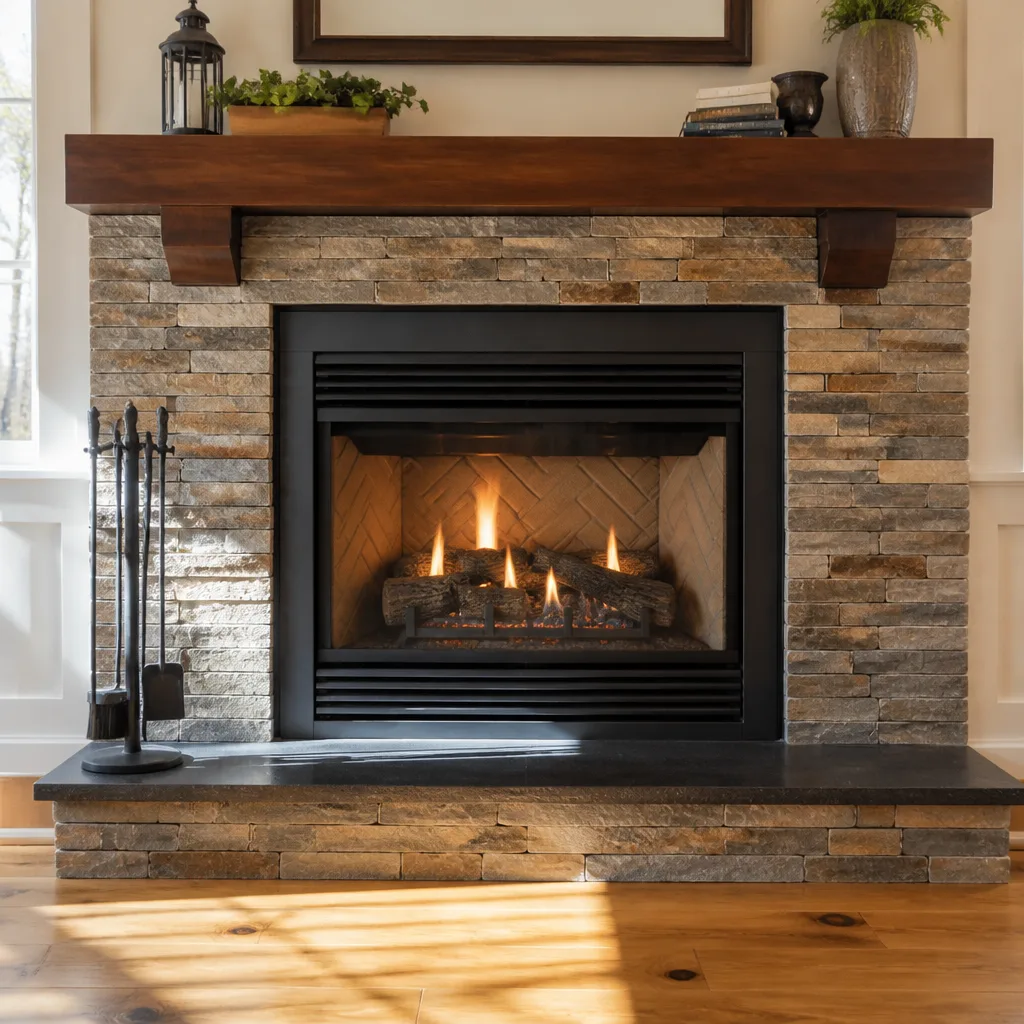 Gas fireplace service
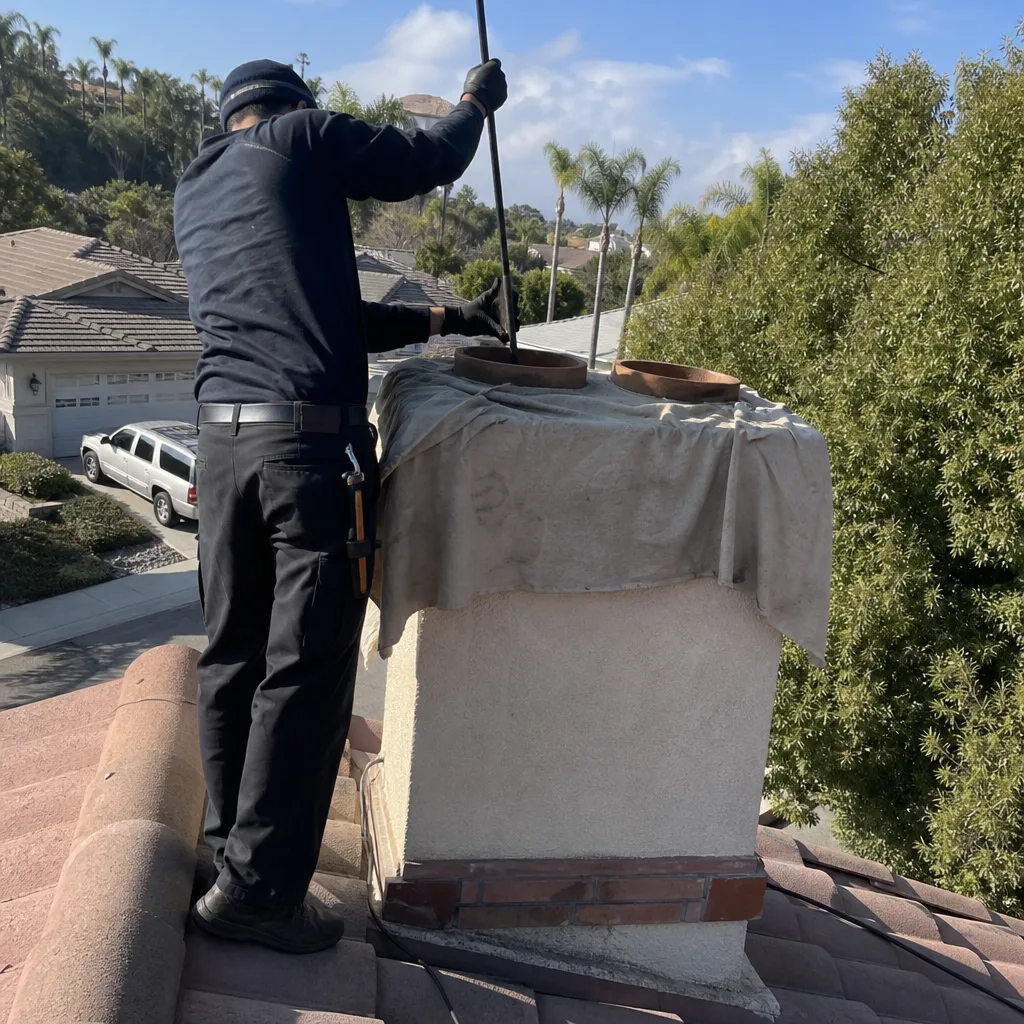
Level 1 sweep and inspection to the NFPA 211 annual standard - flue, crown, cap, and flashing checked and photographed
Chimney sweep logs do not sweep chimneys. They loosen some creosote - which then falls where a brush and vacuum still have to collect it.
Chimney Cleaning Emergency Preparedness Guide for Escondido Homes
Cal Fire’s incident maps show a pattern most Escondido homeowners never connect to their fireplace: homes with uncertified or unmaintained chimney conditions get flagged at higher risk during red flag events, and that flag follows you into your insurance file whether or not a fire ever reaches your street. This guide—along with our Chimney Cleaning Warning Signs: A Escondido Homeowner’s Reference Guide—breaks down what chimney emergency preparedness actually means in a wildfire corridor like Escondido, from the 90 seconds you have during a chimney fire to the documentation your adjuster will ask for after any event. You’ll learn the specific sounds and heat behaviors that signal trouble, why ember intrusion through an uncapped flue is a greater statistical threat than a visible flame, and which inspection records belong in your file before fire season starts.
Styles & brands we work with
Quick Answer
Chimney emergency preparedness for Escondido homes means knowing your flue’s inspection status before fire season, having the documentation to prove it, and understanding the specific failure points (uncapped flues, cracked liners, glazed creosote) that become ignition risks during red flag wind events. The two actions that matter most: an annual Level 1 or Level 2 inspection with a dated report on file (see Chimney Cleaning Permits, Codes & Inspections in CA: What You Need to Know), and a properly fitted spark arrestor cap that resists ember intrusion through the chimney top.
Table of Contents
- What a Chimney Fire Looks and Sounds Like From Inside the Home
- The 90-Second Response Protocol: What to Do While You Wait
- How Ember Intrusion Works Through Damaged or Uncapped Chimney Tops
- The Insurance Documentation Every Escondido Homeowner Needs Before Fire Season
- Post-Event Protocol: What to Check Before Relighting
- Why Escondido’s Climate Creates a Different Chimney Risk Profile
- A Maintenance Schedule That Matches Escondido’s Fire Calendar
- Common Mistakes to Avoid
- When to Call a Professional
- Frequently Asked Questions
- The Bottom Line
What a Chimney Fire Looks and Sounds Like From Inside the Home
A chimney fire does not sound like a crackling fireplace. It sounds like a freight train rumbling through your flue, or a low roar that grows steadily louder, sometimes accompanied by a rhythmic thumping as burning creosote expands and breaks apart against the flue walls. Homeowners describe it as a jet engine spooling up somewhere inside the walls, not a cozy pop and hiss from the hearth. From outside, neighbors may see dense black smoke pouring from the chimney top or flames shooting several feet above the cap, but from inside the living room, the most reliable indicators are sound, heat, and the sudden draft reversal that makes the fireplace begin smoking back into the room.
Heat behavior matters for the same reason. A normal fire with the damper open and a clean flue should feel warm within two or three feet of the hearth, not hot on the mantle, and certainly not hot on the wall above the fireplace. If you can hold your hand against the wall above the firebox and it feels more than comfortably warm, something is transferring heat where it should not be. In our inspection work across San Diego County, we find that homeowners most often dismiss the early warning signs because they have no baseline for what normal chimney heat feels like. If the sound changes suddenly or keeps escalating, treat that as an active fire event, not a wood-quality issue.
One critical distinction: a chimney fire does not announce itself with visible flames in the firebox. You will typically see only the fire you built, burning normally, while the actual hazard is happening in the flue above you. The telltale signs are auditory and thermal. If you hear a roar that rises when you open the damper fully and subsides when you close it partially, you are hearing combustion inside the flue, not just draft noise. That damper response is diagnostic: normal draft noise does not surge and fade based on oxygen the way an actual fire does.
The 90-Second Response Protocol: What to Do While You Wait
The chimney industry teaches a specific response sequence for active chimney fires, and the order matters more than most homeowners realize. Here is the protocol we train our technicians to teach, adapted for what actually happens in a living room during the first 90 seconds:
- Close the damper immediately, but do not latch it. Cutting off oxygen from below will not usually extinguish a chimney fire by itself, but it slows the draft that is feeding it, and that slowdown is the single biggest thing you can do to reduce the intensity while help arrives.
- Suppress the fire in the firebox. If you have a fire extinguisher rated for Class A, use it on the logs. If you do not, close the glass fireplace doors if you have them. Do not pour water into a hot fireplace unless it is the only option; the thermal shock can crack firebrick and, in some cases, create a steam burst that spreads burning material into the room.
- Call 911 from outside the home. This is not a call you make from the couch while watching the fire. Get everyone out of the house first, then call. Escondido Fire Department response times are solid in the valley floor neighborhoods, but the hillside communities near Lake Wohlford Road and the unincorporated edges of the city can see longer arrival times.
- Do not open the chimney cleanout door. If your fireplace has an ash dump or cleanout door at the base of the flue, leave it closed. Opening it introduces a blast of fresh air directly into the hottest part of the system, and that is how confined chimney fires become structure fires.
- Monitor the chimney chase and attic. While waiting for the fire department, if you can safely access the interior wall around the chimney, place your palm flat against it at multiple heights. Any spot that feels hot to the touch indicates heat is already penetrating the flue liner into the structure, and the fire department needs to know that immediately upon arrival.
One note we always include, because it genuinely matters: the damper closes but never seals. Its job is draft regulation, not airtight containment, so closing it will not starve a chimney fire. It will, however, reduce the fresh oxygen moving upward through the flue and slow the burn rate enough to buy meaningful response time. Treat the closed damper as a suppression aid, not a suppression system.
How Ember Intrusion Works Through Damaged or Uncapped Chimney Tops
The most common chimney-related structure loss during Southern California wind events is not a chimney fire at all. It is ember intrusion through an uncapped, under-capped, or corroded chimney top. During red flag conditions in the Escondido area, wind-driven embers can travel a mile or more from the active fire line, and when they land on a roof, they look for entry points. An open flue with no spark arrestor is a direct vertical shaft into your home’s most combustible horizontal surface: the creosote-laden flue walls and any accumulated debris at the smoke shelf.
Here is how the mechanics work. An ember riding a 40 mile-per-hour wind does not need to travel down the flue to cause a fire. It needs to lodge somewhere that holds it against a combustible surface long enough to transfer heat into that surface. The spark arrestor screen on a properly fitted cap exists not to block every ember (at the mesh sizes required by code, very small ones can still pass), but to break the wind pattern at the flue opening and prevent the ember from being carried down into the chimney with enough force to reach the smoke shelf. Most embers that pass through an arrestor screen land harmlessly in the flue and burn out on the ceramic or metal surface below.
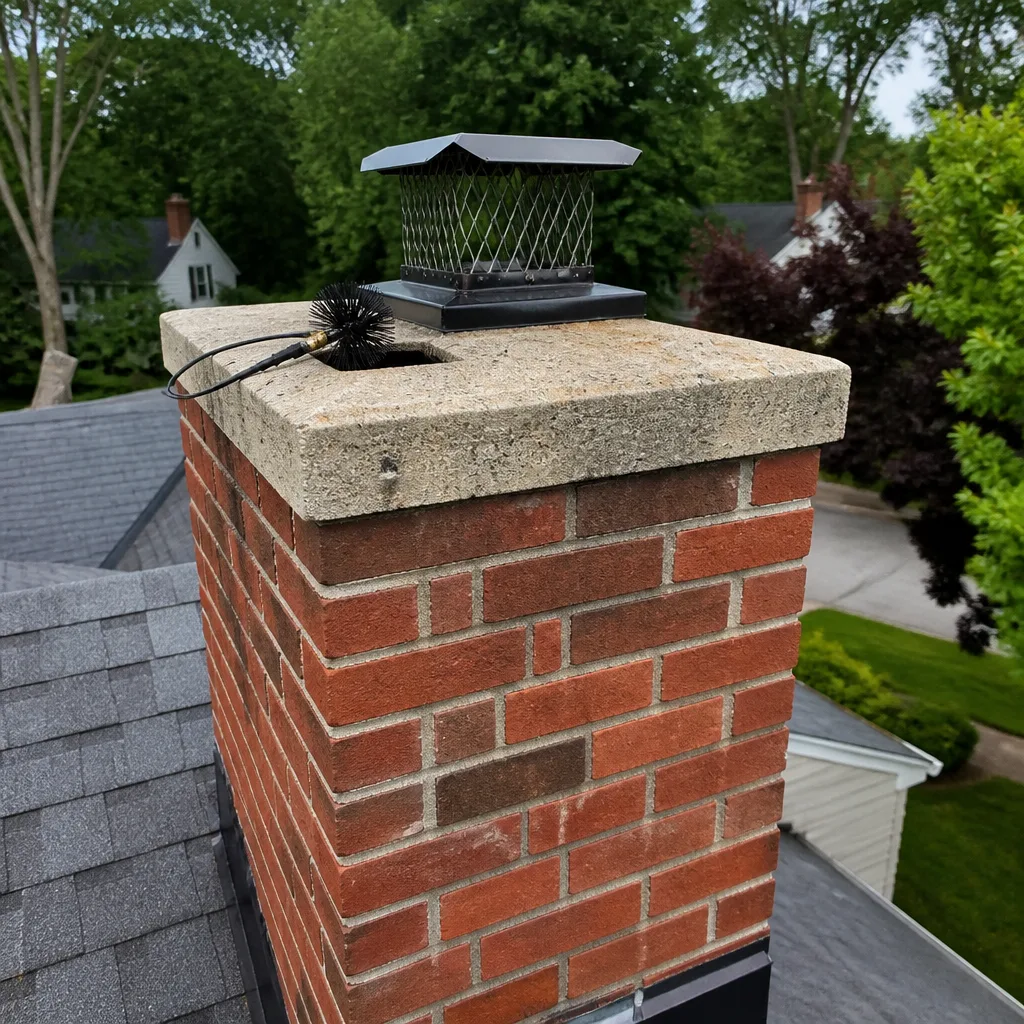
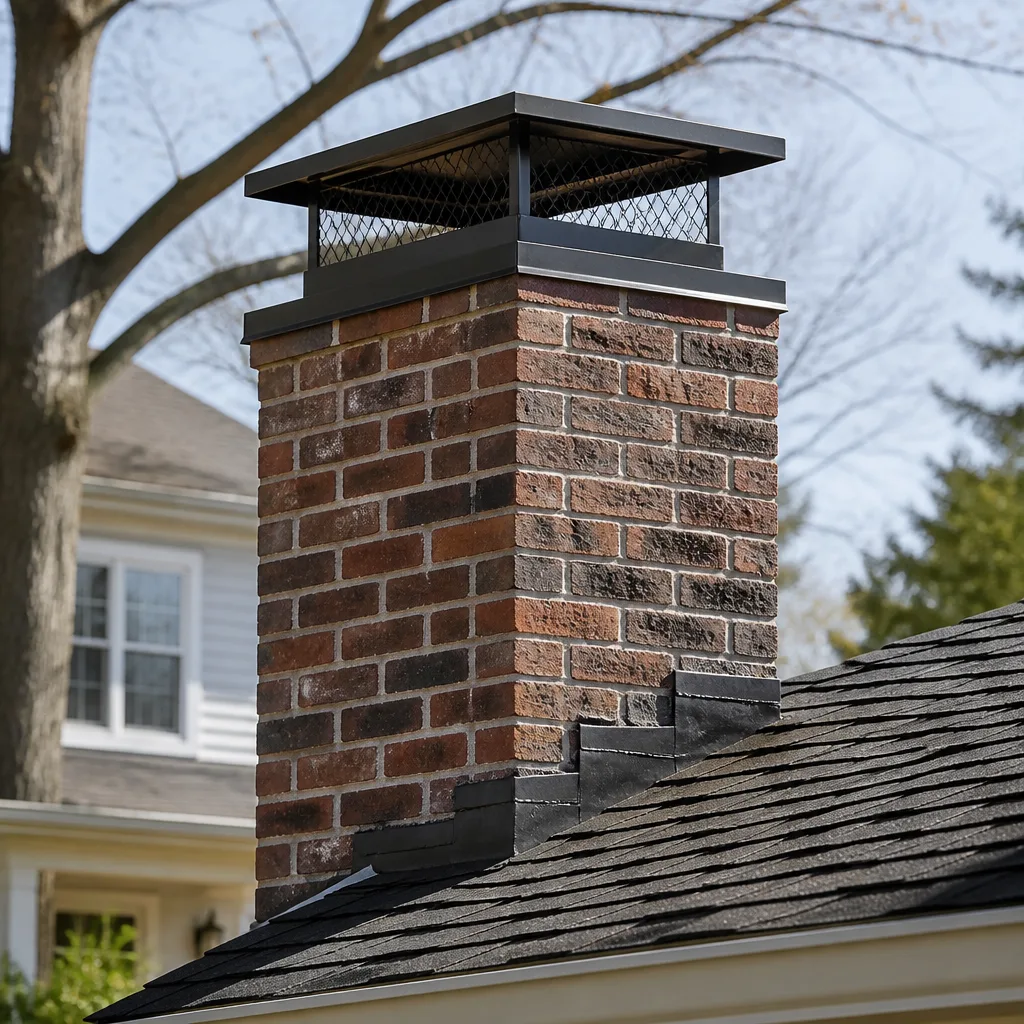
The cap styles that resist ember intrusion best are full-coverage caps with integrated stainless steel mesh, the kind Copperfield and Gelco manufacture for the working chimney trade. These caps do two things at once: they shed embers when the mesh is clean and intact, and they seal against rain intrusion that accelerates flue liner corrosion. In Escondido’s backcountry-adjacent neighborhoods, where Santa Ana winds funnel through the San Pasqual Valley and the hills east of Interstate 15, we recommend checking the spark arrestor mesh at least twice a year. Mesh that is dotted with creosote or corroded enough to develop holes is not doing the job anymore, and a missing cap is an open invitation during the exact wind conditions that make Escondido a high-risk zone.
The Insurance Documentation Every Escondido Homeowner Needs Before Fire Season
Insurance adjusters do not process chimney-related claims based on what you tell them you did. They process them based on what you can document. In a wildfire corridor like Escondido, where claims volume surges after any major event and adjusters are working through hundreds of files, the homeowner who produces a clean, dated inspection report and repair receipts moves faster than the homeowner who says they had it looked at “last fall sometime.” Here is the file you should build now, before you need it:
- The inspection report, with the level stated. Level 1 means the technician checked the accessible portions of the flue and confirmed the fireplace is functioning with no visible deficiencies. Level 2 means a camera was run through the full length of the flue. Some insurers now require a Level 2 inspection before issuing or renewing policies in the highest-risk Escondido ZIP codes. Know which one your policy expects.
- The date of inspection, clearly legible. An undated report is worth less than nothing in a claim review; it raises the question of whether the inspection ever happened at all.
- The technician’s credential. This does not need to be a license number printed on the letterhead, but it does need to identify the company clearly and consistently with how that company appears in state and county business records. A company name, phone number, and business license identifier on the report is the minimum working standard.
- Any repair receipts from the last five years. If you relined the flue, replaced the cap, repaired the firebox, or had a Chimney Repair in San Marcos-area contractor address a defect, keep the receipt showing what was done, when, and with what materials. Material names matter to adjusters. A receipt that says “DuraFlex liner installed” is stronger than one that says “chimney fixed.”
- Photos with timestamps. Before-and-after photos of any visible chimney work, plus a shot of the clean and maintained firebox each season, cost nothing and close a surprising number of disputes before they start.
Keep this file in two places: a physical folder near your home’s main electrical panel and a digital copy in cloud storage. Fire takes paper. Cloud storage does not burn.
Post-Event Protocol: What to Check Before Relighting
Three different events require three different inspection responses, and conflating them is a common and potentially dangerous mistake. Here is what we tell Escondido homeowners about each scenario.
After a chimney fire: Assume the flue is compromised until a Level 2 camera inspection proves otherwise. Chimney fires routinely crack clay tile liners, and sometimes they burn hot enough to warp the metal components around the smoke chamber. You cannot see this damage from the firebox. The rule is simple: no fire, no relight, no exceptions, until a camera has been run through the full flue and the report says the liner is intact or identifies exactly what needs repair. In many cases, a cracked clay liner can be restored with Oakleaf Chimney Sweep home HeatShield resurfacing rather than full replacement, which is exactly the kind of distinction a camera inspection makes clear.
After a nearby wildfire smoke event: This is a less urgent but still real concern. Wildfire smoke carries fine particulates that deposit inside the flue and combine with existing creosote to create a sticky, corrosive layer. If your neighborhood in Escondido was smoked in but never evacuated, you should schedule a Level 1 inspection before your first fire of the season. In most cases, the flue just needs a normal sweep to remove the particulate layer and restore clean draft.
After seismic activity: Escondido sits within the San Diego County fault network, and even minor earthquakes can shift chimney masonry and crack mortar joints. If you feel a quake strong enough to rattle windows, inspect the visible chimney structure from the ground before your next fire. Look for new cracks, shifted bricks, or a cap that no longer sits flush. If anything looks different, schedule an inspection before relighting. A cracked liner or shifted masonry is a carbon monoxide risk even when it is not a fire risk.
Why Escondido’s Climate Creates a Different Chimney Risk Profile
Escondido’s fire risk is not generic Southern California risk. The city sits in a valley that funnels Santa Ana winds from the northeast, accelerating them through the San Pasqual corridor and up the slopes toward communities like The Country Club, Hidden Trails, and the neighborhoods around Dixon Lake. Those winds find chimneys. The same homes that are surrounded by defensible space and well-irrigated landscaping can still lose a roof fire started through a poorly capped flue, because the wind direction does not care about your landscaping.
The seasonal pattern matters too. Escondido’s fire season now effectively runs from late summer through the first significant rains, which some years do not arrive until December. That means the typical homeowner’s habit of scheduling chimney sweeping in September or October places the inspection just a few weeks before peak risk, not at the end of a long inactive period. If your sweep gets postponed, the buffer is thin. We recommend booking in August, because by the time red flag warnings start appearing in the Cal Fire bulletins, every qualified chimney service in North County is already booked out multiple weeks, and a creosote-heavy flue is the wrong thing to carry into October.
There is also the less obvious factor of ambient dryness. A flue in Escondido accumulates creosote differently than a flue in a humid climate. The same burning habits produce drier, more glazed creosote deposits, which ignite more readily and burn hotter when they do ignite. That glazed coating does not brush out as easily as the flaky stuff, which is one reason professional-grade Chimney Sweep in San Marcos services use rotary equipment and chemical treatments designed for exactly this kind of deposit. Homeowners who do their own sweeping with a wire brush rarely achieve the same surface, and in a fire-prone climate, that difference matters.
A Maintenance Schedule That Matches Escondido’s Fire Calendar
Working against the calendar, not the calendar’s convenience, is the simplest emergency preparedness step you can take. Here is the schedule we recommend for Escondido homeowners based on the city’s actual fire weather pattern:
- August: Schedule your annual Level 1 inspection and sweep. This puts you ahead of the September and October rush, and if the inspection finds a defect, you still have six to eight weeks to address it before the highest-risk period.
- September: Complete any repairs identified in the August inspection. Order parts early; the supply chain for professional chimney components like Copperfield caps and Gelco dampers tightens in the fall just like the service queues do.
- October through December: Visually check the spark arrestor mesh monthly. Walk around the house with a pair of binoculars if needed and confirm the cap is seated and the mesh is intact. After any wind event with gusts over 50 miles per hour, check again.
- January through February: This is the lower-risk window for wildfire in Escondido, but it is also when homeowners discover mid-season problems. Address any draft issues or unusual sounds before you stack a winter’s worth of fires on top of a developing problem.
- March through July: Empty the ash pit and inspect the firebox and damper for rust, cracks, or operation problems. This is also the right time for a Dryer Vent Cleaning in San Marcos-area service call if you are coordinating multiple maintenance items in one day.
What ties this schedule together is the buffer it creates. The homeowner who sweeps in August can absorb a two-week delay without landing in the middle of red flag season with a dirty flue. The homeowner who sweeps in October has no buffer, and in a bad fire year, no appointment.
Common Mistakes to Avoid
- Treating the spark arrestor screen as decorative. The screen is the single most important ember-resistance component on the entire chimney system during red flag winds. Let it corrode to nothing and you have given wind-driven embers a direct route into the most combustible part of the home.
- Burning unseasoned wood because it was cheap. Green wood produces heavier, stickier creosote. The same burning habits that produce a brushable dust with seasoned oak produce a glazed, flammable coating with unseasoned wood, and the difference is not subtle in Escondido’s dry burn seasons.
- Assuming one chimney fire means the flue is now clean. A chimney fire burns off that year’s creosote but frequently damages the liner in the process. The flue might look cleaner and still be more dangerous than before the fire.
- Filing the inspection report in a drawer and forgetting where. A report you cannot find during an insurance claim is the same as no report. Keep a digital copy somewhere you can pull it up from a phone in a parking lot if you need to.
- Using a chimney sweep ball from the big-box store as an equivalent to professional equipment. A spinning brush from the hardware store can remove loose creosote, but it cannot identify liner cracks, cannot remove glazed deposits, and cannot generate the inspection report your insurance company will ask for.
- Waiting for visible smoke to schedule a sweep. By the time a chimney smokes back into the room, the flue is significantly obstructed or the draft equilibrium has failed. Neither is a condition you want to discover during an active burn season.
When to Call a Professional
Any of the following situations warrants a professional inspection before your next fire: you hear a roaring or rumbling sound from the flue during operation; you can feel substantial heat radiating through the wall around the chimney; you see black smoke exiting the chimney top during a fire that is burning seasoned wood; your spark arrestor cap shows visible holes or has come loose from the flue; or you experienced any chimney fire, even a brief one. Oakleaf Chimney Sweep offers free estimates in Escondido, and our technicians arrive with the repair capability to address what they find rather than referring you to a second contractor. Call (855) 362-1450 to schedule.
Frequently Asked Questions
A standard Level 1 chimney sweep and inspection in Escondido typically runs between $180 and $340, with the higher end reflecting multi-flue homes, glazed creosote requiring rotary cleaning, or homes outside the central valley where travel time adds labor cost. Camera inspections run higher. Call (855) 362-1450 for an exact quote on your chimney, because the condition of the flue and the type of fireplace change the number more than any price sheet suggests.
Not every damaged liner needs full replacement. Many cracks and spalled sections can be resurfaced with HeatShield restoration compound, which we apply as a bonded ceramic coating inside the existing flue. The camera inspection is what tells us which path your flue actually needs, and we will show you the footage so you can see the damage yourself before approving any work.
Most Escondido homes with regular fireplace use should be swept annually. Homes that burn more than a cord of wood per season, or that burn softwoods or manufactured logs with high creosote output, may need mid-season attention. The dry Santa Ana season means deposits in this area mature faster than in coastal climates, so the annual cadence is not negotiable for safety here.
Creosote continues to accumulate, and in Escondido’s dry climate it glazes over and hardens rather than flaking away. The flue diameter narrows, draft performance declines, and the accumulated material becomes a fuel source for a chimney fire that can spread to the structure. The risk is not linear; a two-year-old deposit is more than twice as dangerous as a one-year-old deposit, because the layer closest to the flue wall has begun to cure into the hardest-to-remove form.
Some insurers in the high-risk Escondido ZIP codes now include chimney maintenance clauses in wildfire coverage, and a few require Level 2 inspection documentation before binding or renewing a policy. Check your policy language for phrases like “chimney inspection” or “flue maintenance.” If the language exists, get the inspection on file before fire season, not after a claim.
Very small embers can pass through the width of the mesh opening, but the arrestor’s primary job is to break the wind force that would carry embers deep into the flue. An intact, properly sized arrestor screen stops the vast majority of wind-driven intrusion, and when combined with a full-coverage cap design, it is the difference between a chimney that sheds embers and one that catches them. A missing or corroded cap removes that protection entirely. Call (855) 362-1450 to have your cap inspected and, if needed, replaced with a Copperfield or Gelco unit sized for your flue.
The Bottom Line
Chimney emergency preparedness in Escondido comes down to three things: know your flue’s condition before fire season, document that condition so it holds up in an insurance claim, and maintain the physical components (cap, arrestor screen, liner) that stop embers and contain chimney fires. The homeowner who does all three is not just safer; they are in a stronger position during every conversation that follows an event, whether with a fire department, an insurance adjuster, or a chimney contractor. Most of Escondido’s chimney-related structure losses are preventable, and the prevention—covered in more guides & resources—is neither complicated nor particularly expensive. It just requires acting before the red flag warnings start, not after.
Written by the team at Oakleaf Chimney Sweep, serving Escondido since 2016.
See the difference
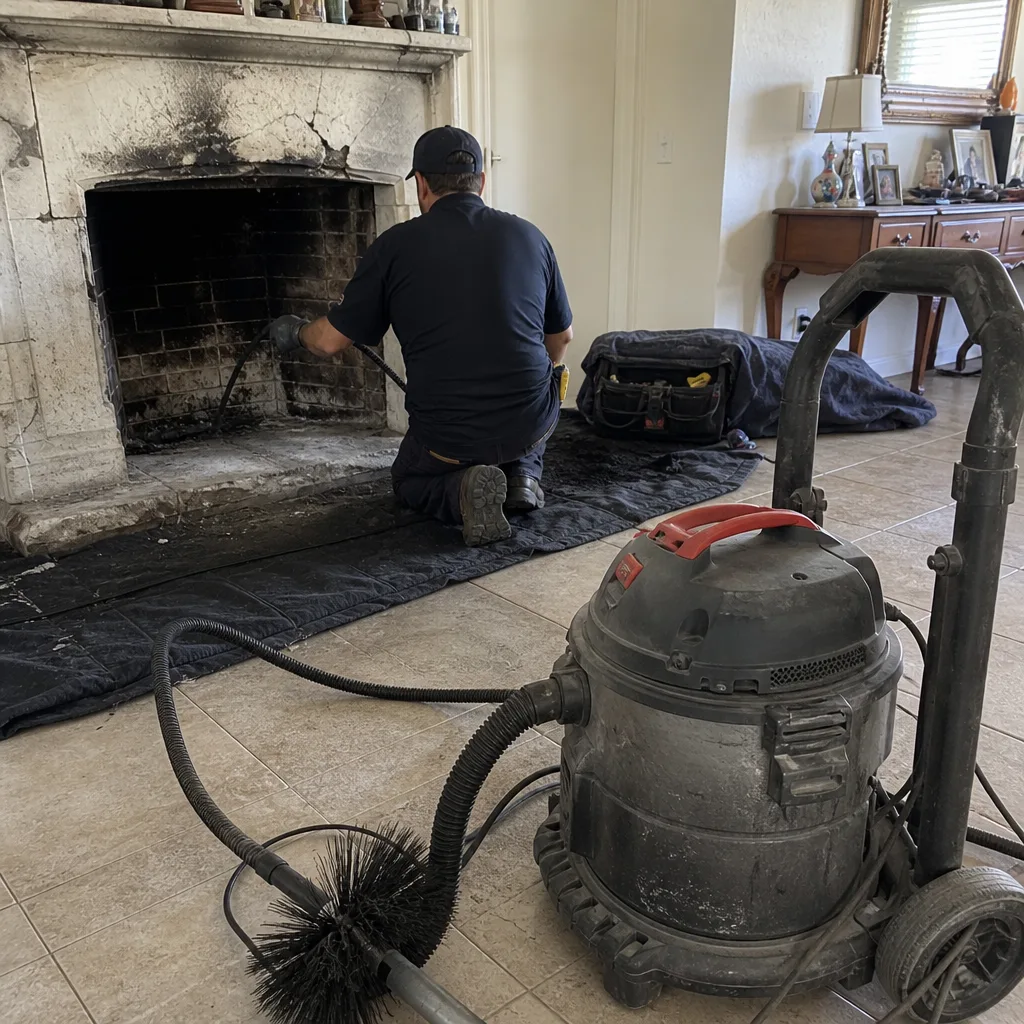 Before
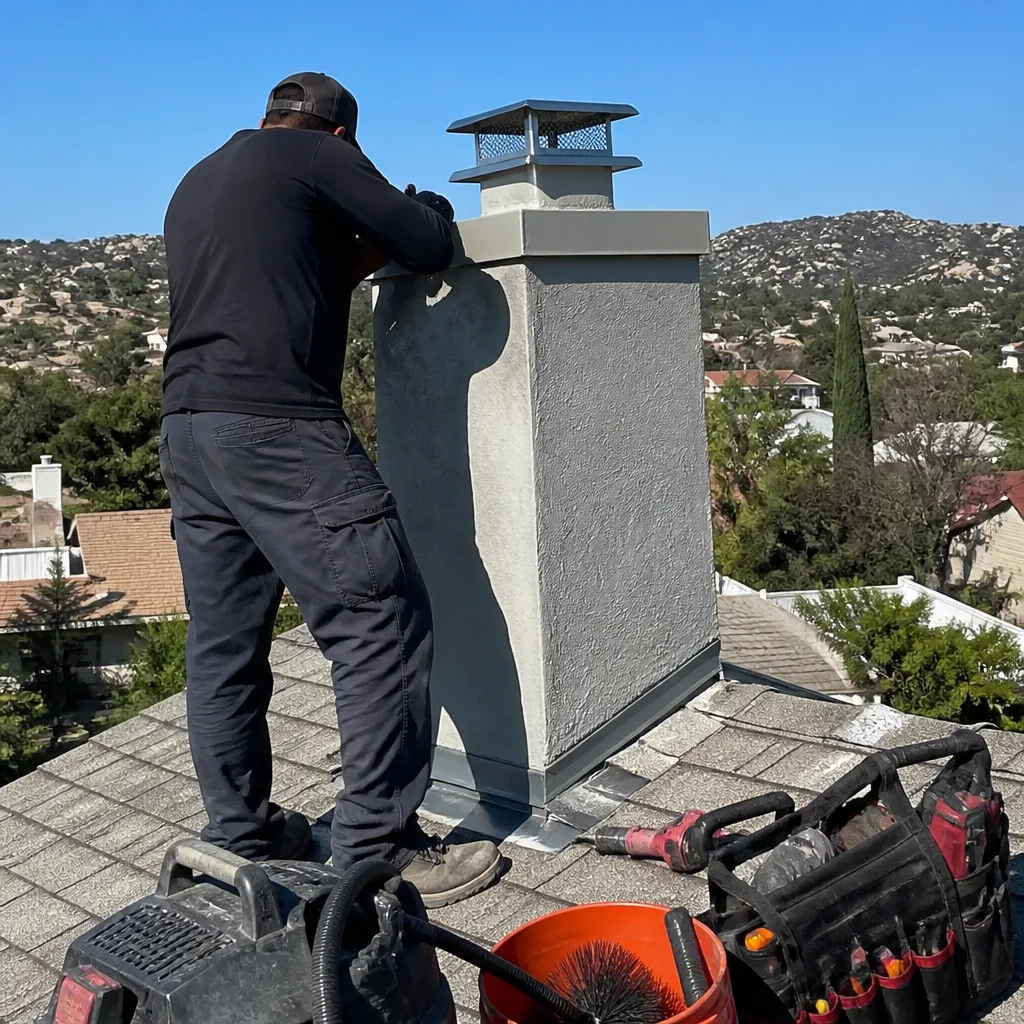 After
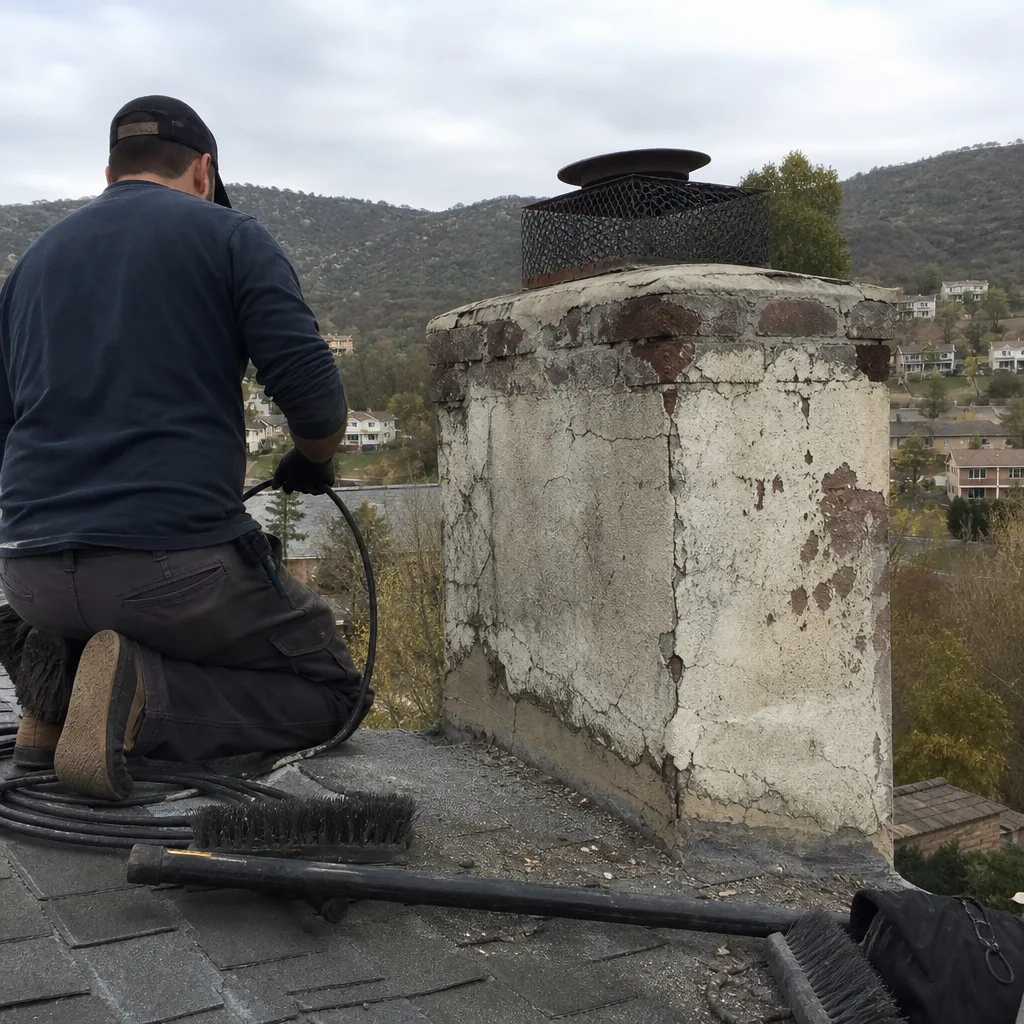 Before
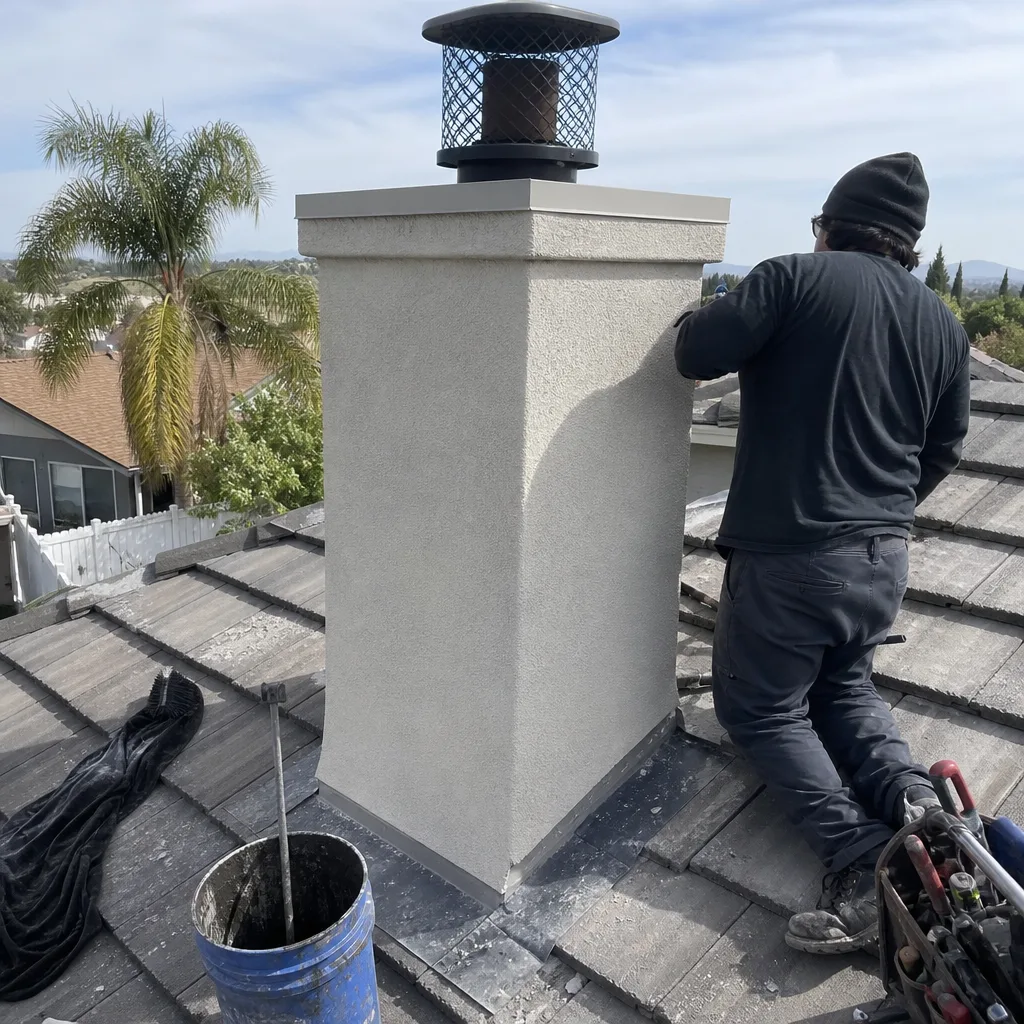 After
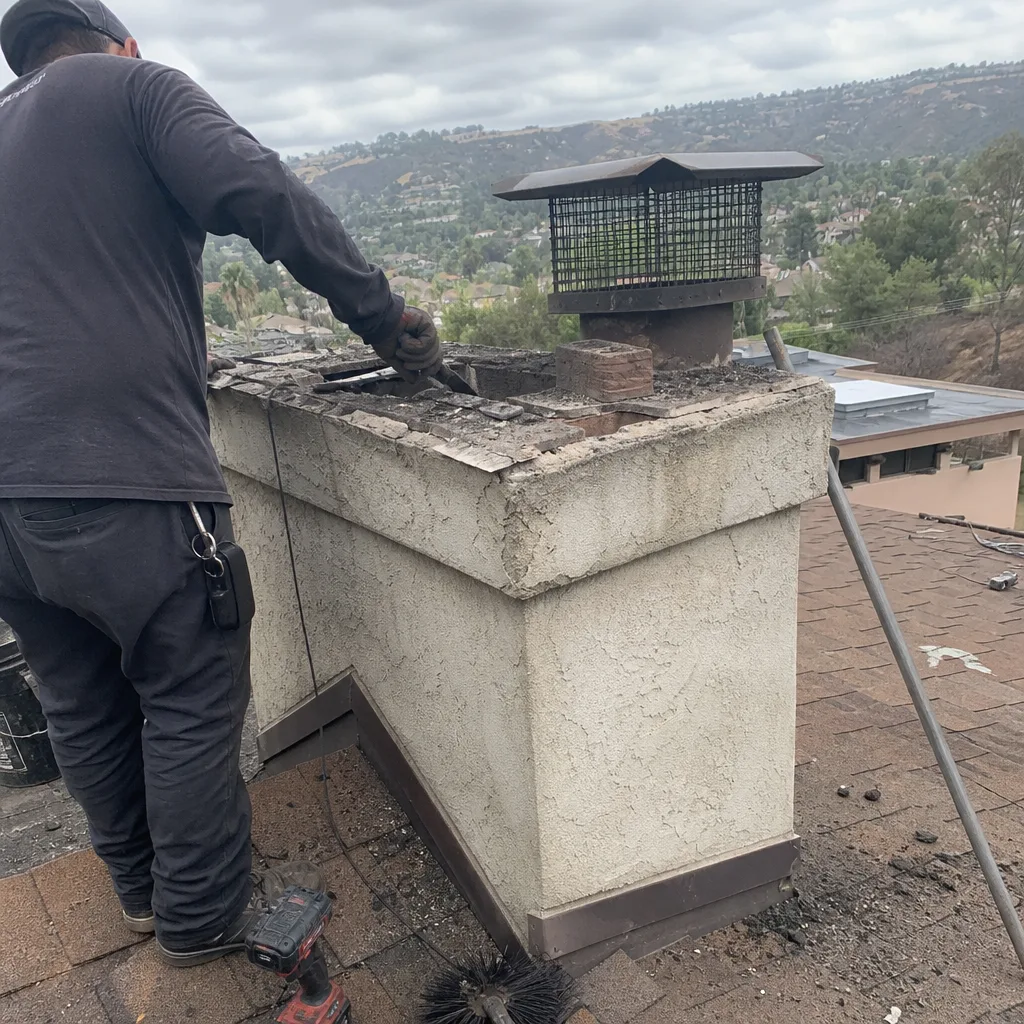 Before
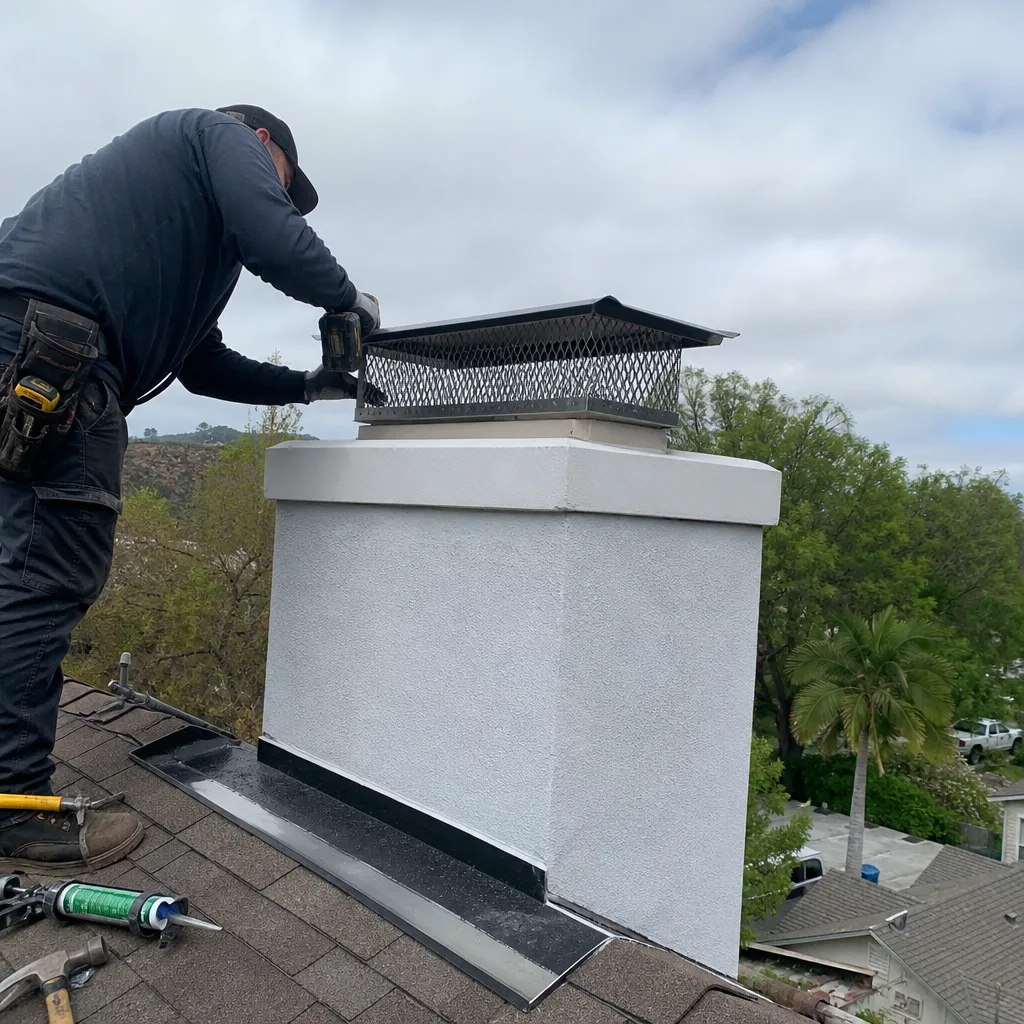 After