Last updated October 31, 2026
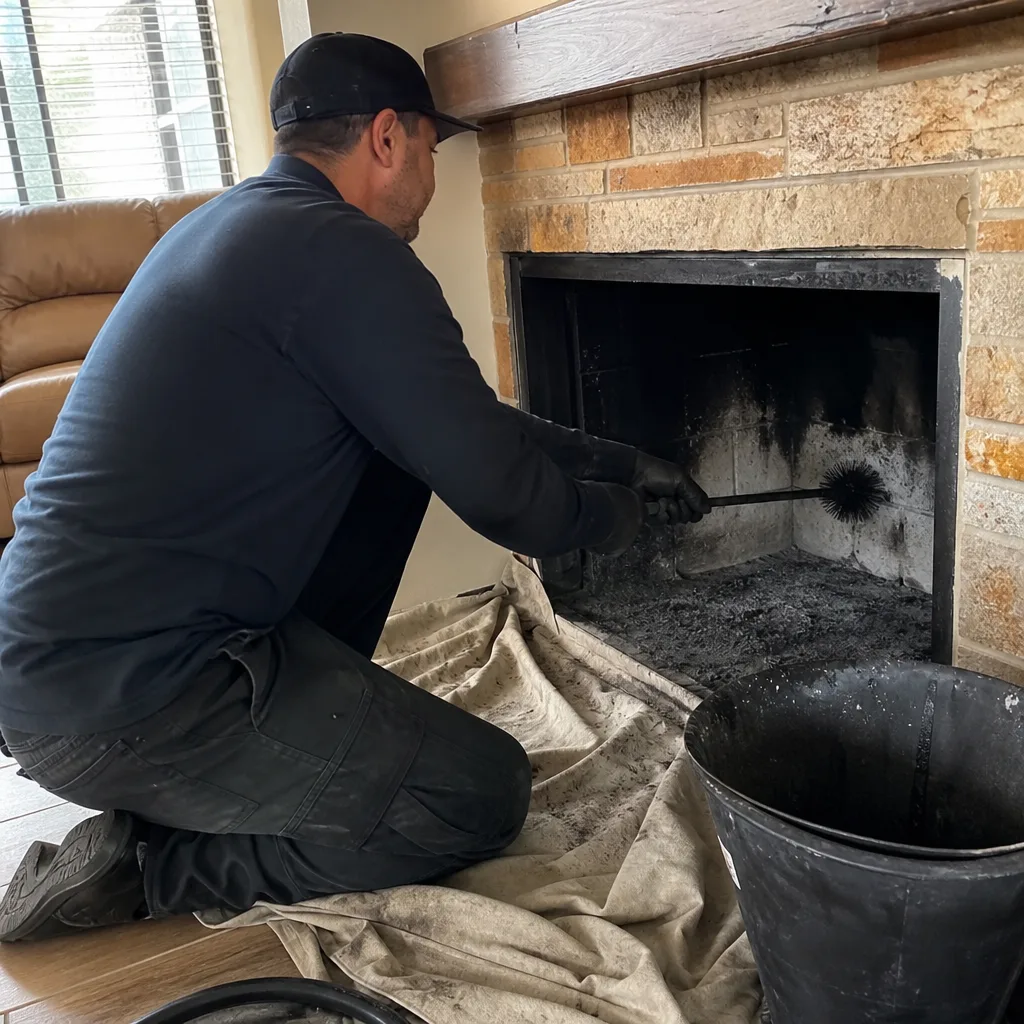
 Sweep & inspection
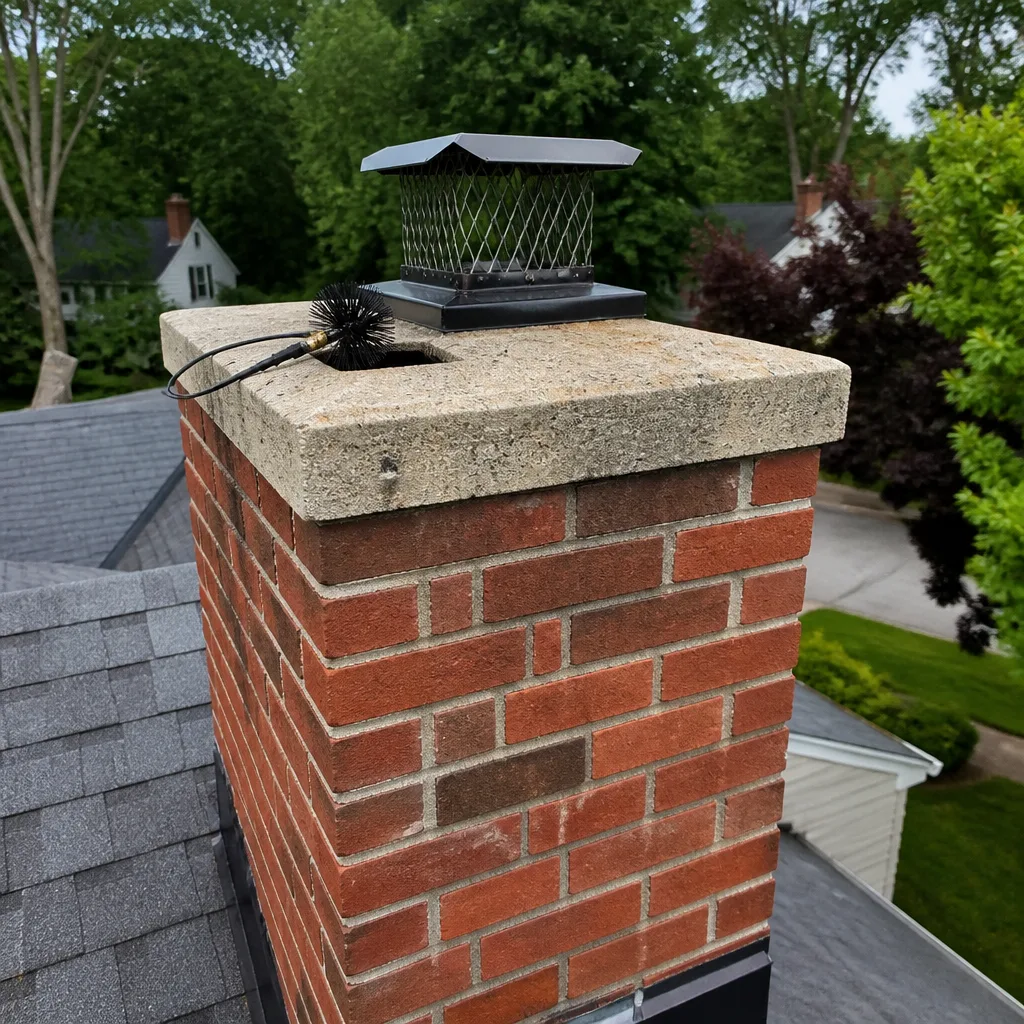
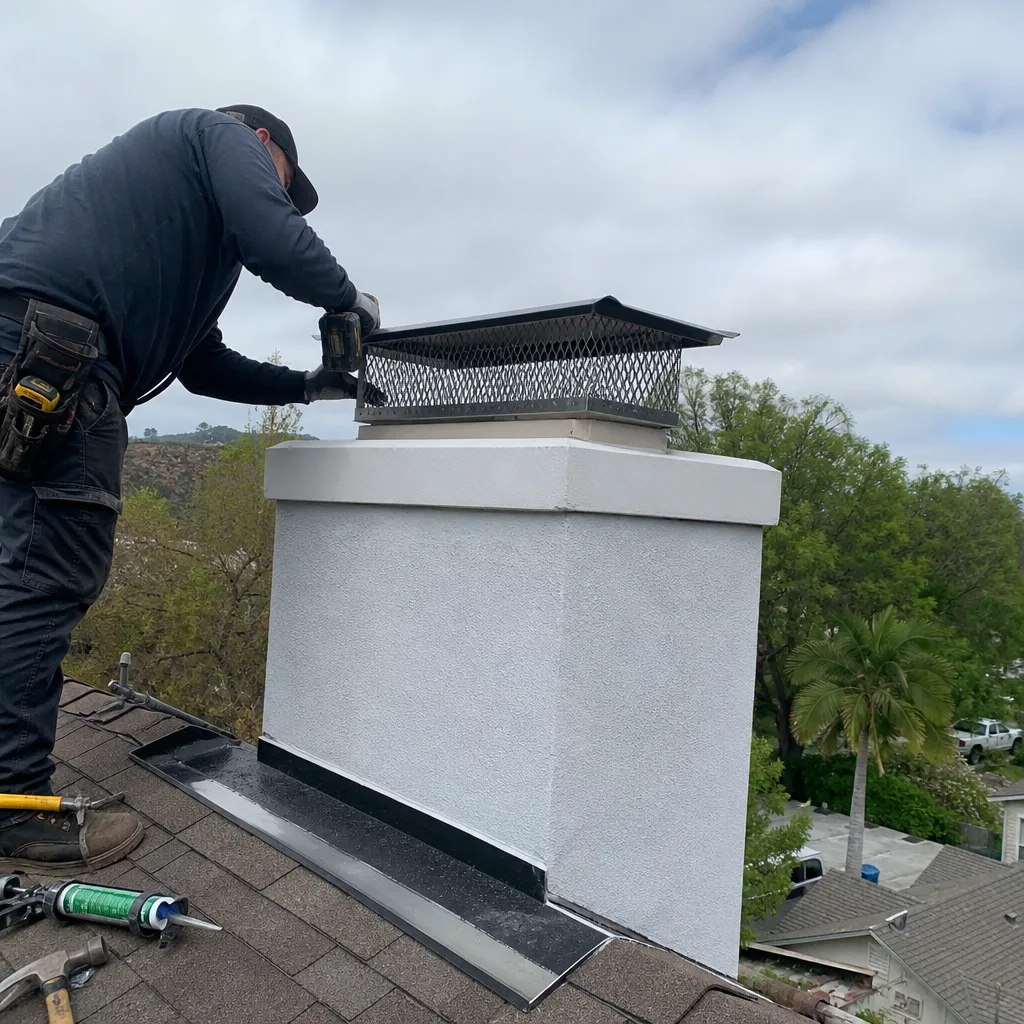
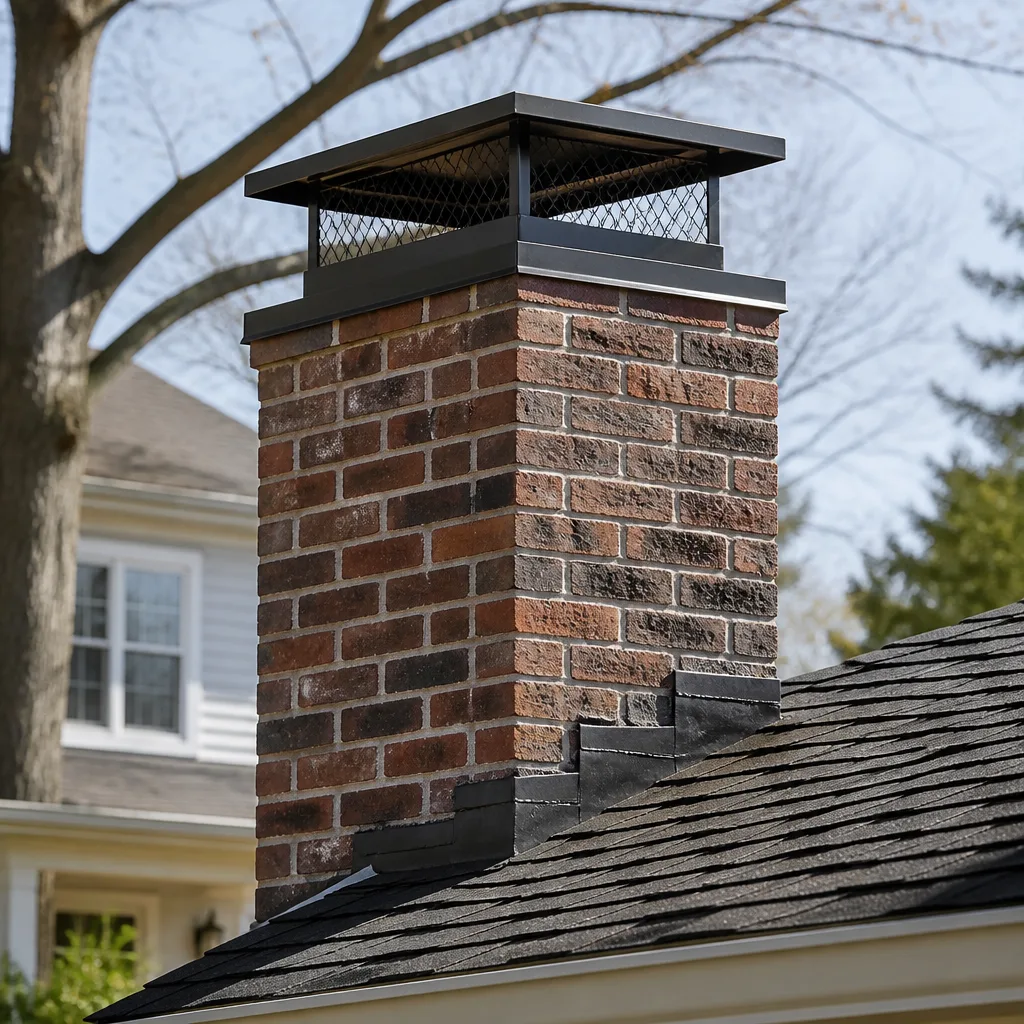 Caps & crowns
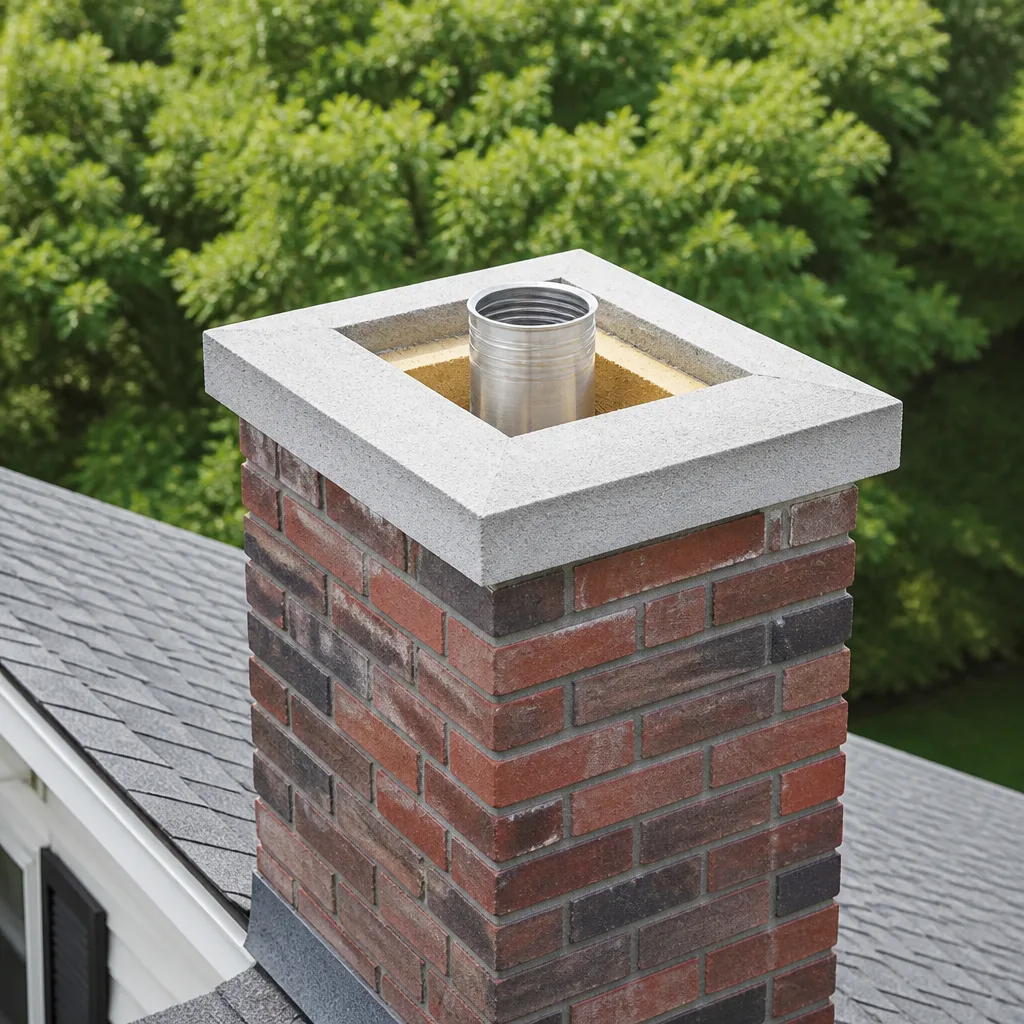 Flue relining
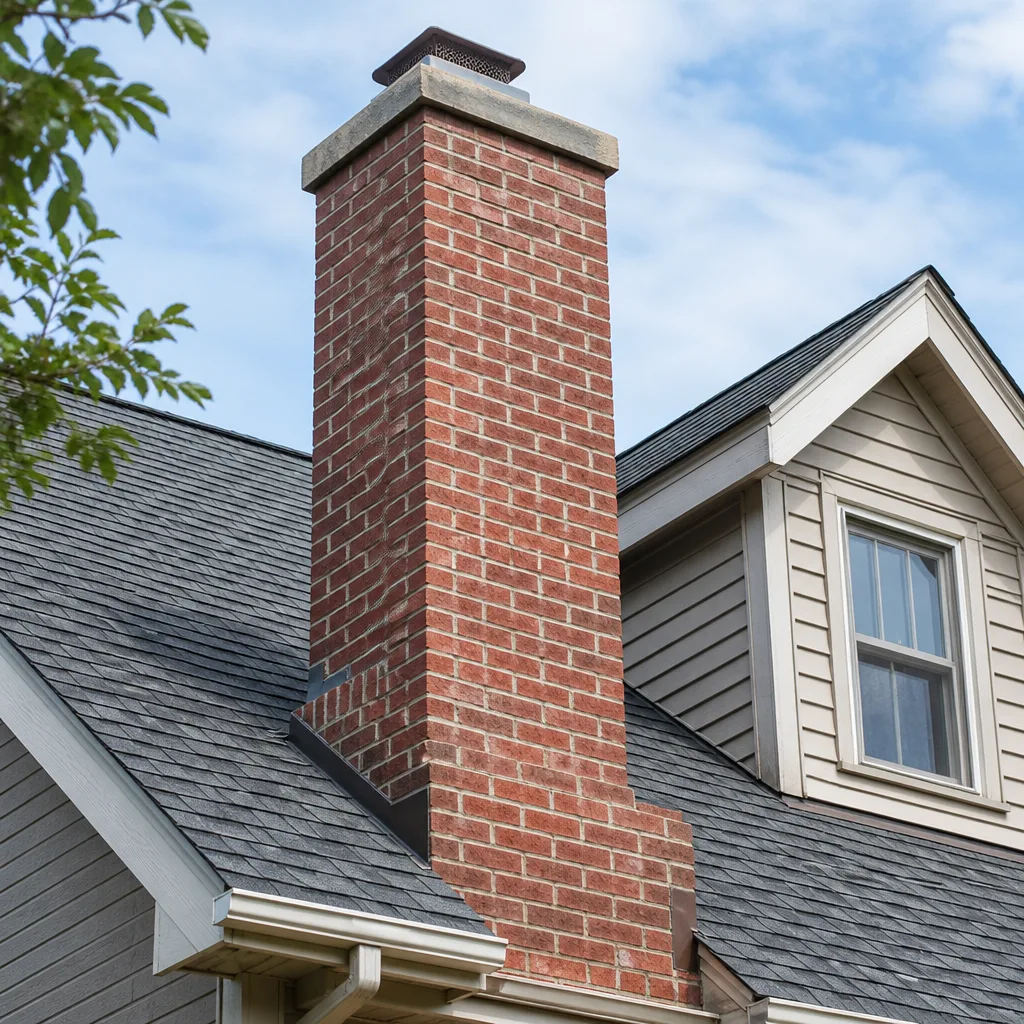 Masonry repair
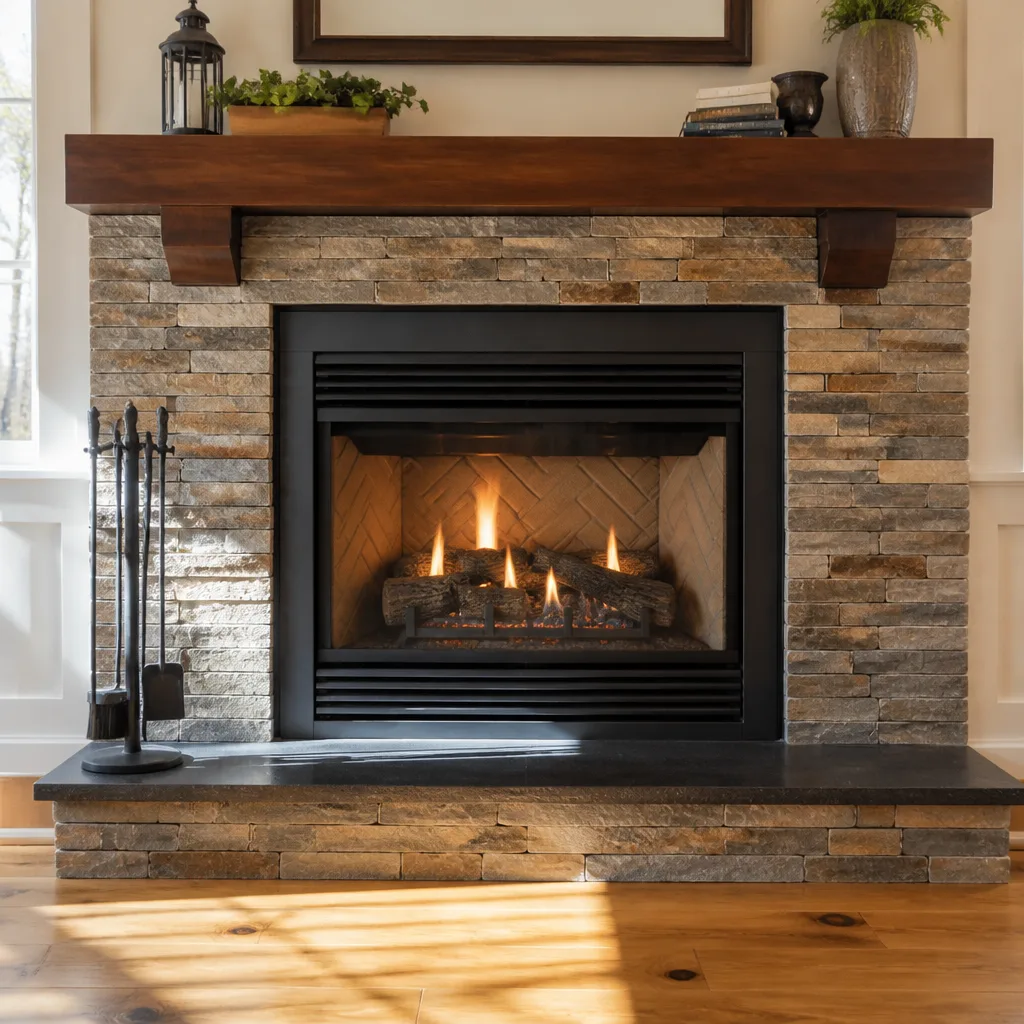 Gas fireplace service
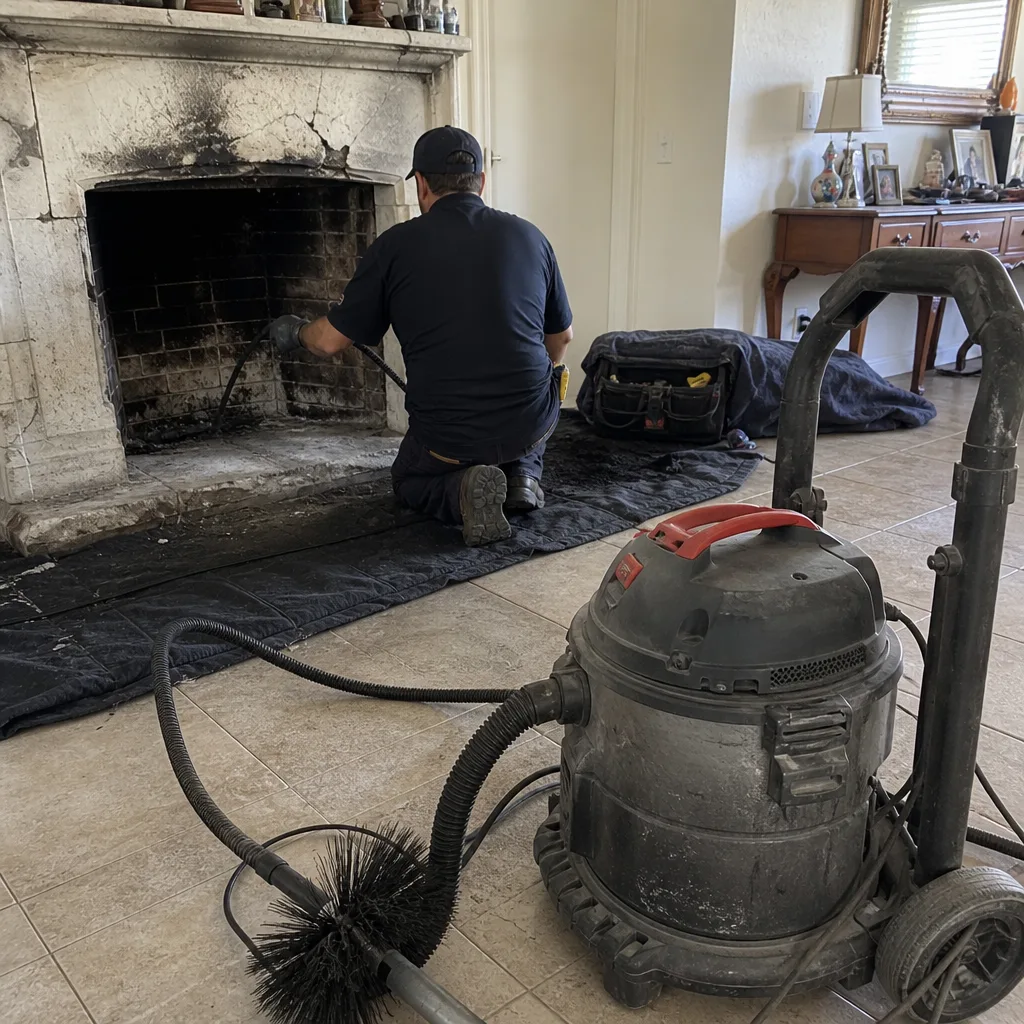
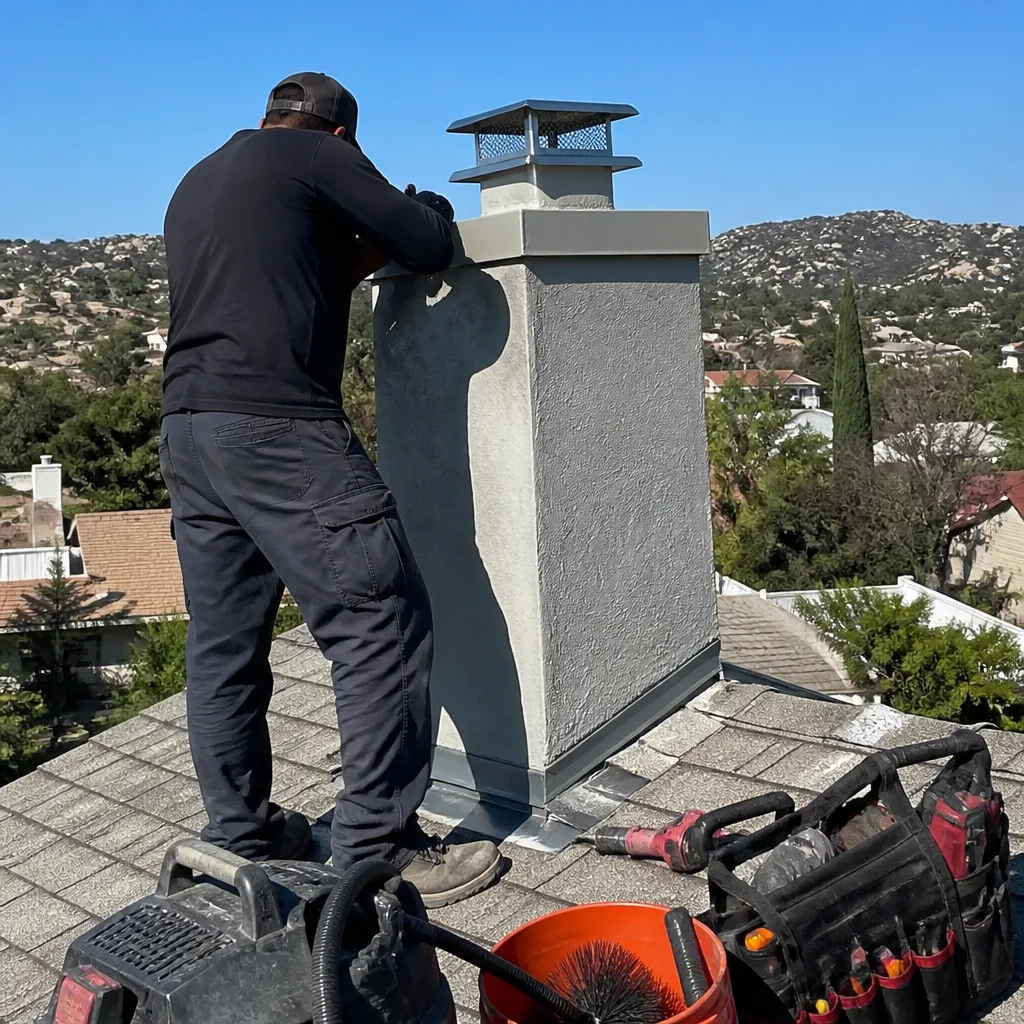
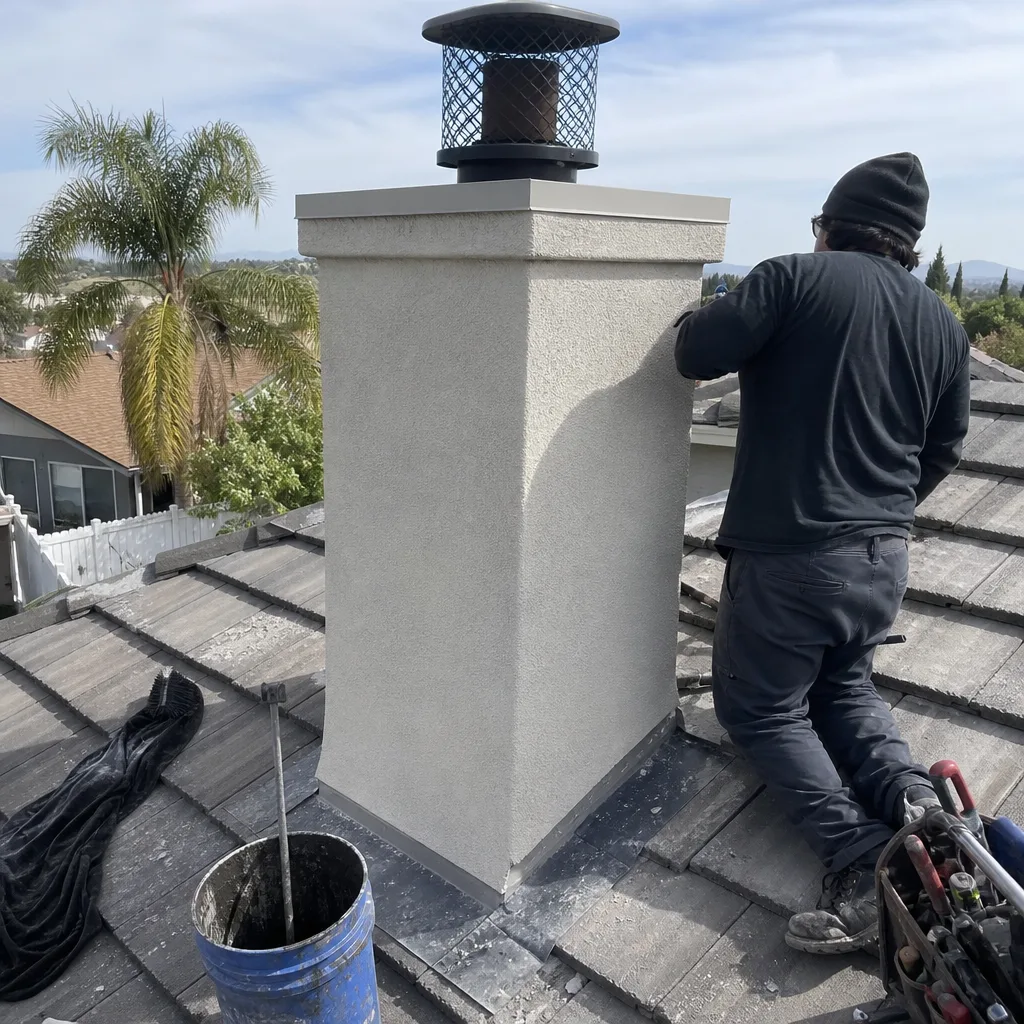
Level 1 sweep and inspection to the NFPA 211 annual standard - flue, crown, cap, and flashing checked and photographed
Chimney sweep logs do not sweep chimneys. They loosen some creosote - which then falls where a brush and vacuum still have to collect it.
Chimney Cleaning Warning Signs: A Escondido Homeowner’s Reference Guide
A chimney fire doesn’t announce itself with flames shooting from the top. It often announces itself weeks earlier with a faint petroleum smell when the fireplace is cold, and most people assume it’s coming from outside. Escondido homeowners walk past the real warning signs every week without recognizing them. This guide covers what those signs look like, what they smell like, and which ones mean you need a sweep this week versus which can wait until the season ends. For more detail, see our Chimney Sweep Maintenance Checklist for Escondido Homeowners.
Styles & brands we work with
Quick Answer
The chimney cleaning warning signs that matter in Escondido are: a petroleum or asphalt odor when the fireplace is cold, dark crusty buildup visible on the firebox walls, smoke that lingers or drifts into the room instead of drawing upward, and exterior crown cracking that follows a spiderweb pattern. Any of these signals means the flue needs a professional inspection before the next fire. A sweep costs less than the repair that comes after ignoring them.
Table of Contents
- The Creosote Stages: What Stage 2 and Stage 3 Actually Look Like
- The Smell Signals: Petroleum, Campfire, and Musty Odors
- Exterior Crown Cracking: Structural vs. Cosmetic Failure
- Rust Stains on the Firebox Floor: What They Reveal About Your Damper
- Animal Evidence: Chimney Swifts vs. Squirrels and Why It Matters
- Smoke Behavior in Escondido: Draft Problems at This Elevation
- Gas Fireplace and Insert Warning Signs Most Guides Skip
- Common Mistakes to Avoid
- When to Call a Professional
- Frequently Asked Questions
- The Bottom Line
The Creosote Stages: What Stage 2 and Stage 3 Actually Look Like
Creosote is the byproduct of incomplete wood combustion. It condenses on the flue walls as smoke cools on its way up the chimney. What most Escondido homeowners don’t realize is that creosote comes in three distinct stages, and the difference between stage 2 and stage 3 determines whether you need a routine sweep or something more urgent.
Stage 1 creosote is a fine, dusty, dark film. It looks like soot and brushes away easily. A standard chimney sweep removes it without complications. This is what you want to catch during an annual cleaning, before it has time to build into something worse.
Stage 2 creosote looks like shiny black cornflakes or hard, crunchy scales. It has a brittle, porous texture. If you run a fireplace poker along the firebox wall and it comes back coated with something that flakes rather than smears, you’re looking at stage 2. At this stage the creosote is no longer just dust. It’s a hardened deposit that resists basic brushing and can ignite if the flue gets hot enough. The smell from stage 2 creosote is noticeable when the fireplace is cold: a sharp, asphalt-like odor that people often mistake for roof tar or nearby construction.
Stage 3 creosote is the dangerous one. It looks like a thick, shiny, tar-like glaze coating the flue walls, sometimes with a pitted or rippled surface. It can appear wet or glassy. Stage 3 creosote burns like fuel. If a flue with stage 3 buildup reaches ignition temperature, the resulting chimney fire is severe and can crack the liner, spread to the roof assembly, or send burning debris onto the roof. The smell of stage 3 is stronger, more persistent, and sometimes described as like a hot asphalt driveway on a summer day, even when the fireplace hasn’t been used in months.
Why does this matter in Escondido specifically? Because our mild winters mean fireplaces often sit unused from April through November. That long idle period lets creosote absorb moisture from coastal air, which changes its chemical composition. Creosote that would have been stage 2 and easily swept in March can become denser and harder by the time December arrives. A chimney that was fine at the end of one season can be a hazard at the start of the next.
- Inspect the firebox walls with a flashlight. Look for crusty, flaking deposits rather than loose dust.
- Note any smell when the fireplace is cold. Sharp asphalt or petroleum odors are creosote signals, not outside smells.
- Do not attempt to remove stage 3 creosote with a wire brush or chemical cleaner from a hardware store. This requires professional rotary tools and potentially a liner restoration assessment.
The Smell Signals: Petroleum, Campfire, and Musty Odors
Your nose is the most underused diagnostic tool you have. Escondido’s dry, warm climate complicates smell detection because oil and creosote odors can dissipate during the day when the chimney warms and intensify at night when it cools. Here are the three key smells and what they indicate.
Petroleum or asphalt odor: This is the signature smell of creosote buildup. It’s especially noticeable when the fireplace is cold and the damper is open. The smell comes from the volatile compounds in creosote off-gassing. A faint hint that appears a few days after the last fire can be normal. A strong smell that persists for weeks, or one you notice when walking past the fireplace with the damper closed, indicates significant buildup that needs a professional sweep. If you can smell it, the creosote volume is high enough that you should not light another fire until the flue is cleaned.
Campfire smell when no fire is burning: This is a draft issue, not a creosote issue. When a chimney draws properly, odors go up and out. When the flue is partially blocked, or when stack pressure in the house is negative, air flows down the chimney and brings the smell of old ashes into the living space. Escondido homes with tight construction, new windows, or powerful kitchen exhaust fans are particularly prone to this. The fix can be as simple as a damper adjustment or as involved as a top-sealing damper installation, but first you need to know what’s actually causing the reversal. Our Chimney Sweep Troubleshooting: Common Problems and How to Fix Them walks through how to diagnose this step by step.
Musty or animal smell: This is not creosote. A damp, organic smell usually means moisture in the flue, often combined with nesting material. Rain enters through a damaged or missing chimney cap, soaks into creosote deposits or animal debris, and creates a steady release of musty odor. In Escondido’s occasional heavy rain events, a cracked crown or missing cap can introduce water that saturates old creosote and reveals itself as a smell that persists for days after the storm.
Key takeaway: Any persistent fireplace odor when the firebox is cold warrants an inspection. Our team at Oakleaf Chimney Sweep can identify the source and tell you whether it’s a cleaning issue, a draft problem, or a moisture problem. If we find damage during the sweep, we have the repair capability to fix it on the spot, using materials from Oakleaf Chimney Sweep home.
Exterior Crown Cracking: Structural vs. Cosmetic Failure
The chimney crown is the concrete slab that covers the top of the chimney, sealing the flue and the brickwork from water. Cracks in the crown are among the most misunderstood warning signs in Escondido, because our climate produces a specific cracking pattern that doesn’t exist in colder regions.
Cosmetic cracks are hairline, surface-level, and don’t go all the way through the crown. They’re caused by normal concrete shrinkage and thermal expansion. In Escondido’s hot, dry summers, the crown expands during the day and contracts at night, which slowly opens hairline cracks over time. These are worth sealing to prevent moisture intrusion, but they don’t require immediate action.
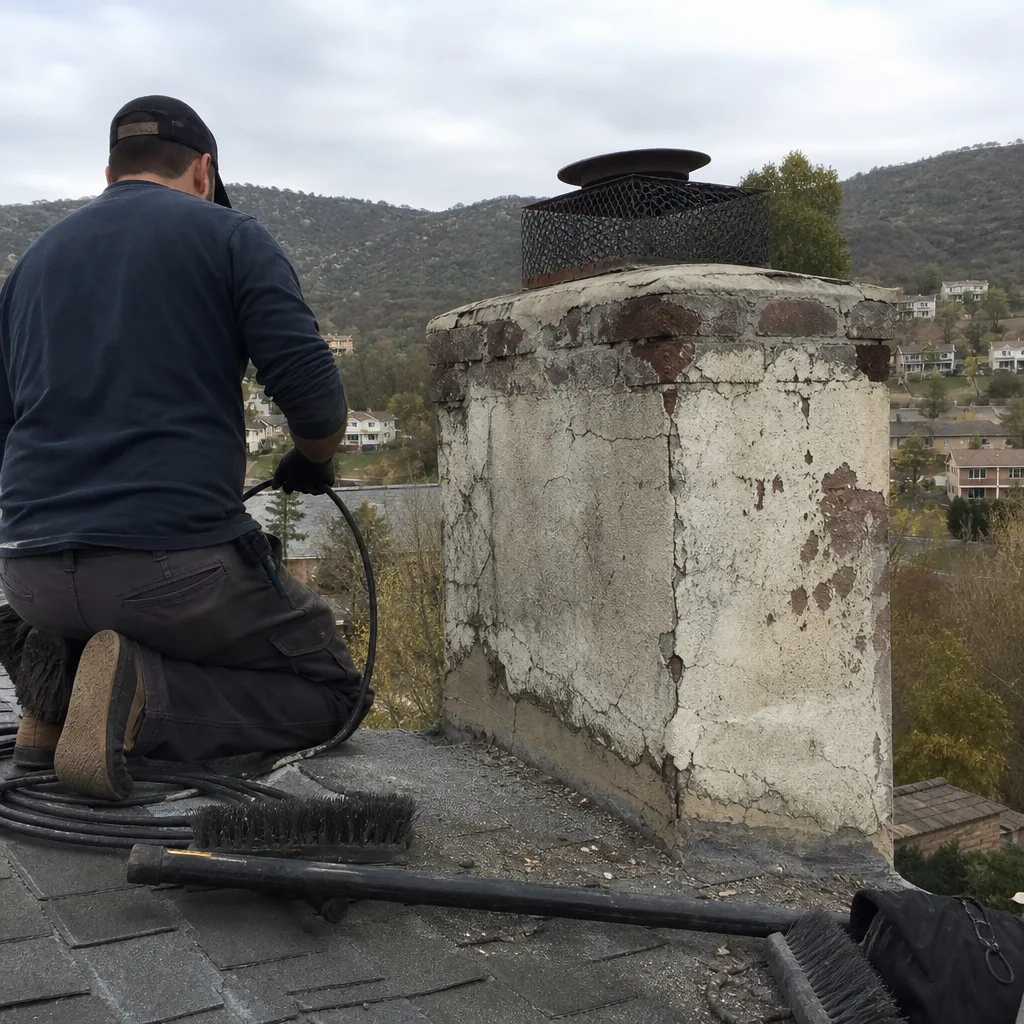
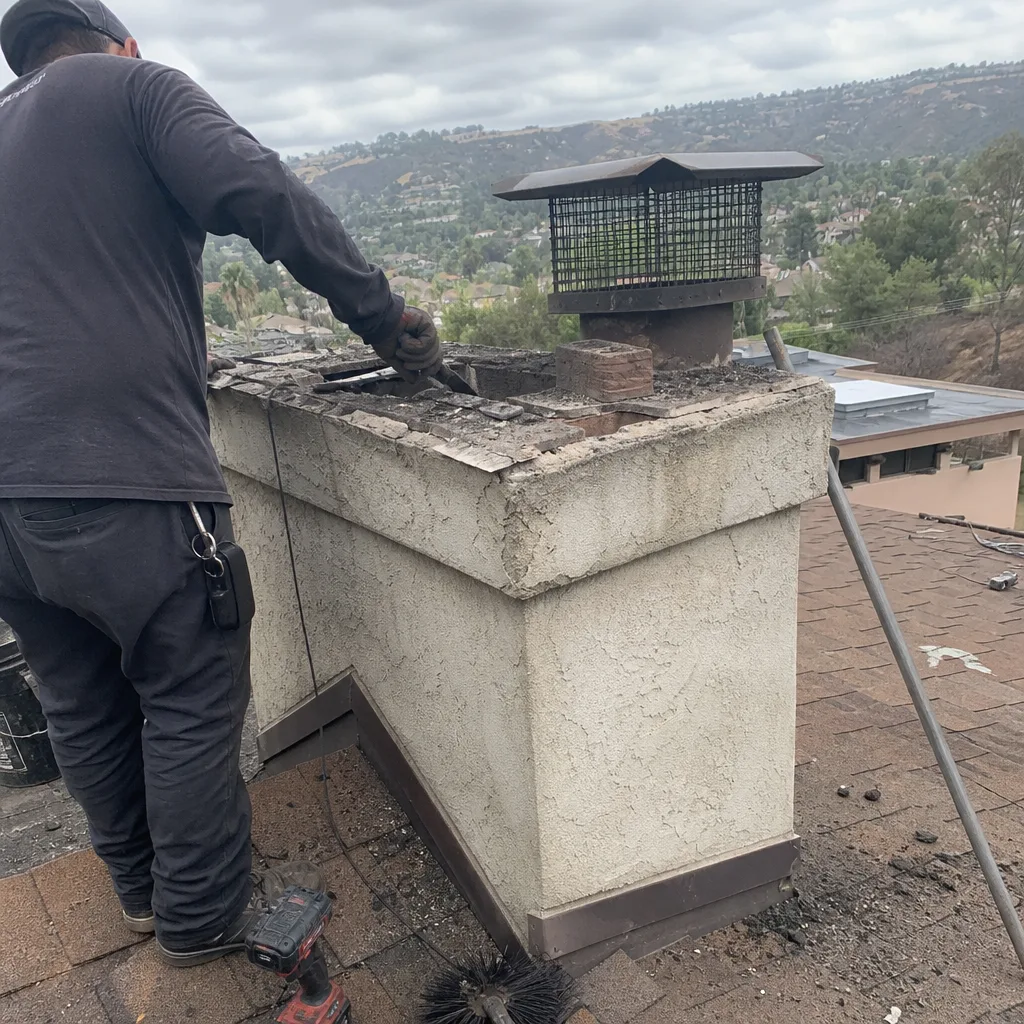
Structural cracks are different. Look for cracks wider than a quarter of an inch, cracks that run through the crown and down into the brick, or spiderweb patterns that radiate outward from the flue opening. Structural cracks mean water has a direct path into the chimney’s internal masonry. During an Escondido winter, that moisture cycles through wet and dry periods, which fractures the brick and mortar from the inside. The result is spalling brick, loose mortar joints, and eventually a chimney that needs rebuilding rather than sealing.
Here’s what to check from the ground or with binoculars:
- Is the crack pattern evenly distributed, or does it concentrate around the flue opening?
- Do you see white mineral deposits (efflorescence) below the crown line? That’s proof water is moving through the masonry.
- Can you see any missing chunks of crown that expose raw brick or mortar?
- Does the crown slope away from the flue, or is it flat or bowing inward?
The repair path depends on what the crack pattern reveals. Hairline cracks can be sealed with a compatible crown coat. Deeper cracks may need routing and filling. A crown that has structurally separated from the flue often needs full replacement. The important skill is knowing which is which, because sealing a structurally failed crown buys you a season at best. A proper inspection tells you the difference before you spend money on a patch that won’t hold.
Rust Stains on the Firebox Floor: What They Reveal About Your Damper
Rust in the firebox is the warning sign most Escondido homeowners dismiss. They assume it’s just what happens to metal near fire. But rust on the firebox floor tells a specific story, and ignoring it can mean the difference between a damper replacement and a liner issue.
The firebox floor sits directly beneath the damper. When the damper fails to seal properly, a small amount of moisture makes its way down the chimney and condenses on the cool metal surfaces inside the firebox. Rainwater comes down the flue, particularly during Escondido’s winter storms, and pools in the throat area where the damper seats. The result is rust staining that spreads across the firebox floor in a distinct pattern: concentrated near the center, thinning toward the edges.
What the rust is telling you:
- Rust that appears only after rain: Your damper is not sealing, and water is entering the flue. This is a damper issue first, not a chimney crown issue.
- Rust that appears even in dry weather: Condensation is forming inside the flue, often because the chimney is oversized for the appliance it serves, or because the flue gases are cooling too quickly. This is a drafting and sizing issue.
- Rust accompanied by flaking metal chips on the firebox floor: The damper itself is corroding and may soon need replacement. If the damper frame is rusting, the flue above it has been exposed to moisture for a sustained period, and a liner inspection is warranted.
- Rust staining along the back wall of the firebox, not the floor: This suggests water infiltration through the masonry itself, not the flue. Check the crown and the mortar joints on the exterior.
Rust is never just cosmetic. It’s moisture evidence. Moisture in a chimney accelerates creosote degradation, damages liner surfaces, and shortens the life of the damper assembly. In our experience in Escondido, the homes that need liner restoration are almost always the ones where rust signals were ignored for two or three seasons first. A Chimney Sweep in San Marcos can identify the moisture source and recommend whether the fix is a damper repair, a crown repair, or something further up the flue. HeatShield liner restoration can rebuild a damaged flue without the cost of a full relining, and we’ll tell you which your situation actually needs.
Animal Evidence: Chimney Swifts vs. Squirrels and Why It Matters
Escondido’s location puts us in the range of two very different animals that use chimneys for very different reasons. Knowing which one you’re dealing with changes the urgency and the solution.
Chimney swifts are protected migratory birds. Their nesting material is a tight, shallow cup of twigs cemented to the flue wall with the bird’s saliva. The twigs are small, uniform, and arranged like a woven basket glued in place. Swifts arrive in Escondido in spring, nest in April and May, and are usually gone by late summer. If you see this type of nesting material, the legal situation matters: you cannot remove an active swift nest, and the birds cannot be harmed. The practical advice is to leave the nest alone until the birds migrate, then have the flue cleaned.
Squirrels are a different problem entirely. A squirrel in a chimney builds a nest of leaves, grass, shredded bark, and whatever else it can carry up from your yard. Unlike swifts, squirrels do not migrate. They will live in the chimney indefinitely, enter and leave through the top, and cause damage through chewing and constant activity. Squirrel nesting debris is bulkier, leafier, and less structured than swift nests. If you hear scratching or thumping from the chimney during the day, it’s likely a squirrel. Swifts are quiet by comparison.
Why the distinction matters for chimney safety:
- Squirrel nests burn. A squirrel nest packed into a flue is a fire hazard the moment you light a fire beneath it.
- Swift nests, while flammable, are usually removed during a post-season sweep before the first fire of fall.
- A squirrel, once removed, will return unless the chimney cap is repaired or replaced. The cap is the prevention, not the removal.
- Both types of debris obstruct draft and reduce the flue’s effective diameter, which increases creosote deposition below the blockage.
The safe approach for any animal in the chimney is to stop using the fireplace until the animal is gone and the flue is cleared. Professional tools for this include caps and dampers from Gelco and Copperfield, which Oakleaf works with when closing off flues after animal removal. A properly fitted Dryer Vent Cleaning in San Marcos gives you the same attention to vent hygiene, and when it comes to animal prevention, the cap is the whole game.
Smoke Behavior in Escondido: Draft Problems at This Elevation
Escondido sits at roughly 690 feet above sea level, surrounded by hills that channel the wind in predictable patterns. Draft problems here don’t look like draft problems in Denver or Chicago, and they often go undiagnosed because the symptoms are subtle.
Healthy chimney behavior during a fire: smoke draws upward cleanly, the fire burns steadily, and little or no smoke enters the room when the fireplace door or screen is open. Unhealthy behavior in an Escondido home shows up in specific ways.
Smoke that enters the room only when the fire is first lit: This is the most common symptom. Cold air sits in the flue, and the warm air from the first few minutes of fire can’t push it out. Homeowners often call this “just how it is.” But a properly sized and maintained flue should establish draft within a minute or two. Persistent start-up smoke often means the flue is oversized for the firebox, a damaged or improperly positioned damper is restricting the opening, or the chimney cap is partially blocked with debris.
Smoke that drifts out of the fireplace when it’s windy outside: Escondido’s hill-channeled winds can create a downdraft or crossdraft at the flue termination. This is particularly common in homes on the east side of the valley, where afternoon winds come over the ridgeline. A chimney cap designed to reduce this effect can help, but it’s important to identify whether the issue is wind-related or draft-related before adding components.
Smoke that lingers in the room after the fire is out: This is a draft reversal that happens when the fire dies down and the chimney cools. The warm air column that was carrying smoke upward collapses, and whatever smoke is still in the flue settles back into the house. Escondido’s cool winter nights accelerate this by dropping the flue temperature quickly.
Smoke that drifts out from a gas fireplace: Gas fireplaces have less visible exhaust, but a draft problem shows up as soot staining on the glass, a faint gas smell in the room, or a buildup of moisture on the walls near the fireplace. Gas appliance draft issues are often misdiagnosed as appliance problems when the real issue is in the flue or the venting configuration.
These behaviors are warning signs, not personality quirks. A draft problem means combustion byproducts are not fully contained and exhausted. That’s the entire job of the chimney system. If smoke behaves oddly in your Escondido home, the flue needs evaluation before the next fire. Oakleaf Chimney Sweep offers free estimates in the Escondido area for exactly this kind of assessment.
Gas Fireplace and Insert Warning Signs Most Guides Skip
Roughly half the fireplaces we see in Escondido are gas, and most chimney cleaning guides ignore them entirely. That’s a mistake. Gas fireplaces and inserts have their own failure modes, and some of them are more dangerous than wood-burning issues because they’re invisible.
Soot streaking on the logs or glass: Gas appliances should burn cleanly. If you see black soot building up on the ceramic logs or fogging the glass between cleanings, the air-to-fuel ratio is off. This is usually caused by clogged burner ports, misaligned logs that disrupt the flame pattern, or a venting restriction. Soot in a gas fireplace means incomplete combustion, which means carbon monoxide is being produced.
A lazy, yellow, or flickering flame where a crisp blue flame used to be: The flame on a gas log set should be steady and mostly blue at the base. A flame that’s gone yellow and lazy, or one that lifts off the burner surface and flickers erratically, is getting too much fuel or too little air. This changes the combustion chemistry and increases CO production.
Moisture buildup on the inside of the glass after use: Gas combustion produces water vapor. In a properly vented system, that vapor exits through the flue. If it’s condensing on the glass, the draft is inadequate and the flue is not pulling as it should. This same moisture will condense inside the flue liner and accelerate deterioration.
White or gray crusty deposits on the burner or in the firebox: These are mineral deposits from combustion byproducts that aren’t being fully exhausted. They signal venting issues and sometimes liner corrosion. Left alone, the deposits themselves can restrict the burner and change the flame pattern.
Gas fireplaces need cleaning and inspection too. A Chimney Repair in San Marcos visit from us checks the burner, the logs, the venting, and the flue liner in one appointment. If we find damage during the sweep, we have the repair capability to fix it on the spot, using components from Gelco, Copperfield, and other brands working chimney professionals specify.
Common Mistakes to Avoid
- Assuming the smell is coming from outside. A petroleum odor near the fireplace is creosote off-gassing, not the neighbor’s roof repair. When in doubt, leave the damper closed and call for an inspection.
- Using a flashlight to check the flue and declaring it clean. The flue is a vertical shaft you can’t see fully from the firebox. What’s visible at the bottom is only the beginning. Creosote builds most heavily where the flue cools, which is usually in the upper third, invisible from below.
- Falling for cheap sweep specials that don’t inspect anything. A sweep without a visual inspection of the liner, damper, and crown is just brushing. Escondido homeowners pay once for competence or twice for separate visits. The inspection is what finds the problem before it becomes a chimney fire.
- Sealing a cracked crown without determining why it cracked. If the crack is structural, surface sealer buys a season. You need to know the difference, and that requires someone who sees cracked crowns all year.
- Ignoring the dryer vent because it’s “a different system.” Lint buildup in the dryer vent is the same fire logic as creosote in the chimney. Both are combustion ventilation problems. Dryer vents clog, overheat, and catch fire just like chimneys, and cleaning yours belongs on the same maintenance schedule.
- Waiting until December to book a sweep. Escondido’s mild fall means fireplaces don’t get used, but the creosote from last season is still in there absorbing moisture and hardening. Book the cleaning before the first cold night, not after.
When to Call a Professional
Call for a professional inspection if you notice any of these: a persistent petroleum or asphalt smell from the fireplace when it’s cold, smoke entering the room during start-up or windy conditions, shiny black glaze visible in the flue, rust staining on the firebox floor that appears or worsens after rain, a cracked or crumbling chimney crown visible from the ground, animal activity in the chimney, or a gas fireplace flame that has turned yellow and sooty. These are not aesthetic quirks. They’re evidence of specific problems that get more expensive and more dangerous the longer they’re ignored. Oakleaf Chimney Sweep offers free estimates in Escondido, call (855) 362-1450. One call covers every fire-safety vent in your home, chimney and dryer.
Frequently Asked Questions
A standard chimney sweep in Escondido typically runs between $150 and $300 for a wood-burning fireplace with an accessible flue. The price moves upward when the flue has a heavy creosote buildup, animal nesting material, or damage that requires additional tools or a liner inspection. The cost of the sweep is fixed before the work starts. See Choosing the Right Chimney Cleaning Brand: A Buyer’s Guide for Escondido to compare options, or call (855) 362-1450 for an exact quote—estimates are free.
The National Fire Protection Association recommends an annual inspection and sweeping when creosote reaches a certain thickness, which for most Escondido homes means once per year, best scheduled before the first fall fire. Some homes with high-use wood stoves need mid-season attention. The key is measuring the buildup, not watching the calendar. A sweep removes what’s there, and an inspection tells you whether it’s accumulating faster than normal.
Not always. If the liner is damaged but not structurally compromised, HeatShield liner restoration can resurface the flue and restore its integrity for significantly less than a full relining with DuraFlex. The decision depends on the condition of the underlying structure and the degree of damage. A camera inspection gives you the evidence you need, and you should never agree to a liner replacement without seeing that footage yourself.
Ignoring creosote buildup or liner damage can lead to a chimney fire, which is a structural fire inside the flue that can reach temperatures high enough to crack the liner, ignite nearby framing, and send burning material onto the roof. Even short of a fire, the moisture and acidic creosote byproducts accelerate liner deterioration and turn a $200 sweep into a $2000 repair. In Escondido, where fireplaces sit idle for months, creosote hardens and becomes more flammable during the off-season, not less. Call (855) 362-1450 to schedule before the next fire.
You can sweep the loose soot out of a wood-burning fireplace if you have the right brushes and understand the flue system, but you cannot see the upper flue, you cannot safely assess liner condition from below, and you cannot tell whether the creosote you removed was the full extent of the problem. Professional sweeps include inspection equipment that reveals what a brush can’t. The safety issue is knowing not just what came out, but what remains. A professional assessment answers both.
A summer fireplace smell is usually creosote off-gassing amplified by warm weather. The heat in Escondido raises the temperature inside the flue and releases volatile compounds from creosote deposits, which then fall back into the house through the open damper or draft-reversed chimney. The fix is a full sweep to remove the creosote source. Air fresheners and deodorizers do not address the material causing the smell.
The Bottom Line
The warning signs that protect you from a chimney fire are not loud. They’re the faint petroleum smell on a cold fireplace, the rusty streak on the firebox floor after rain, the hairline crack on the crown you’ve been meaning to look at, the smoke that drifts into the room when the wind shifts. Each one is a piece of information the chimney gives you before it fails. Escondido’s climate makes some signs easier to miss and others more serious than they’d be elsewhere. The rule is simple: if the chimney is talking, listen before the next fire. Oakleaf Chimney Sweep inspects, cleans, repairs, and restores with professional-grade materials like HeatShield and DuraFlex, and we’ll show you the evidence before we recommend anything. For more guides & resources, visit our blog, or call (855) 362-1450 for a free estimate in Escondido.
Written by the team at Oakleaf Chimney Sweep, serving Escondido since 2016.
See the difference
 Before
 After
 Before
 After
 Before
 After