Last updated October 31, 2026
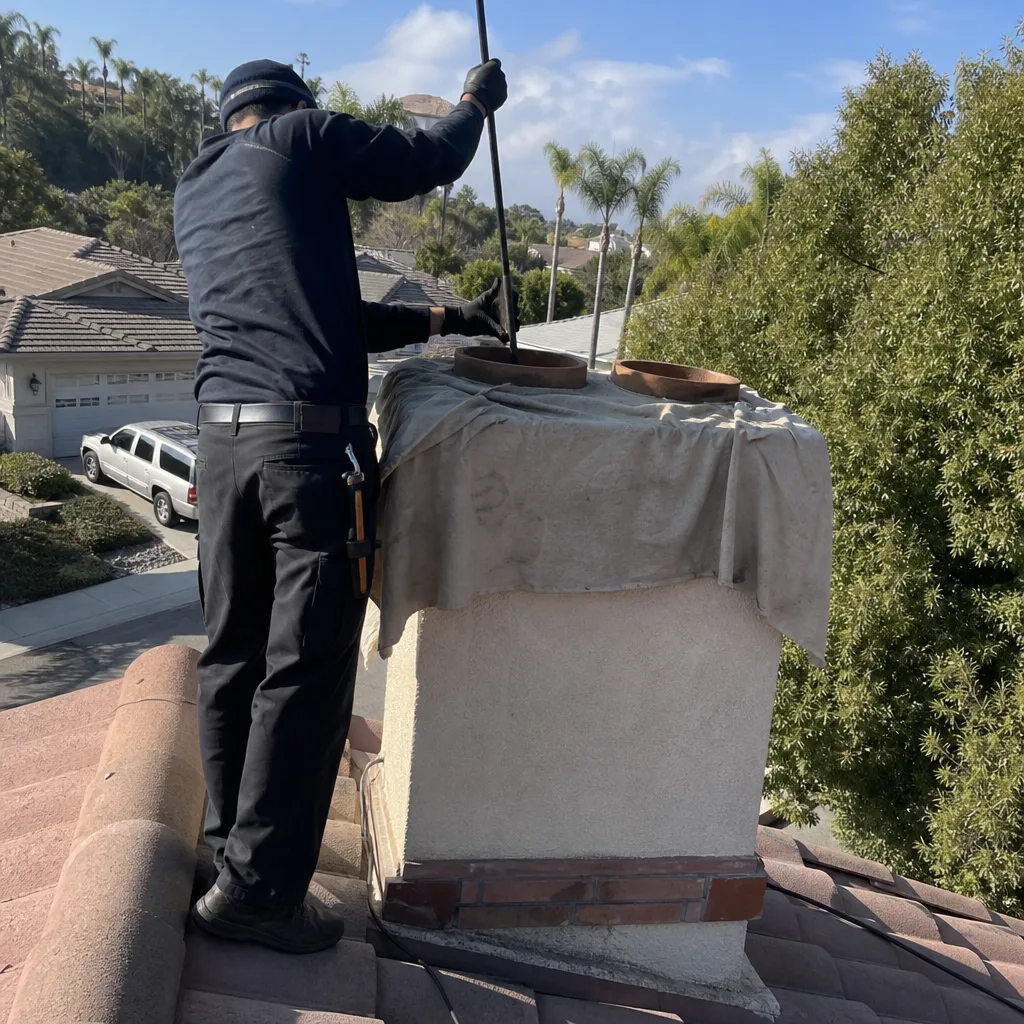
 Sweep & inspection
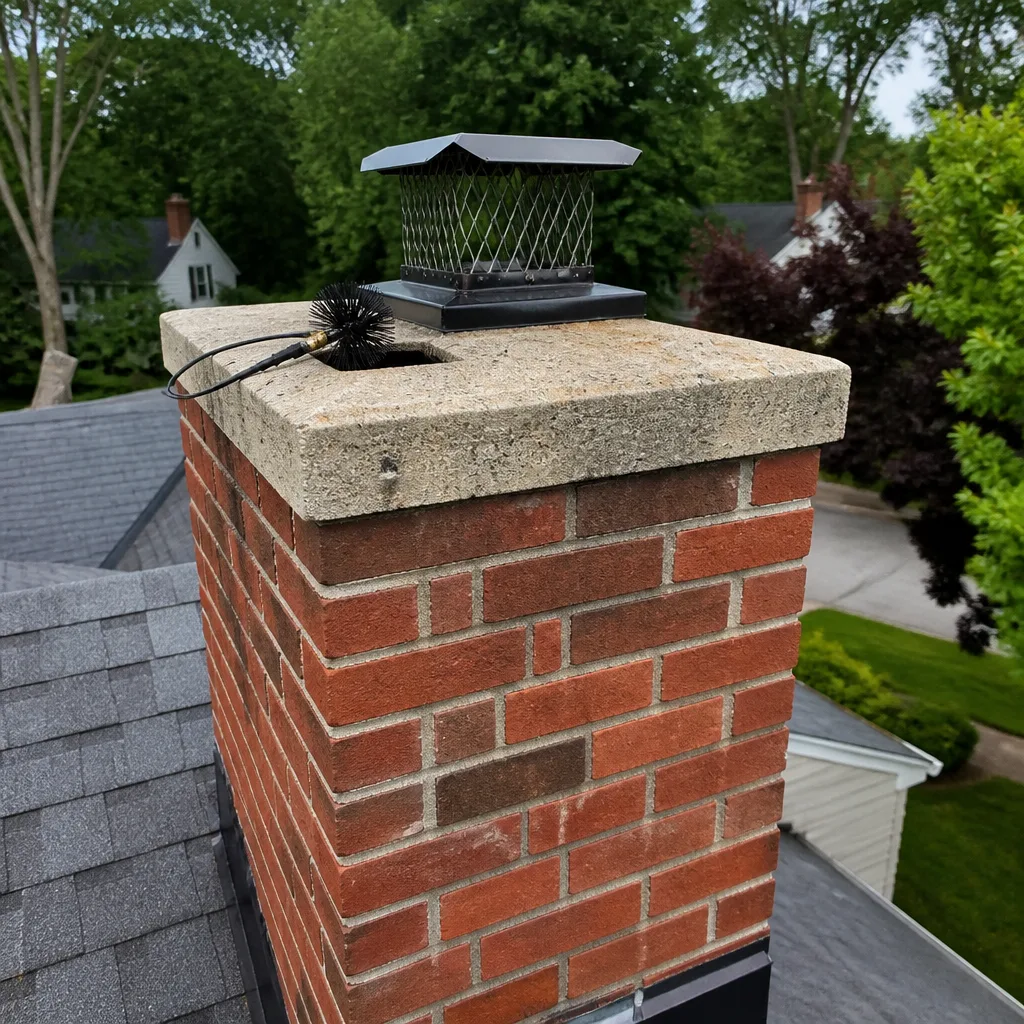
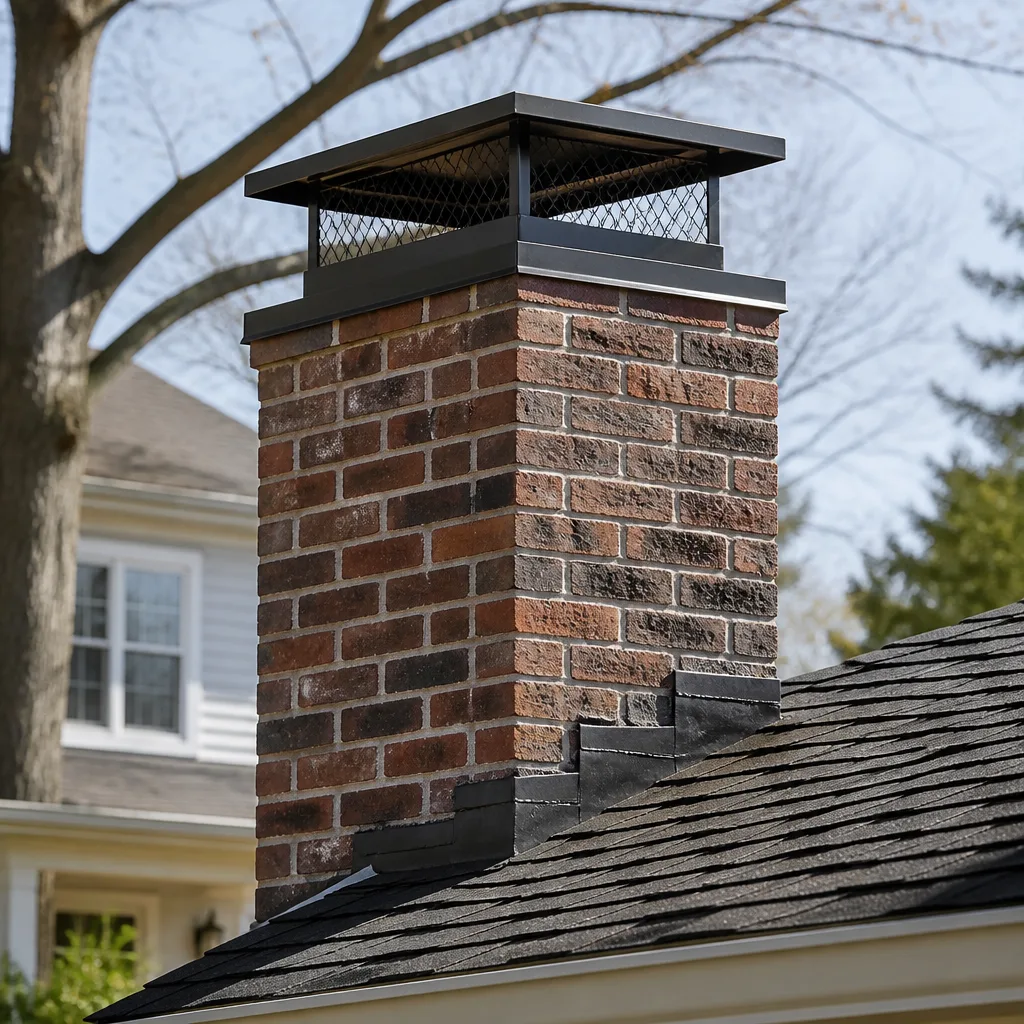 Caps & crowns
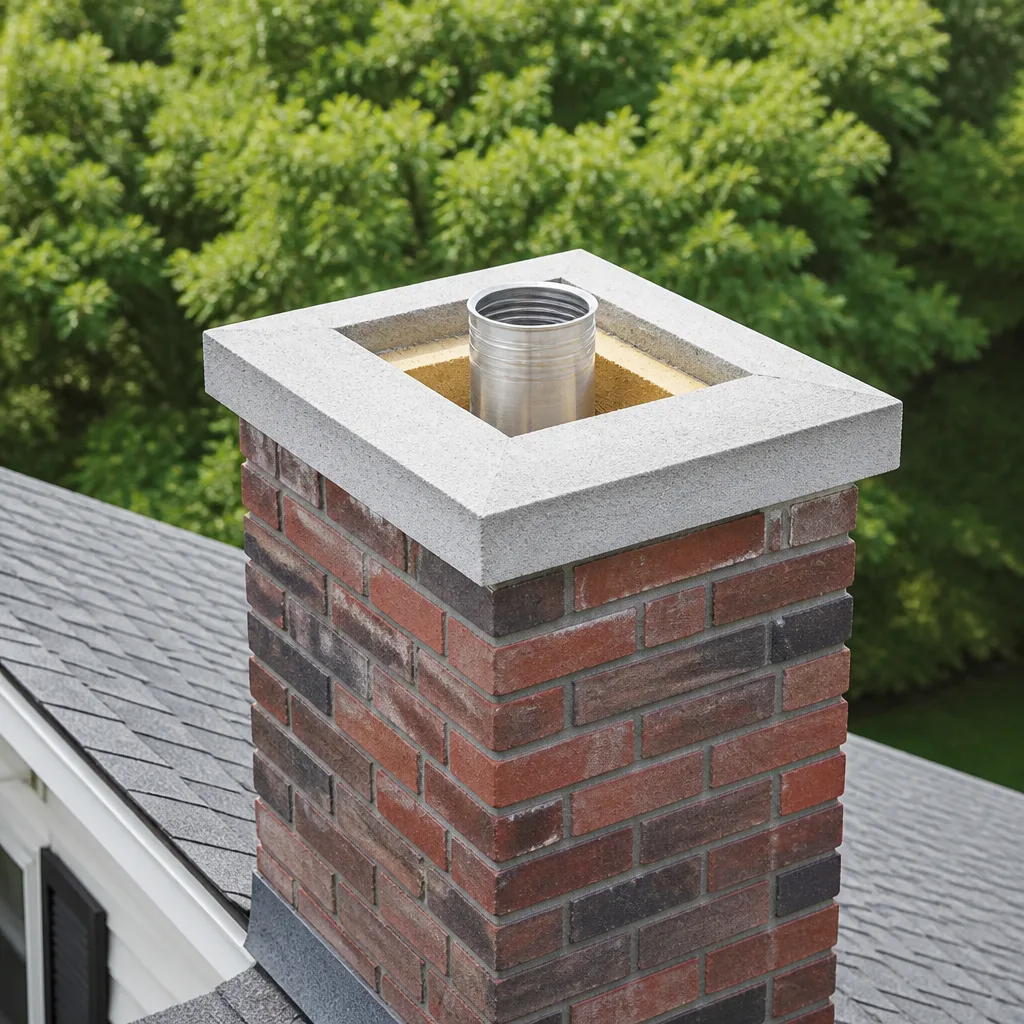 Flue relining
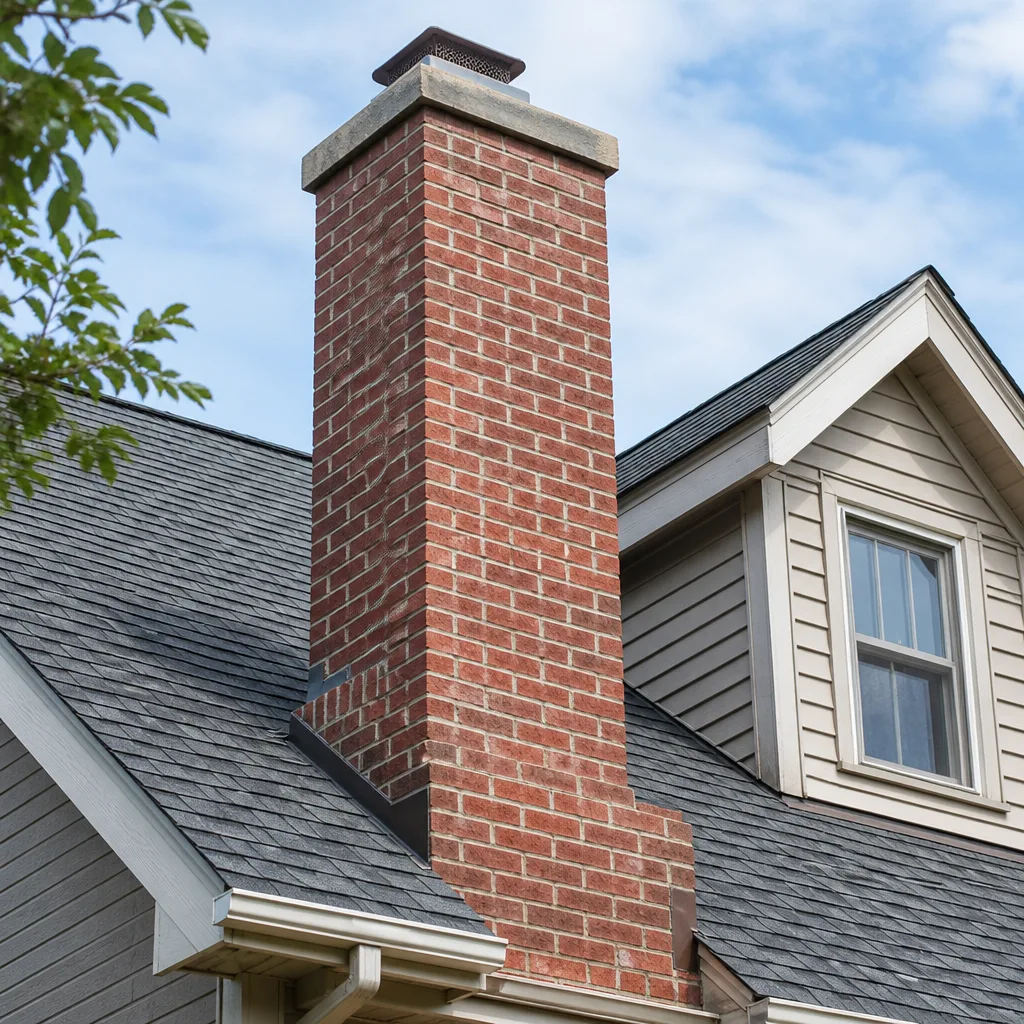 Masonry repair
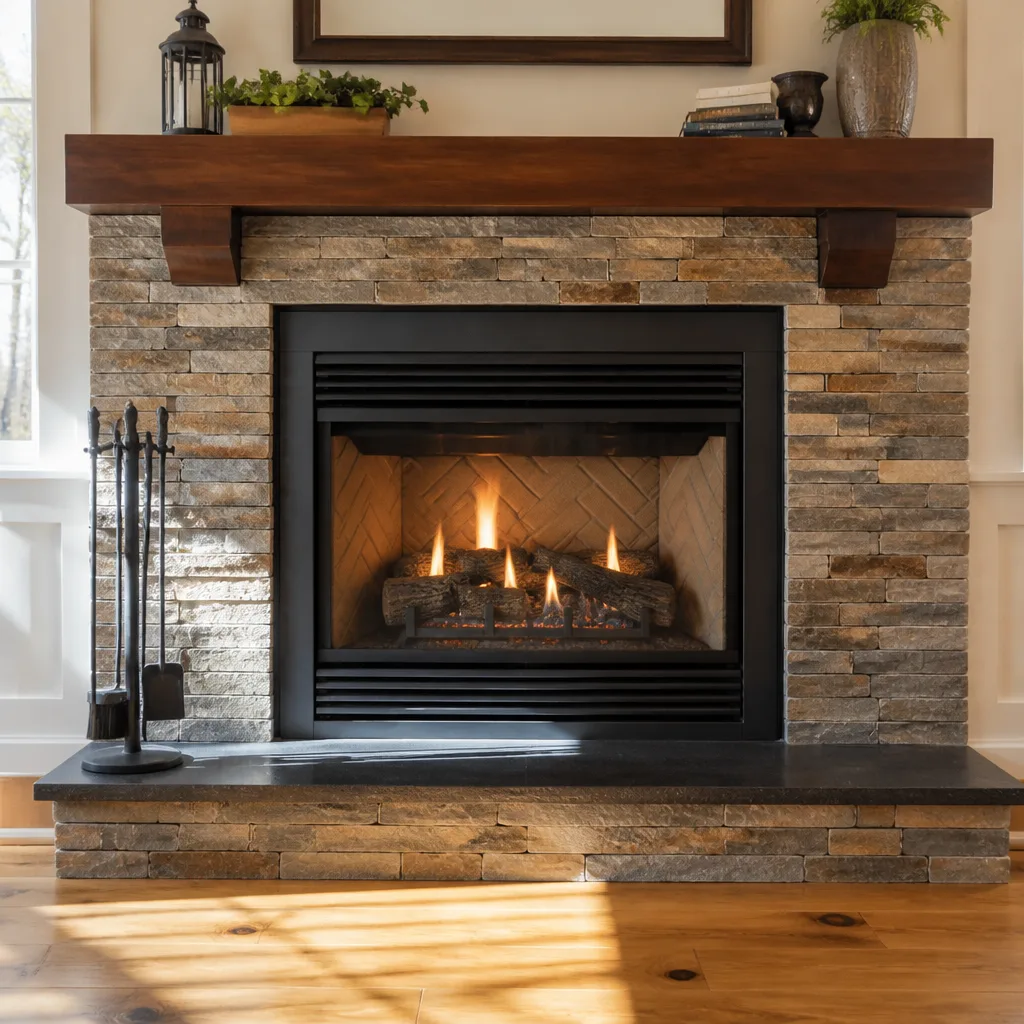 Gas fireplace service
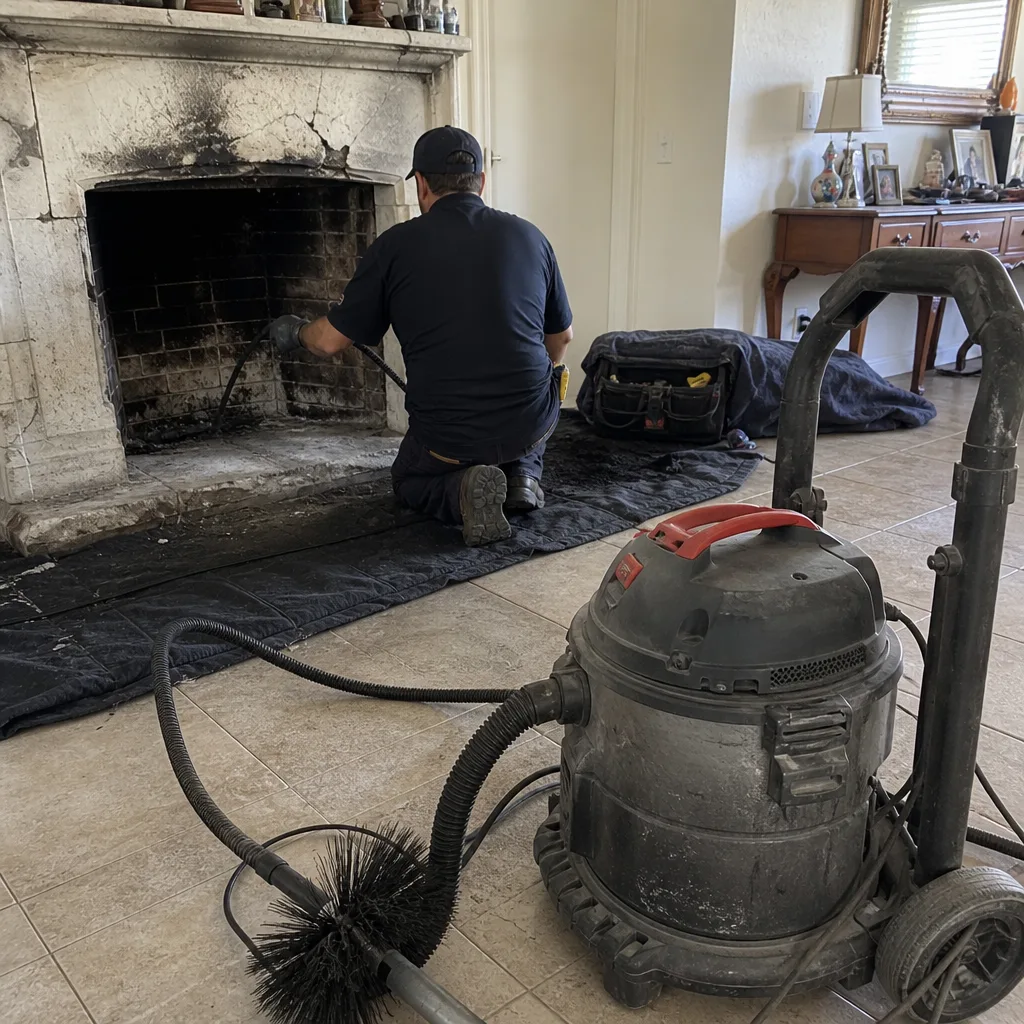
Level 1 sweep and inspection to the NFPA 211 annual standard - flue, crown, cap, and flashing checked and photographed
Chimney sweep logs do not sweep chimneys. They loosen some creosote - which then falls where a brush and vacuum still have to collect it.
Chimney Sweep Troubleshooting: Common Problems and How to Fix Them
A smoky fireplace and a smoky house are two different problems with two different causes. Confusing them is how Escondido homeowners end up paying for a flue cleaning when the real issue is a failed damper seal, or replacing a chimney cap when the problem was actually negative air pressure from a newly installed kitchen exhaust fan. This guide walks through the diagnostic logic we use on chimney sweep service calls every week, so you can describe the problem accurately, understand what the fix should cost, and avoid paying for work you don’t need. By the end, you’ll know which symptoms you can address yourself, which ones require a professional inspection, and which ones mean the fireplace stays cold until a specialist arrives.
Styles & brands we work with
Quick Answer
Most chimney problems fall into one of three categories: airflow issues (downdraft, smoke spillage), buildup issues (creosote, soot, animal nests), or component failures (damper, cap, flue liner). The fix depends entirely on which category you’re dealing with, and misdiagnosing the category is the single most expensive mistake homeowners make. If smoke enters the room only when a fire is struggling to start, you likely have an airflow problem. If smoke enters the room only when the fire is burning hot, you likely have a blockage or creosote restriction. If you smell something odd when there’s no fire at all, the damper or cap is probably the culprit.
Table of Contents
- Downdraft vs. Smoke Spillage: How to Tell the Difference
- Chimney Smells and What They Actually Mean
- How to Inspect Your Damper Without Climbing on the Roof
- Creosote Buildup: The Three Stages and What They Mean
- The Three Most Misdiagnosed Chimney Problems
- When a Symptom Is a Safety Hold: Do Not Use the Fireplace
- Water Stains, Leaks, and Efflorescence: What’s Actually Wrong
- Common Mistakes to Avoid
- When to Call a Professional
- Frequently Asked Questions
- The Bottom Line
Downdraft vs. Smoke Spillage: How to Tell the Difference
These two problems get lumped together constantly, and they require completely different fixes. Here’s the distinction that matters: downdraft is an airflow problem where outside air pushes down the chimney and into the house. Smoke spillage is a restriction problem where smoke can’t exit fast enough and backs up into the room. The symptoms look similar at first glance, but the timing tells you everything.
Downdraft happens most often when the fire is being lit or when it’s burning low. You’ll see smoke puff into the room in rhythm with wind gusts outside. On calm days, the fireplace might draft perfectly fine. On windy days, it’s unusable. This pattern points to a pressure problem: the chimney is shorter than surrounding roof peaks, nearby trees create turbulence, or the house itself is competing for air. In Escondido, we see downdraft complaints spike in fall when Santa Ana wind patterns shift, even in fireplaces that worked all winter.
Smoke spillage shows up when the fire is burning hot and established. The flue is partially blocked, so the smoke can’t move fast enough and spills over the lintel into the room. The smoke is usually thicker, and it hangs in the room rather than puffing rhythmically. Creosote buildup is the most common cause, but a collapsed flue tile, a bird nest, or a failed damper that’s only opening halfway will do it too.
Here’s the diagnostic sequence we walk customers through on the phone:
- Does smoke enter the room when the fire is first lit, or only after it’s burning hot? (First lit = downdraft. Burning hot = spillage.)
- Is the smoke rhythmic, matching wind gusts? (Yes = downdraft.) Or is it steady once the fire is established? (Yes = spillage.)
- Does the fireplace work on calm days but fail on windy days? (Yes = downdraft.) Or does it smoke regardless of outdoor conditions? (Yes = spillage.)
- Can you see daylight through the flue when the damper is open? If you can, the flue is at least partially clear, which pushes the diagnosis toward pressure issues rather than blockage.
Downdraft fixes range from adding chimney height with a taller cap to installing a properly sized top-sealing damper. Spillage fixes almost always require a sweep first, then a camera inspection of the flue to see what’s actually restricting it. One of these costs hundreds of dollars. The other can cost thousands if the liner has failed. Knowing which conversation you’re having before calling saves everyone time.
Chimney Smells and What They Actually Mean
Chimney odors are a diagnostic tool if you pay attention to what you’re smelling and when. Here’s what the common ones indicate.
A sulfur or rotten-egg smell after a fire points to creosote interacting with moisture. Creosote is acidic, and when it absorbs humidity from the air, it releases a sharp, acrid odor that some people describe as sulfurous. This is the smell of a flue that needs sweeping, not a gas leak. However, if you have a gas fireplace or gas water heater venting through the same flue and you smell rotten eggs, that’s a different situation. Natural gas and propane are odorized with mercaptan, which smells like rotten eggs, and that smell means call the gas company immediately. The distinction matters: burning plastic or a chemical smell near a wood fireplace is usually creosote. A rotten-egg smell near a gas appliance is an emergency.
A burning plastic smell during a fire typically means something that isn’t firewood is in the flue. We’ve found plastic bags, kids’ toys, and sections of old chimney balloon inflaters that were never removed. In Escondido’s dry summers, birds and squirrels build nests in uncapped chimneys, and those nests contain synthetic materials that smell like burning trash when the first fall fire hits. If the smell persists after a sweeping, the liner itself may be the issue. Older clay tile liners can have failed mortar joints that let creosote soak into the surrounding masonry, and that embedded creosote smolders with an acrid chemical smell.
A musty, damp smell in the off-season is moisture, usually entering through a missing or damaged chimney cap. Rain pools in the smoke shelf, soaks into creosote deposits, and creates that basement-like odor that wafts into the house when the AC runs. The fix is usually a cap replacement, which is straightforward. But if the musty smell is accompanied by visible water staining on the ceiling near the chimney or on the firebox walls, you may have a flue liner problem, not just a cap problem. The flue is the water channel, and if it’s compromised, water migrates through the chimney structure itself.
We use Copperfield and Famco caps and dampers on most installations because they hold up through the temperature swings and dry-season dust that Escondido chimneys deal with. For help selecting components, see Choosing the Right Chimney Cleaning Brand: A Buyer’s Guide for Escondido. The brand matters less than the fit, but a properly sized cap with a screened spark arrestor solves about 80% of the odor complaints we get.
How to Inspect Your Damper Without Climbing on the Roof
You can learn a lot about your chimney from inside the living room, and you should do this before calling anyone. A damper that’s rusted open, warped, or missing entirely changes the whole diagnosis, and you can spot it in five minutes.
Here’s the sequence:
- Open the damper completely. You’re looking for smooth travel on the handle or lever. It should move without grinding, and you should feel it seat when it reaches the open position. A damper that stops partway open is a smoke spillage source even if the flue is clean.
- Shine a flashlight up the flue. You’re looking for three things: visible creosote (shiny black, flaky black, or puffy black deposits), obstacles (nests, debris), and daylight at the top. If you can’t see daylight, the flue is blocked or the cap is clogged.
- Feel the metal around the damper frame. Rust flakes, pitting, or a damper that’s frozen in place means moisture has been entering. If the damper frame is rusted, the chimney cap is suspect, and the damper may need replacement.
- Close the damper and check the seal. With the damper closed, light a match or a piece of incense and hold it near the damper opening. If the smoke wavers or gets pulled upward, the damper is leaking air. A damper that doesn’t seal costs you money year-round: heated air escapes in winter, cooled air escapes in summer, and chimney odors enter the living room constantly.
If the damper fails any of these checks, you’ve found at least part of your problem. In our experience serving Escondido and the surrounding areas, damper issues are present in roughly half of the “chimney doesn’t draft” calls we answer. The fix is often a top-sealing damper, which replaces the throat damper entirely and seals at the flue termination instead. A top-sealing damper does double duty: it stops air leakage better than any throat damper and it keeps rain, debris, and animals out. It’s a more durable solution than repeatedly repacking a worn throat damper with high-temperature gasket material.
Creosote Buildup: The Three Stages and What They Mean
Creosote isn’t one substance. It’s a spectrum of deposits that form when wood smoke condenses on the cooler walls of the flue, and the stage of creosote you have determines the method and cost of removal.
Stage 1: Soot and light flaky creosote. This is a fine black or brown powder or lightly crusty deposit. It brushes off with standard sweeping tools. Every chimney develops Stage 1 creosote with regular use. The fix is a routine sweep.
Stage 2: Glazed or tarry creosote. This is a hardened, shiny, tar-like coating that forms when smoke condenses rapidly and the creosote bakes at moderate temperatures. It doesn’t brush off with standard tools. It requires rotary cleaning heads with metal chains or chemical treatment to break down. Stage 2 creosote is a fire hazard: it’s flammable, and it reduces flue diameter, which raises flue temperatures, which makes ignition more likely.
Stage 3: Hardened, caramelized creosote. This creosote has been through repeated heating cycles and set into a thick, rock-hard layer. It’s extremely difficult to remove, and in some cases it has already damaged the flue liner beneath it. Stage 3 creosote requires aggressive mechanical removal, and the flue should be camera-inspected afterward because the creosote’s acidic and thermal stress has often compromised the liner.
Here’s what you can check yourself: shine a light up the flue and look at the color. Flat black, powdery = Stage 1. Shiny and wet-looking even when cold = Stage 2. Thick, crusty, and uneven like old tree bark = Stage 3. If you’re seeing Stage 2 or 3, don’t burn again until the flue is swept. A chimney fire in a glazed flue burns hot enough to crack clay tiles and damage masonry structure, and you may not even know it happened until the damage is found during the next sweep or inspection.
For flues that have already been damaged by creosote or by a previous chimney fire, there’s a repair option short of full relining. HeatShield is a liner restoration system that resurfaces the interior of a damaged flue with a ceramic coating, restoring a smooth surface and sealing cracks. We offer HeatShield as an alternative to a full stainless liner installation when the underlying flue structure is still sound. The distinction matters because the cost difference is significant. A heat-damaged flue that would have meant a $6,000-$8,000 relining can sometimes be restored for around half that. Not every chimney qualifies, but the camera inspection tells us whether yours does.
The Three Most Misdiagnosed Chimney Problems
These are the problems we get called in to correct after someone else has already charged for a fix that didn’t work. They share a common thread: each one requires a camera inspection and repair capability that sweep-only operators often don’t have.
1. A “blocked flue” that’s actually a failed damper blade
A damper blade that has rusted, warped, or come loose from its hinges looks like an obstruction. A sweep-and-brush call removes creosote but does nothing for the damper. The customer has paid for a cleaning, still has smoke spillage, and assumes the chimney is unfixable. The actual fix is damper replacement, which is mechanical repair, not sweeping. The giveaway is smoke spillage even when the flue is visibly clean, especially when the damper handle feels loose or rattles.
2. A “downdraft” that’s actually negative house pressure
This one chains through Escondido homes that have been remodeled. A new kitchen exhaust fan, a more powerful bathroom vent, a tighter building envelope, or a new HVAC system changes the air balance in the house. The chimney can’t draft because the house is starved for makeup air. The customer is told the chimney needs a taller pot or a special cap, and the problem remains because the pressure imbalance hasn’t been addressed. The fix is usually mechanical: a makeup air damper, an outside air kit for the fireplace, or adjusting the exhaust fan setup. The diagnostic clue: the chimney drafts fine when a window near the fireplace is opened but smokes immediately when all windows and doors are closed.
3. A “chimney leak” that’s actually a failed liner, not a missing cap
Water coming down the flue in a cold-weather home is often a cap problem. But in Escondido’s climate, we see a different pattern: water staining on interior walls, damp firebox bricks, and musty odors persist even after a new cap is installed. The cause is a cracked or spalled flue liner that’s letting moisture migrate through the chimney structure. The only reliable way to confirm it is with a camera inspection of the flue interior. If the liner is compromised, the fix is either HeatShield restoration or a stainless steel liner like DuraFlex. Installing a new cap over a failed liner is like replacing the roof shingles while the wall studs are rotting.
When a Symptom Is a Safety Hold: Do Not Use the Fireplace
Some symptoms mean the fireplace should not be used until a professional inspects it. These aren’t judgment calls. They’re hard stops.
- You see white, chalky deposits on the exterior brick above the roofline. This is efflorescence, which means water is moving through the masonry and carrying minerals to the surface. The visible deposit is cosmetic, but the water movement behind it may have compromised the flue liner or the mortar structure. Water and fire don’t mix: a water-damaged flue liner can fail catastrophically during a fire.
- You hear dripping inside the flue after rain, or you see water in the firebox. Water entering the flue soaks into creosote, accelerates liner corrosion, and creates the conditions for a chimney fire. Don’t burn until the water entry point is found and fixed.
- You see smoke stains on the ceiling around the chimney chase or on the walls adjacent to the fireplace. This indicates smoke has been leaking out of the flue structure into the living space, which means the liner or the mortar joints are compromised. Carbon monoxide follows the same path as that smoke.
- After a chimney fire, no matter how brief. Chimney fires can be over in seconds and still crack flue tiles, separate liner sections, and damage the structure. A camera inspection is the minimum standard before the fireplace is used again.
- You smell gas near a gas fireplace or in the room with a gas appliance connected to the chimney. This is not a troubleshooting situation. Leave the house and call the gas company. After the gas supply is addressed, the venting system needs inspection before the appliance is used again.
These safety holds exist because the visible symptom understates the risk. A hairline crack in a flue liner looks minor on camera, but during a fire, that crack becomes a pathway for hot gases and carbon monoxide to reach the home’s structure. The cost of an inspection is trivial compared to the cost of the damage a failed liner can cause. Oakleaf Chimney Sweep offers Chimney Sweep in San Marcos and the surrounding North County area with camera inspection on every service call, so the question isn’t whether the flue gets looked at. It’s what the camera finds.
Water Stains, Leaks, and Efflorescence: What’s Actually Wrong
Water problems in Escondido chimneys follow a pattern dictated by the climate. We get most of our rain in a handful of winter storms, then long dry stretches where water damage has time to show itself in stains, mineral deposits, and odor changes before the next storm arrives. That gives attentive homeowners a diagnostic window that homeowners in wetter climates don’t get.
The most common entry points, ranked by frequency we see in the field:
- Missing or damaged chimney cap. The cap is the umbrella. If it’s gone, cracked, or the wrong size for the flue, rain falls directly into the flue. This is the easiest fix, and it’s usually the first one we check.
- Cracked or deteriorated crown. The crown is the concrete or mortar slab at the top of the chimney that sheds water away from the flue. Crescendo cracks in the crown let water seep into the masonry below the roofline. Repointing or crown reconstruction is a repair that sweep-only operators often don’t do.
- Failed flue liner. The liner is the water channel, and when it cracks – from age, heat stress, or a previous chimney fire – water migrates through the liner into the brick structure. This shows up as efflorescence on exterior brick, damp interior firebox bricks, and water staining that recurs after every storm regardless of cap condition.
- Faulty flashing at the roofline. The metal flashing that bridges the chimney and the roof is a common leak source, but it’s a roofing repair, not a chimney repair. We inspect it and tell you when the flashing is the problem so you can get a roofer involved rather than paying for chimney repairs that won’t stop the leak.
If you see white powder on the brick above the roofline, that’s efflorescence, and it tells you water is moving through the masonry. The powder itself washes off; the water movement behind it is the concern. If the efflorescence appears within a year of a new cap being installed, the liner is the prime suspect. Camera inspection confirms it in minutes. If the liner has failed, the repair path depends on the damage extent. Minor spalling and small cracks can sometimes be addressed with HeatShield resurfacing. Extensive damage calls for a DuraFlex stainless liner, which is the standard in the industry for full relining. We’ll tell you which your situation actually needs, and the camera footage is yours to see before you make the call.
Common Mistakes to Avoid
- Burning pine or other soft woods as your primary firewood without expecting creosote buildup. Soft woods burn hot and fast, but they produce more smoke and resin than hardwoods, which accelerates creosote formation. In Escondido, where oak and eucalyptus are the common local woods, mixing in too much pine from the mountains increases your Stage 2 creosote risk measurably. Burn seasoned hardwoods, and sweep on schedule.
- Closing the damper too soon after a fire. The damper should stay open until the embers are fully cold. Closing it while the fire is still smoldering traps smoke and moisture in the flue, accelerating creosote condensation and causing odor problems. If you’re going to bed before the fire is fully out, leave the damper open and lose a little heat rather than trapping smoldering byproducts.
- Ignoring a chimney odor because “it’s just how old fireplaces smell.” A musty, sharp, or chemical smell is never normal. It means something is wet, something is blocked, or something is compromised. The smell usually arrives weeks before the clog or the leak becomes visible. Treat it as an early warning.
- Installing a taller chimney cap to fix a drafting problem without checking house pressure. Cap height matters for wind turbulence, but if the problem is negative pressure inside the house, a taller cap does nothing but lighten your wallet. Open a window near the fireplace and see if the draft improves before paying for a cap modification.
- Using a chimney cleaning log as a substitute for a sweep. Chemical cleaning logs break down some creosote, but they don’t remove the deposits, and they don’t address structural problems. The National Fire Protection Association standard for chimney maintenance is an annual inspection and sweep as needed, not a log you burn and forget.
- Hiring a sweep-only service and hoping they find structural problems. Sweeping tools remove creosote. They don’t inspect flue interiors, they don’t repair dampers, and they don’t restore liners. If your chimney has a structural issue, you want a company that can fix what they find, not one that hands you a referral and bills you for the visit.
When to Call a Professional
You can identify a draft problem, a damper failure, or a creosote stage on your own, and you can make an informed decision about whether the fireplace is safe to use. But the actual fix requires tools and access you don’t have: rotary cleaning heads for Stage 2 creosote, camera inspection to see liner condition, mechanical damper replacement, and liner restoration or relining. If you’ve gone through the diagnostic steps above and identified a spillage problem, a safety hold, or a recurring water issue, the next call is to a chimney professional who can inspect and repair in one visit. Oakleaf Chimney Sweep offers free estimates in Escondido — call (855) 362-1450 to schedule a camera inspection and get the fireplace sorted before the next burn season starts. For more guides & resources, visit our blog.
We handle the full range under one roof: Oakleaf Chimney Sweep home services include chimney sweeping, chimney repair, and dryer vent cleaning. If you’re in the area, our Chimney Repair in San Marcos page covers repair scope, and if your dryer vent has been overlooked on the maintenance schedule, our Dryer Vent Cleaning in San Marcos page explains why lint buildup belongs in the same conversation as chimney maintenance. One call covers every fire-safety vent in your home – chimney and dryer. That’s the point of having a single company that does both.
Frequently Asked Questions
A standard chimney sweep in Escondido typically runs between $150 and $300, depending on the flue type, creosote stage, and whether the chimney has been recently maintained. Stage 2 or Stage 3 creosote costs more because it requires rotary cleaning heads and more labor. The estimate for Oakleaf Chimney Sweep includes a camera inspection, so you know exactly what was found and what, if anything, needs repair. Call (855) 362-1450 for an exact quote – estimates are free, and you’ll know the full cost before work begins.
Many damaged liners can be restored with HeatShield, a ceramic resurfacing system that seals cracks and restores a smooth interior surface without the cost of a full relining. The deciding factor is the condition of the underlying flue structure and the extent of the damage, which you can only assess with a camera inspection. A full DuraFlex stainless liner is the right call for extensive damage, and we’ll walk you through the camera footage so you can see for yourself which path your chimney needs. Call (855) 362-1450 to schedule the inspection that answers the question.
Once a year, at minimum, before the burn season starts. If you burn more than two cords of wood per season, sweep mid-season as well. The National Fire Protection Association’s guidelines call for annual chimney inspection and cleaning as needed, and that standard applies whether the fireplace sees daily winter use or occasional weekend fires. In Escondido, the fall shoulder season is the best time to schedule: the chimney is dry, creosote from last season has stabilized, and the sweep is done before the first rain saturates the flue. See The Complete Chimney Sweep Guide for Escondido Homeowners for a full seasonal checklist.
Creosote builds up in stages. Skip one year, and Stage 1 soot becomes a thin glaze. Skip two or three, and the glaze thickens into Stage 2 creosote that a standard brush won’t remove. At that point, a chimney fire becomes likely. Chimney fires burn in the flue at high temperatures, cracking clay tiles and burning through mortar joints. In the best case, a chimney fire leaves damage that requires relining. In the worst case, it spreads to the house’s structure. The annual sweep is the cheap insurance against a five-figure repair.
You can buy chimney brushes and rods at hardware stores, and you can climb a ladder and brush a flue. But you can’t see what the brush missed, you can’t remove Stage 2 glazed creosote with a hand brush, and you can’t assess liner condition without a camera. DIY sweeping also carries real risk: ladder work on a roof, chemical exposure, and the false confidence that comes from brushing a flue you’ve never inspected. A professional sweep costs less than an emergency room visit or a chimney fire repair, and it includes the diagnostic work that DIY cannot.
Rain water entering the flue soaks into creosote deposits, and wet creosote releases the sharp, musty odor that fills the room. The water entry point is usually a missing or damaged chimney cap, but it can also be a cracked crown, failed flashing, or a compromised flue liner that lets water migrate through the masonry. A camera inspection identifies the entry point precisely, and the fix ranges from a simple cap replacement to a full liner restoration depending on what’s found. Call (855) 362-1450 to schedule an inspection and get the odor stopped at the source.
The Bottom Line
Chimney troubleshooting starts with observation: when does smoke appear, what does the smell tell you, what happens when you open a window, what does the damper look like under a flashlight. Those observations separate airflow problems from blockage problems, cap failures from liner failures, and maintenance issues from safety holds. The diagnostic work is yours to do for free. The fix, when it requires tools and camera access, belongs in professional hands – and the best-case scenario is a company that can sweep, repair, and restore in the same visit rather than sending you to a second contractor. In Escondido, the burn season starts soon. Inspect what you can, know what you can’t see, and call (855) 362-1450 when the diagnosis points to something that needs professional attention.
Written by the team at Oakleaf Chimney Sweep, serving Escondido since 2016.
See the difference
 Before
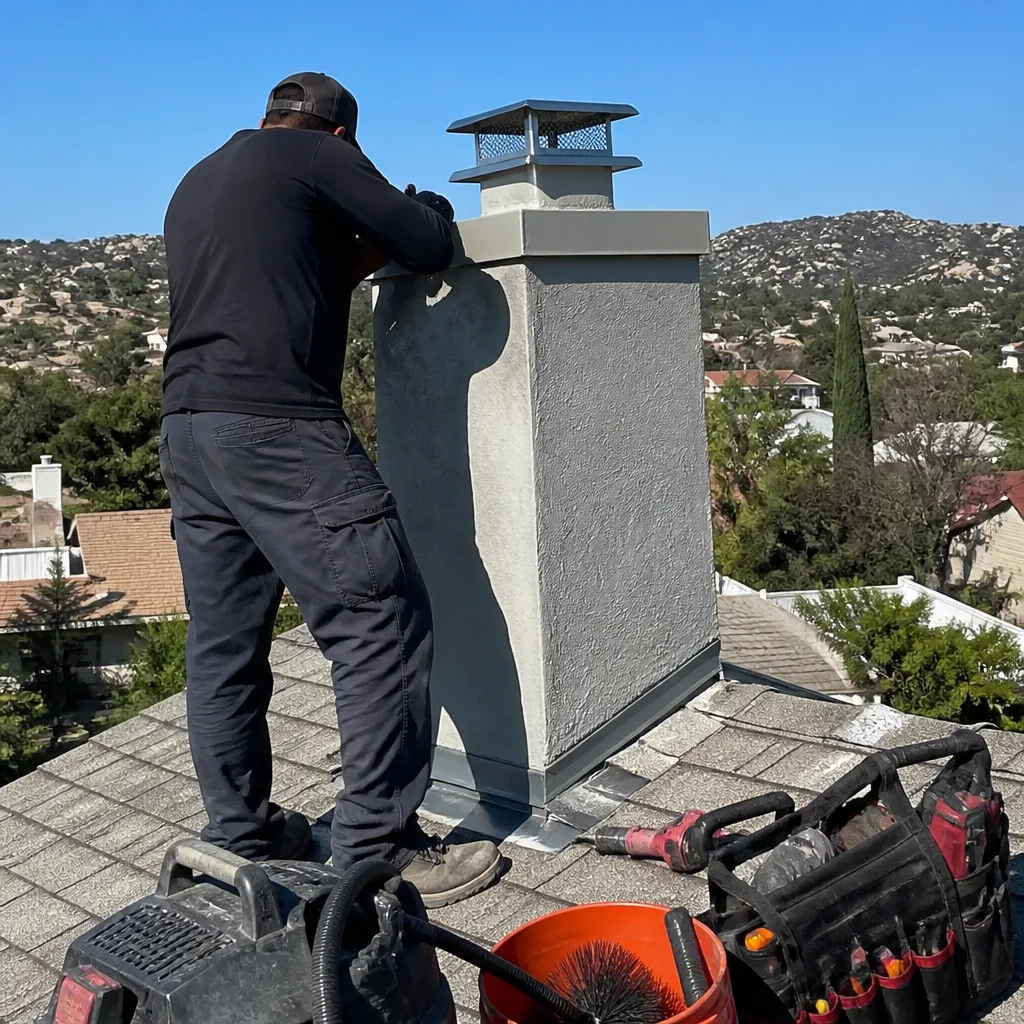 After
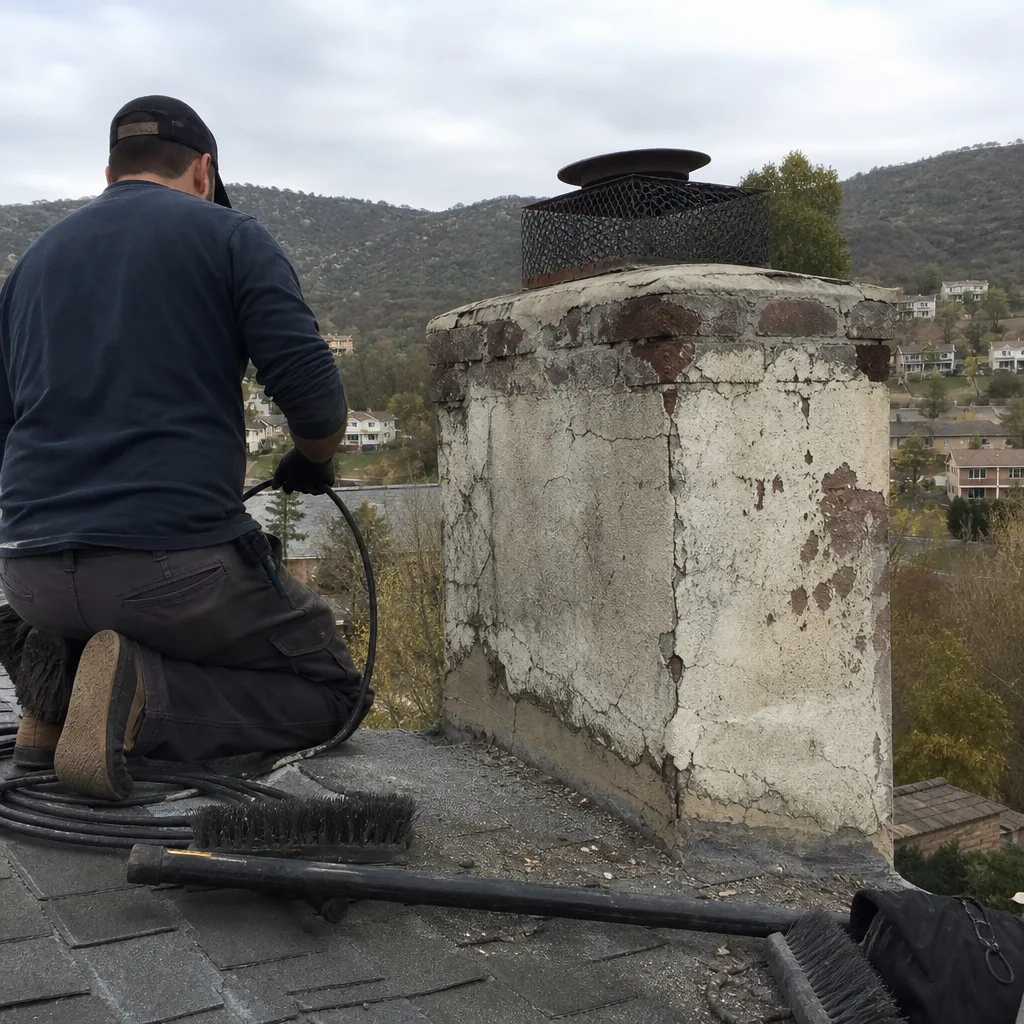 Before
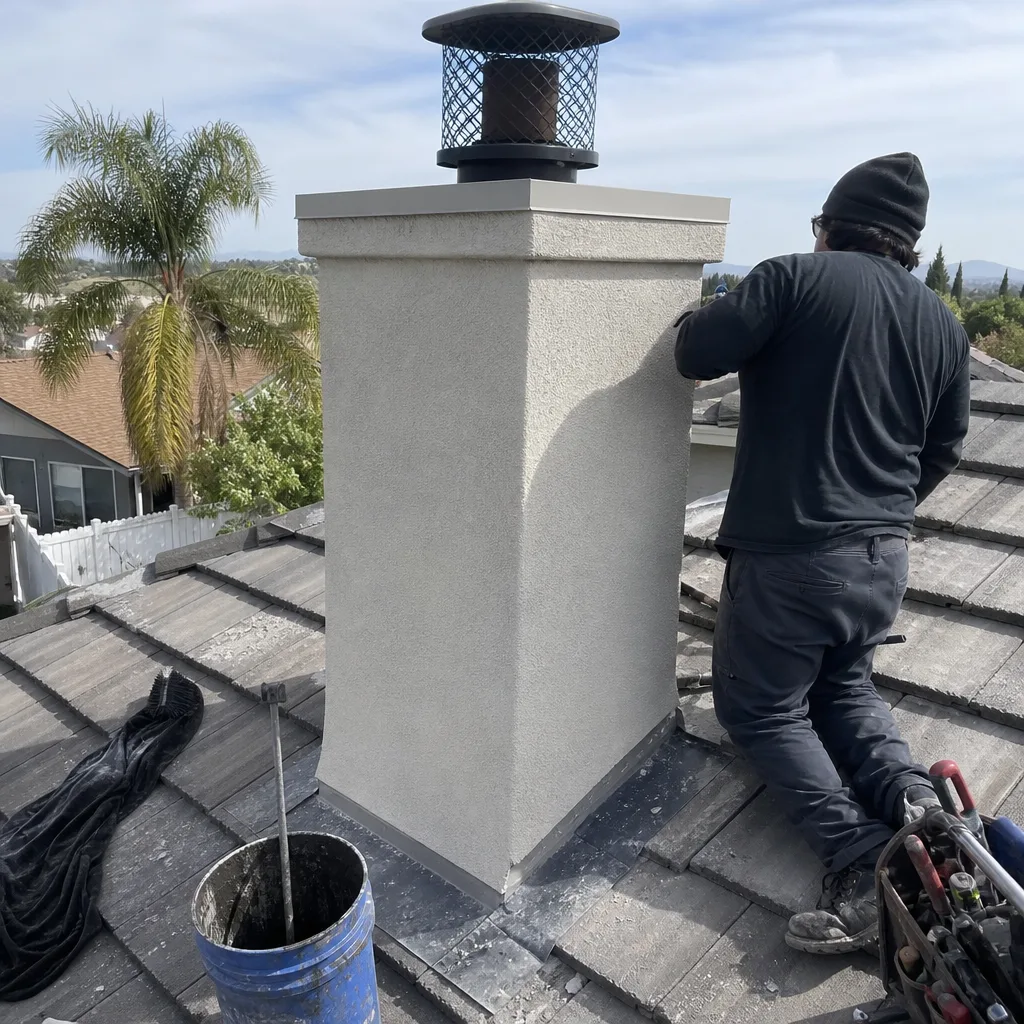 After
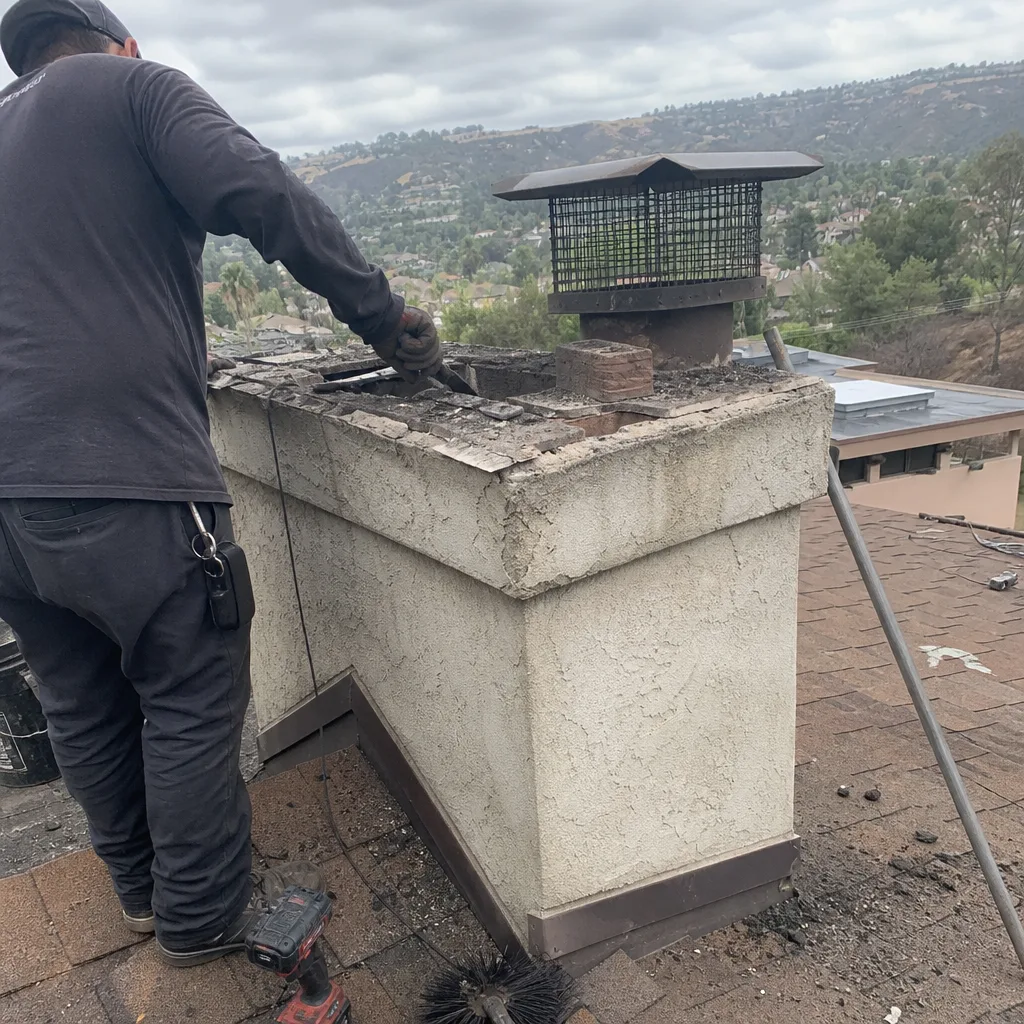 Before
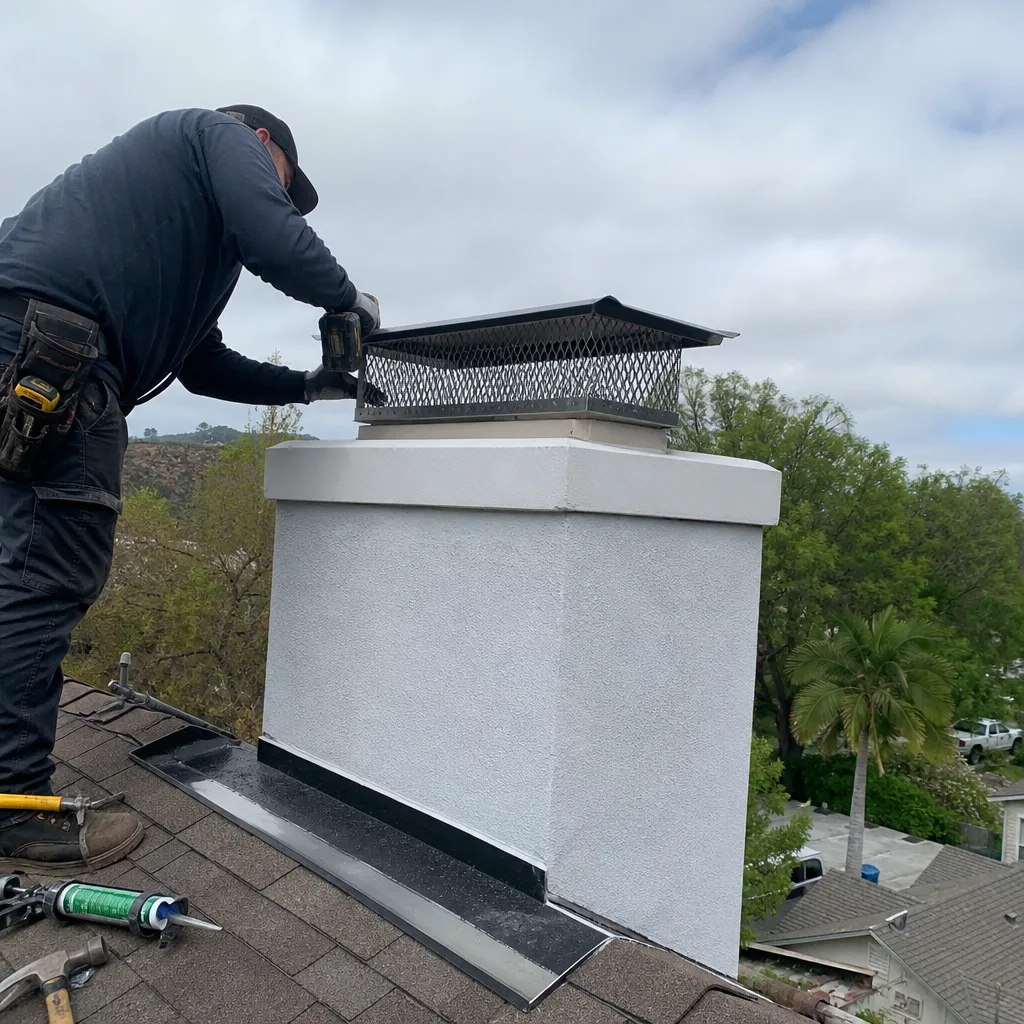 After