

Last updated October 31, 2026
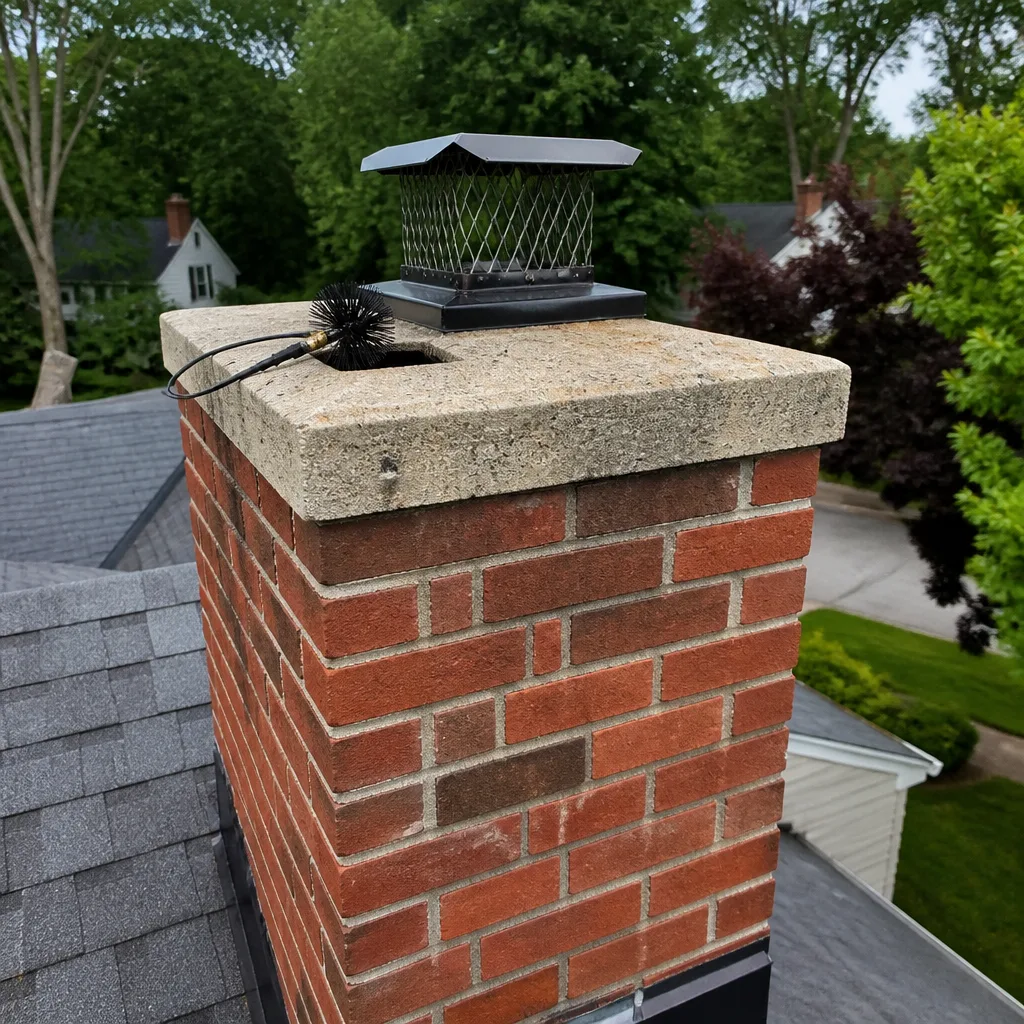 Sweep & inspection
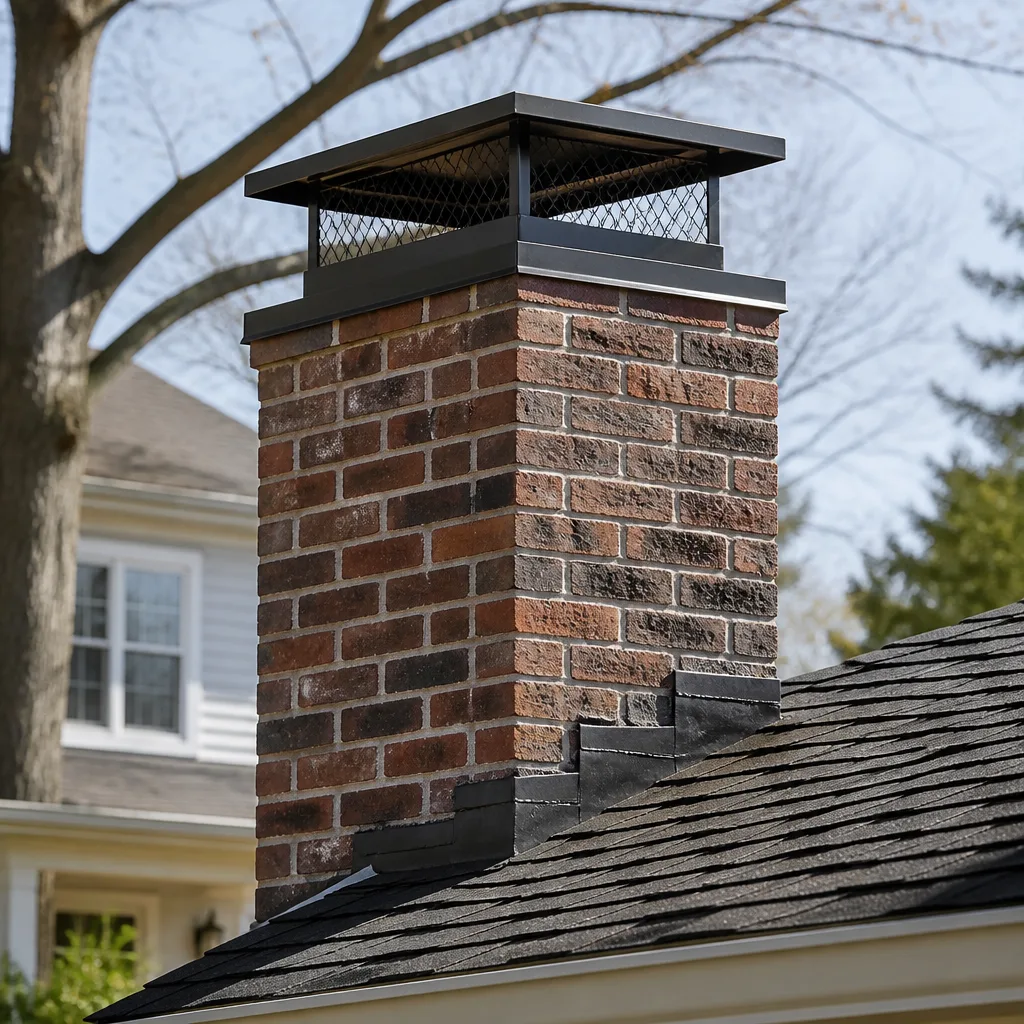 Caps & crowns
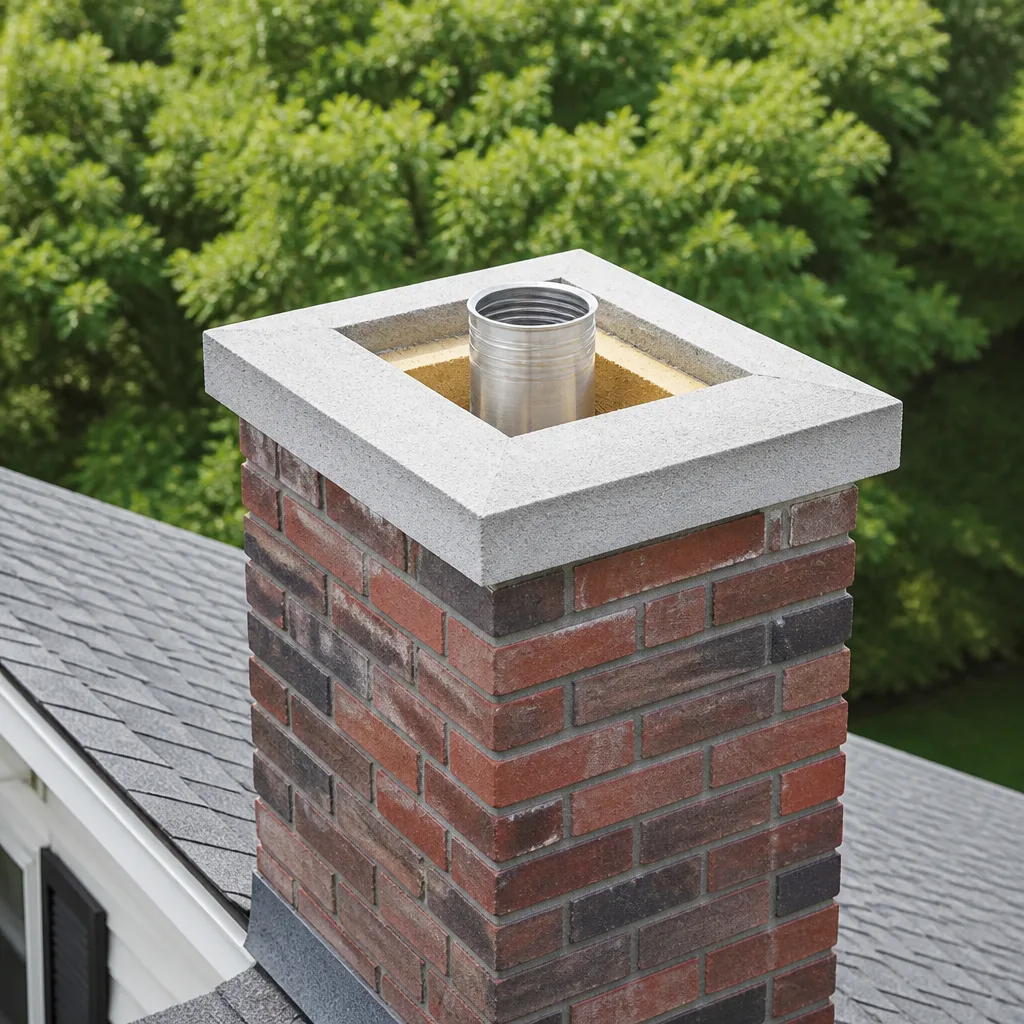 Flue relining
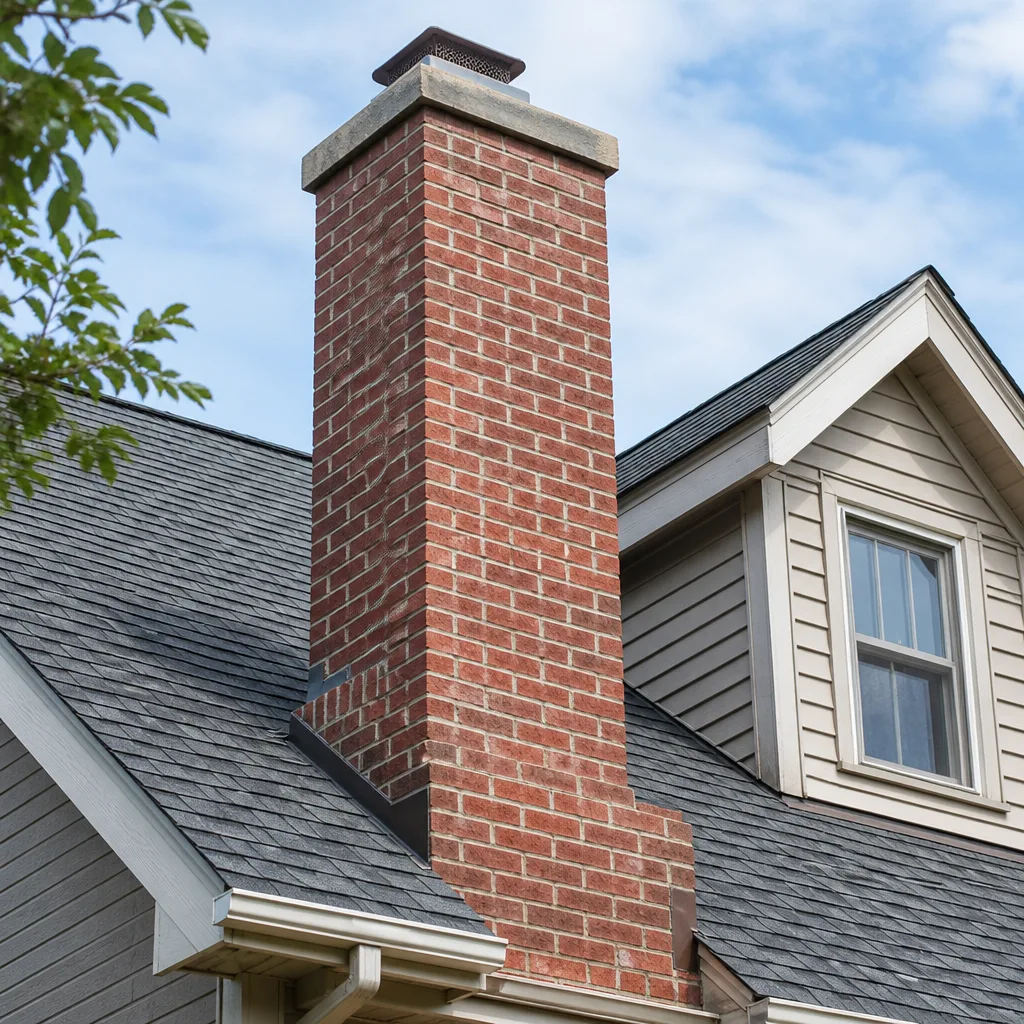 Masonry repair
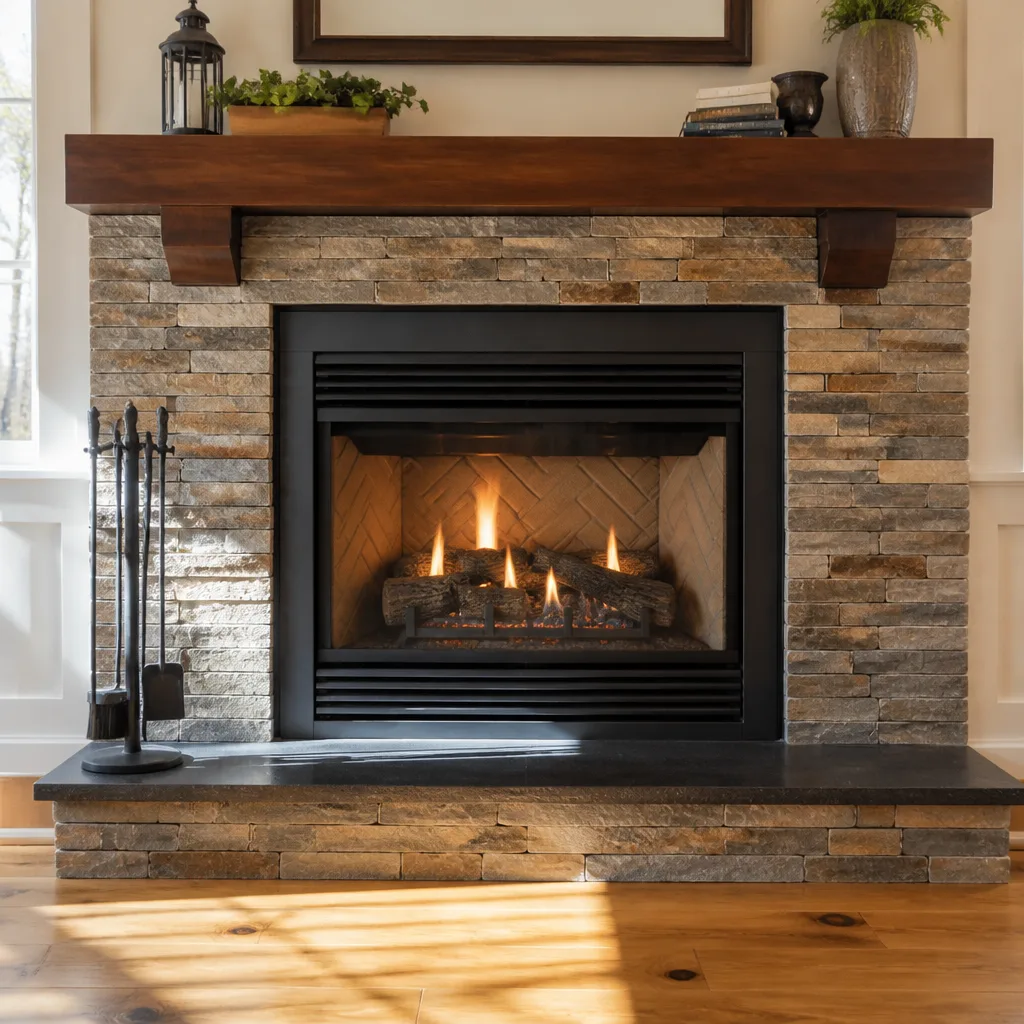 Gas fireplace service
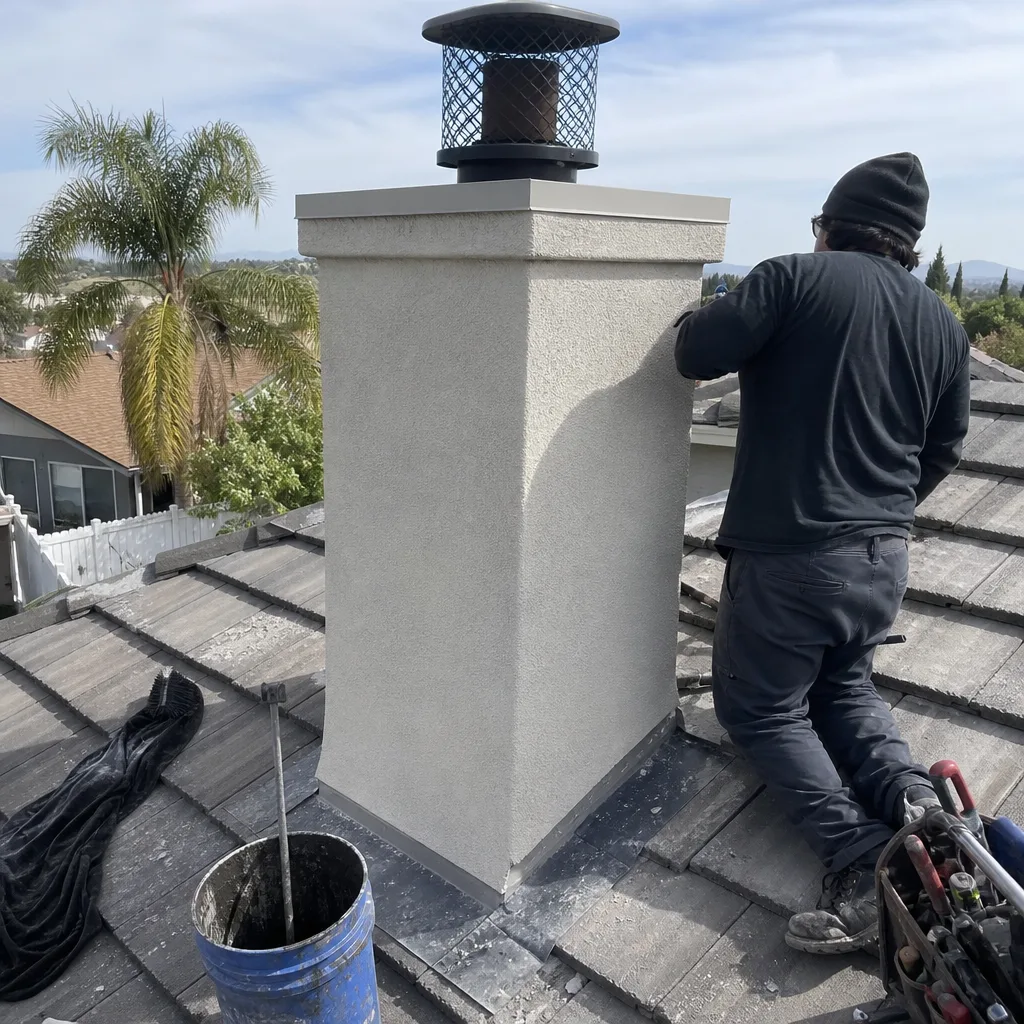
Level 1 sweep and inspection to the NFPA 211 annual standard - flue, crown, cap, and flashing checked and photographed
Chimney sweep logs do not sweep chimneys. They loosen some creosote - which then falls where a brush and vacuum still have to collect it.
Chimney Sweep Maintenance Checklist for Escondido Homeowners
The standard advice is “sweep once a year.” That schedule was written for Vermont, not a San Diego County hillside where your fireplace runs six times between Thanksgiving and March. If you follow it blindly, you’ll either sweep too early and waste money, or too late and miss a creosote problem that built up during one cold snap. This guide replaces the generic calendar with a maintenance cadence built around how Escondido homes actually burn wood: occasionally, seasonally, and often with a dryer vent running year-round that deserves the same attention. Here is exactly what to check, when to check it, and what you can safely handle yourself versus what needs a camera and a trained eye. Our Chimney Sweep services have worked on enough Escondido fireplaces to know the difference between a brushed flue and a truly safe one, and we’ll walk you through both.
Styles & brands we work with
Quick Answer
The chimney maintenance checklist for Escondido homeowners has three tiers: monthly visual checks of your damper, firebox, and visible crown during burn season (October through February); an annual professional sweep and camera inspection, ideally in late September or early October before the first fire; and a dryer vent cleaning on the same schedule as your chimney sweep, since lint buildup is the same class of fire hazard. If you burn more than three cords a season or notice a campfire smell when the fireplace is not in use, move the professional sweep earlier.
Table of Contents
- Why Escondido’s Fire Season Changes the Checklist
- The Monthly Visual Checklist (What You Can Do Yourself)
- The Annual Professional Sweep: What Actually Happens
- Escondido-Specific Debris Points: Open Space, Wind, and Critters
- Folding Dryer Vent Cleaning Into the Same Schedule
- What to Keep on File: Documentation That Saves You Money Later
- When a Sweep Turns Into a Repair: Liner, Damper, and Crown Decisions
- Common Mistakes to Avoid
- When to Call a Professional
- Frequently Asked Questions
- The Bottom Line
Why Escondido’s Fire Season Changes the Checklist
Escondido sits in a Mediterranean climate with hot, dry summers and mild, occasionally wet winters. The inland valley catches more temperature swing than the coast. That means fires get lit in bursts: three cold nights in a row, then nothing for two weeks, then a rainy stretch where the fireplace becomes the center of the living room again. Each cold-burn cycle does something specific to your flue. When a fire burns hot and then the chimney cools completely, creosote condenses and hardens in layers. When the next fire starts, the flue is not warming from a residual heat state like it would in a colder climate where the stove runs daily. It’s expanding from cold, which stresses older mortar joints more aggressively.
The fire season in Escondido runs roughly October through February, with shoulder months in September and March. That means the maintenance cadence should not follow spring/fall cleaning logic. You want the professional sweep to land before the first sustained cold snap, not after the damage is already baked on from a season of use. September and early October are the sweet spot. If you missed it, a mid-season sweep is still worthwhile, especially if you’re burning more than expected or using wood that hasn’t fully seasoned. For help diagnosing issues, see our Chimney Sweep Troubleshooting: Common Problems and How to Fix Them.
We also see a pattern specific to this valley: homes that use their fireplace as a backup heat source during Santa Ana wind events, when the dry air makes the house feel colder than the actual temperature. Those bursts are short but frequent, and they’re often the fires that produce the most creosote because people burn whatever wood is available, which is sometimes not fully dry. The checklist below accounts for that reality rather than pretending every Escondido homeowner burns a cord a week.
The Monthly Visual Checklist (What You Can Do Yourself)
During burn season, a five-minute visual check once a month catches problems before they become repair bills. These are things any homeowner can do without a ladder or specialized tools. The goal is not to replace a professional inspection. It’s to flag changes between inspections so you can decide whether to call someone earlier than scheduled.
- Open the damper and look up with a flashlight. You’re looking for three things: a clear opening, any black shiny patches on the flue walls (that’s creosote buildup), and any debris that’s fallen into the firebox. If the damper is stiff, hard to open, or won’t stay open, that’s a repair issue, not a cleaning issue.
- Check the firebox brick faces. Look for spalling: brick faces that have popped off, leaving a rough, crumbly surface. Also look for gaps in the mortar joints wider than a dime. Firebox damage accelerates once moisture gets into those gaps and the heat-cool cycle works on them.
- Look up at the visible portion of the crown. If you can see the top of the chimney from the ground, check for cracks or missing chunks. The crown is the concrete slab that caps the masonry and sheds water. A cracked crown lets water into the chimney structure, and water is the enemy of every masonry chimney in Escondido, especially during winter rains.
- Check the area where the chimney meets the roof flashing. From the ground, look for rust stains, lifted flashing, or dark streaks running down the chimney chase. Those indicate water intrusion, and water intrusion around the flashing is one of the most common issues we see in homes on the hillsides around Daley Ranch, where wind-driven rain hits at odd angles.
- Note how the fireplace smells when not in use. A faint campfire smell on a warm day means airflow is pulling air down the chimney and into the house. That’s often a damper issue or a drafting problem, not just a cleaning issue. It’s worth flagging to a sweep.
- Walk around the dryer vent exterior while you’re thinking about it. Is the flap opening when the dryer runs? Is there lint building up on the exterior vent cover? If the flap is stuck open, birds and rodents can get in. If lint is visible at the exit, the duct run is already restricted.
Keep a small notebook or a note on your phone with the date of each check and anything you noticed. That record becomes useful documentation when you’re deciding whether a recommendation from a sweep is legitimate or whether a previous issue has been flagged before.
The Annual Professional Sweep: What Actually Happens
A professional chimney sweep in Escondido should be more than a brush on a rod. The standard we hold ourselves to at Oakleaf Chimney Sweep home is a full inspection with every cleaning, because the cleaning is only the entry point. The real value is what the camera sees inside the flue.
A proper annual service visit has four parts:
- Flue brushing and creosote removal. Using appropriately sized brushes for your flue, the sweep removes the creosote that has built up on the flue walls. The goal is to get down to the masonry or liner surface, not just knock loose the loose stuff. This is the part everyone knows about.
- Camera inspection of the flue liner. After brushing, a camera goes down the flue to check for cracks, gaps, spalling, or failed mortar joints in the liner. This is where the real repair decisions get made. Without a camera, a sweep is guessing. We’ve looked at flues that appeared clean from the top and found significant liner damage once the camera got past the first bend.
- Damper operation check. The damper gets opened, closed, and checked for a proper seal. A damper that doesn’t seal is a drafting problem and an energy problem, because your conditioned air goes up the chimney even when you’re not burning.
- Report and documentation. You should get a written or documented summary of what was found, what was cleaned, and what needs attention. If the sweep recommends a repair, ask to see the camera images. A legitimate recommendation comes with visual evidence you can understand. If a contractor won’t show you the camera images, that’s a red flag.
The cost of a professional sweep in the Escondido area typically ranges from $150 to $300 depending on the chimney’s height, the amount of creosote, and whether you need a level 2 inspection (which includes the camera work and access to attic or crawlspace areas). Homes near Elfin Forest or the steeper sections of the city often have taller chimneys and more complex roof access, which affects time and therefore price. The sweep should be transparent about pricing before starting.
Escondido-Specific Debris Points: Open Space, Wind, and Critters
Escondido’s geography creates debris problems that coastal homes don’t face. If your home backs up to open space, is near Daley Ranch, or sits on one of the hillsides where the wind funnels through the valley, you’re going to see accumulation in places a generic checklist never mentions.
What actually ends up in Escondido chimneys:
- Eucalyptus bark and leaves. Eucalyptus trees are everywhere in this city, and their bark strips are long and fibrous. They get carried by wind, land on chimney caps, and wedge into the cap screening or the flue opening. We’ve pulled handfuls of eucalyptus bark out of flues on homes that haven’t burned a fire in months.
- Santa Ana wind debris. The dry, gusty winds that roll through the valley pick up dust, small branches, and general debris. If your chimney cap doesn’t have fine screening, that material ends up in the flue. Dust alone isn’t a fire hazard, but combined with creosote, it turns into a thick paste that’s harder to remove.
- Bird and rodent nesting material. Chimney swifts, starlings, and squirrels all see an uncapped or poorly capped chimney as a protected cavity. We’ve found nests built directly on top of damper plates, which is a dangerous situation because the nest blocks the flue and forces smoke back into the house. A proper cap with the right screen mesh prevents most of this.
- Pollen and fine dust from the chaparral. Homes adjacent to the open space preserves around Escondido deal with a fine layer of dust and pollen that settles on horizontal surfaces, including the smoke shelf inside the chimney. It’s not dangerous on its own, but it adds to the material that creosote bonds to.
The practical takeaway: if your home is within a half mile of open space or you have eucalyptus on or near the property, check your chimney cap twice during the burn season instead of once. Debris accumulates faster in these microclimates, and a blocked cap is the most common cause of smoke backing up into the house in this area.
Folding Dryer Vent Cleaning Into the Same Schedule
Most homeowners treat the chimney and the dryer vent as two separate systems that have nothing to do with each other. They’re actually the same category of problem: a duct that carries hot air and combustion byproducts out of your home, which becomes a fire hazard when it’s not cleaned. Lint buildup in a dryer vent is the leading cause of dryer fires, and a clogged dryer vent delivers the same failure mode as a blocked chimney: heat builds, material ignites, and the fire moves into the wall or attic.
Dryer vent cleaning should be on the same annual schedule as your chimney sweep. The logic is simple: one call covers every fire-safety vent in your home, chimney and dryer included. We do both, and we treat them as peer services. If your dryer vent hasn’t been cleaned in years, or if you’ve noticed that clothes are taking longer to dry, that’s a sign the duct run is restricted. The dryer is working harder, running hotter, and pushing lint further into the duct where it compacts.
Here’s the Escondido-specific angle: many homes in this city have dryer vents that terminate on the roof rather than through an exterior wall, because of the way homes were built on sloped lots through the 1980s and 1990s. Roof-terminated vents are harder to clean, harder to inspect, and more prone to water intrusion at the termination point. If your dryer vent ends on the roof, it needs a professional cleaning with the right equipment. This is not a job for a brush from the hardware store.
The practical rule: when you schedule your chimney sweep, ask about the dryer vent in the same call. You can also find more guides & resources on our blog. The cost of cleaning both at once is lower than two separate visits, and it syncs your maintenance calendar so you never have to remember two different timelines.
What to Keep on File: Documentation That Saves You Money Later
Most homeowners remember when their chimney was last swept, but they don’t remember what was found, what the liner looked like, or what repairs were done. That’s a problem, because the next chimney professional you work with has no baseline. And if you sell the home, documentation of chimney maintenance can help answer buyer questions during escrow.
Keep a simple folder (physical or digital) with these items:
- Last inspection report. The level of inspection (level 1 or level 2), the date, and the findings. If the report includes camera images, keep those. They’re your baseline.
- Liner material and condition. Clay tile, stainless steel, or cast-in-place liner? If the liner was noted as “in good condition” on a specific date, that’s useful context for future inspections. If you had a liner replaced or resurfaced, note the product used. If you had a chimney repair done and the liner was addressed with HeatShield or a DuraFlex system, write that down. The next technician needs to know what’s already in there.
- Repairs made and when. Damper replaced? Crown repaired? Cap replaced? Note the date and the product or material used. We use professional-grade components like Gelco and Olympia Chimney caps and dampers, and Famco components for venting, because these are the materials that hold up to Escondido’s sun and weather. If a previous contractor used a hardware-store substitute, that’s also worth noting, because it will fail sooner.
- Burn volume. Rough estimate of how much wood you burn each season. A cord? Half a cord? Three fires total? This tells the next sweep how quickly creosote is likely to accumulate and whether your maintenance interval should be adjusted.
- Dryer vent cleaning date. Same calendar logic. Note when the dryer vent was last cleaned and whether the technician flagged any issues with the duct run.
This documentation is not busywork. It’s the difference between getting an honest recommendation and getting sold something you don’t need. A sweep who sees your chimney for the first time with no baseline is working blind. If they recommend a liner replacement but the previous inspection two years ago showed a liner in good condition, that changes the conversation entirely. If you have camera images from the previous inspection that show cracks, the second recommendation is validated. Keep the file.
When a Sweep Turns Into a Repair: Liner, Damper, and Crown Decisions
One of the realities of chimney maintenance is that the sweep sometimes finds something that needs more than brushing. The question every Escondido homeowner should ask at that moment is: “Show me the camera images, and explain what I’m looking at.” If the explanation is based on photography you can see and understand, it’s worth taking seriously. If it’s based on a verbal claim with no visual evidence, get a second opinion.
Here are the three most common repair recommendations and what they actually mean:
- Flue liner damage (cracks, gaps, spalling). The liner is the protective barrier between the fire and the masonry around it. In older Escondido homes, the liner is often clay tile, which cracks over time as it’s heated and cooled. Once cracked, the liner no longer protects the chimney structure from heat and gases. The repair options are a full relining with a stainless system like DuraFlex, or a resurfacing using HeatShield, which is a liner restoration compound that can rebuild the damaged flue surface without a full relining. HeatShield is not available from sweep-only operators, because it requires specialized application equipment and training. If the damage is localized and the flue is otherwise structurally sound, HeatShield can be the right call. If the liner is collapsed or the damage is extensive, a full relining is the only responsible option. We’ll tell you which your situation actually needs, with the camera evidence to back it up.
- Damper failure. A damper that won’t open, won’t close, or won’t seal is a safety and efficiency issue. The damper controls airflow, and a failed damper can allow smoke into the house or allow conditioned air to escape constantly. Replacement dampers come in different grades, and the quality difference matters. A professional-grade damper from a maker like Gelco or Olympia Chimney will seat properly and last. A big-box damper often doesn’t fit correctly and lets air through even when closed.
- Crown cracking. The crown is the concrete slab that caps the masonry chimney. When it cracks, water gets into the brick and mortar, and the freeze-thaw cycle does its work. Escondido doesn’t get hard freezes often, but even occasional cold snaps are enough, and the rainy season does plenty of damage on its own. Crown cracks are a repair that can often wait until the end of burn season if they’re superficial, but should not be ignored indefinitely. Water that gets into the chimney structure causes problems that are far more expensive to fix than a crown repair would have been.
The key point for homeowners: not every problem found during a sweep needs to be fixed that same day. A good chimney professional will tell you what’s urgent, what can wait, and what the cost difference is between addressing it now versus later. A less scrupulous operator will tell you everything is urgent and quote you a number. The camera images are the difference between those two experiences.
Common Mistakes to Avoid
- Using the generic “once a year” schedule without adjusting for burn volume. A home that burns half a cord a season has very different maintenance needs than one that burns three cords. If you burn a lot, twice-yearly sweeps may be the right interval. If you burn rarely, an annual sweep may be overkill, but skipping years entirely is how small issues become repair bills.
- Burning unseasoned wood because it’s what’s available. Green or wet wood produces more creosote per fire than seasoned wood. In Escondido, where wood availability is often whatever’s being sold by the side of the road off 78, it’s worth checking the moisture content before you buy. Wet wood is not a bargain.
- Ignoring the dryer vent because it’s a different system. Lint fires are just as real as chimney fires, and they’re more common in homes that use the dryer heavily. If you’re already booking a chimney sweep, add the dryer vent. The logic is simple: one call covers every fire-safety vent in your home.
- Accepting a repair recommendation without camera evidence. This is the most expensive mistake on this list. Camera inspection is standard equipment for any legitimate chimney professional in 2026. If the sweep recommends thousands of dollars in liner work and can’t show you the images, walk away.
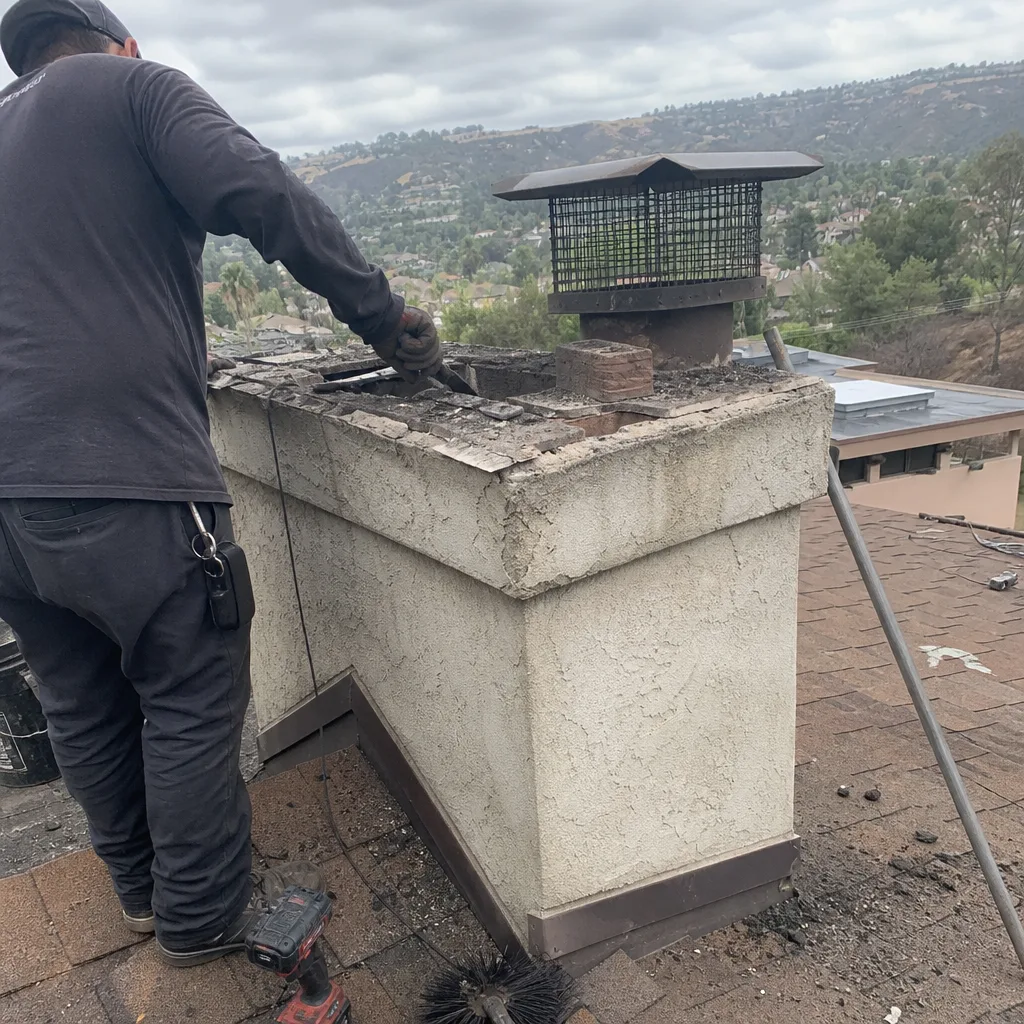
- Putting off a crown crack repair because “it’s not that bad.” Crown cracks are the classic deferred-maintenance problem. The crack gets wider, water gets in, and eventually the masonry starts spalling. By the time it’s visible from the ground, the repair is far more expensive than it would have been.
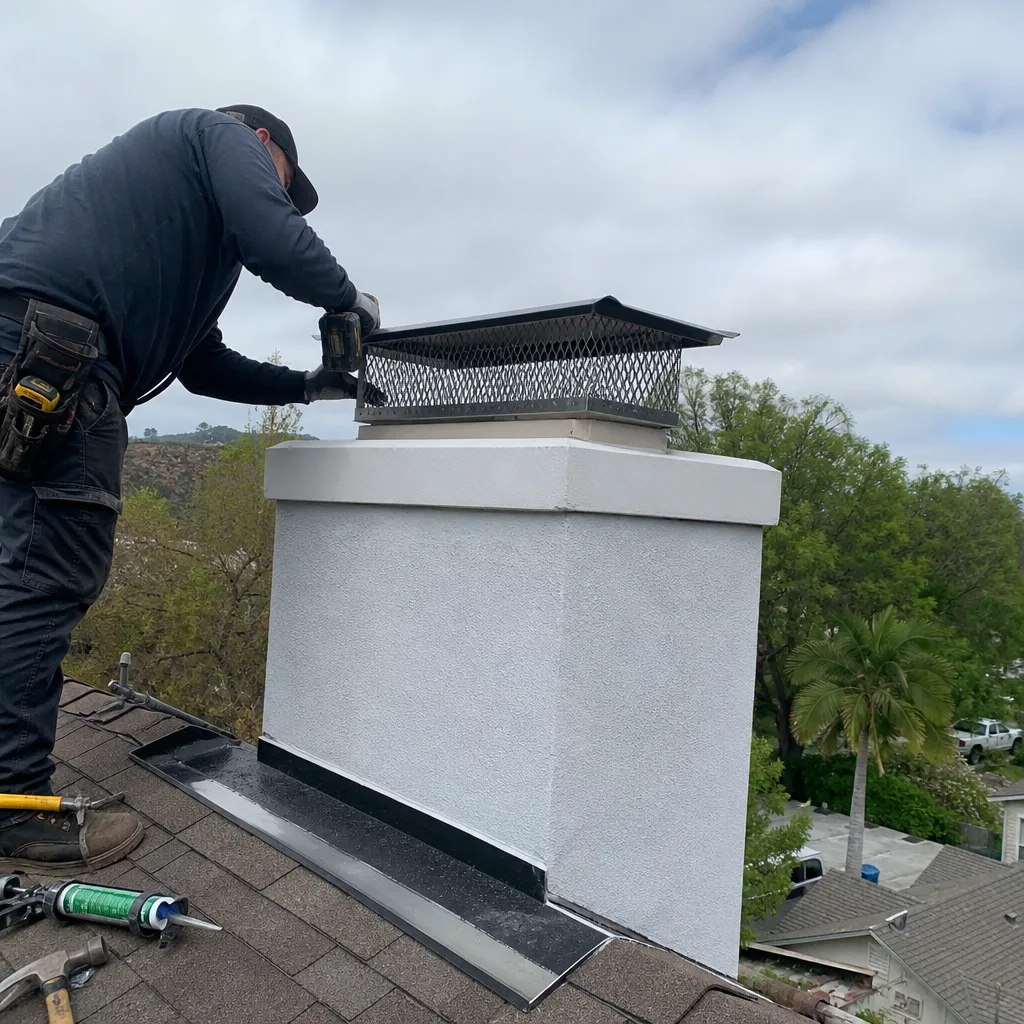
- Replacing a chimney cap with whatever’s cheapest at the hardware store. The cap is the first line of defense against debris, animals, and rain. A cheap cap with coarse mesh lets in sparks and debris; a poorly fitted cap blows off in a Santa Ana. Professional-grade caps from makers like Olympia Chimney are sized to the flue and stay put.
- Assuming a gas fireplace needs no maintenance. Gas logs and inserts have their own maintenance needs: checking the gas connections, cleaning the burner, inspecting the venting. They don’t produce creosote, but they can produce carbon monoxide if the venting fails. An annual check is still the right interval.
When to Call a Professional
Any of these scenarios warrants a phone call, not a do-it-yourself attempt: smoke backing up into the house when the fireplace is lit, a strong campfire smell when the fireplace is cold, visible creosote buildup that’s shiny or tar-like, water staining around the ceiling near the chimney, a damper that won’t operate, or a dryer that takes twice as long to dry a load. These are signs that a system is failing, not just dirty. If your home hasn’t had a professional inspection in more than two years, that’s also the time to schedule one. Chimney sweep service with camera inspection gives you a baseline you can use going forward. Oakleaf Chimney Sweep offers free estimates in Escondido, call (855) 362-1450.
Frequently Asked Questions
Once a year is the right baseline for most Escondido homes that burn wood seasonally, but the interval should be set by burn volume rather than the calendar. If you burn more than two cords a season, or if you burn unseasoned wood, you may need a mid-season sweep. If you light the fireplace only a handful of times each winter, an annual sweep still makes sense because the chimney sits idle for nine months and debris accumulates even without fires. Call (855) 362-1450 for an assessment of your specific situation.
A standard chimney sweep and level 1 inspection in Escondido typically ranges from $150 to $300. The price varies based on chimney height, roof access, the amount of creosote present, and whether a level 2 inspection with camera work is warranted. Homes with steep roofs or chimneys on the upper story of hillside lots often cost more due to access time. The sweep should quote the price before work begins, and estimates are free.
Only if the camera images show damage that compromises the flue’s integrity. Cracks, gaps, and spalling in a clay tile liner are legitimate reasons to consider replacement or resurfacing. But you should never accept the recommendation without seeing the camera footage yourself. In some cases, HeatShield liner restoration can rebuild damaged sections without a full relining, which is a lower-cost option. A full relining with a stainless system like DuraFlex is the right call when the damage is extensive or the existing liner has failed structurally.
It should be, because both systems are exhaust pathways that become fire hazards when they’re not maintained. Lint accumulates in dryer vents the same way creosote accumulates in chimneys, and the failure mode is the same: heat builds, material ignites, fire spreads into the wall or attic. At Oakleaf, we treat dryer vent cleaning as a peer fire-safety service, not an upsell. Schedule it on the same day as your chimney sweep and you’ve covered every exhaust vent in the home in one visit.
You can brush the flue with a DIY kit, but you cannot inspect it the way a professional does. The camera inspection is where the real value is, because it sees the condition of the liner, the smoke shelf, and the damper from inside the flue. Brushing alone removes creosote but tells you nothing about the structural condition of the chimney. If you’re going to DIY, do the monthly visual checks and leave the annual sweep and camera inspection to someone with the right equipment.
The most likely outcomes, in order: creosote builds up to a level that’s dangerous, the flue liner degrades without anyone noticing, water finds its way in through a crown crack or flashing gap, and the first sign you get is either a chimney fire or a water stain on the ceiling. By the time a problem is visible from the outside of the chimney, the repair is almost always more expensive than the maintenance would have been. If it’s been more than two years, schedule an inspection now and establish a baseline.
The Bottom Line
Chimney maintenance for Escondido homeowners is a three-part habit: monthly visual checks during burn season, an annual professional sweep with camera inspection before the season starts, and a dryer vent cleaning on the same schedule. The monthly checks catch obvious problems early; the professional sweep catches the ones you can’t see; the documentation ties it all together so you can make informed decisions about repairs. If you burn wood in an Escondido home, you need a maintenance cadence that matches how this climate actually works: occasional fires, long idle periods, Santa Ana debris, and a dryer running year-round. One call covers every fire-safety vent in your home, chimney and dryer included.
Written by the team at Oakleaf Chimney Sweep, serving Escondido since 2016.
See the difference
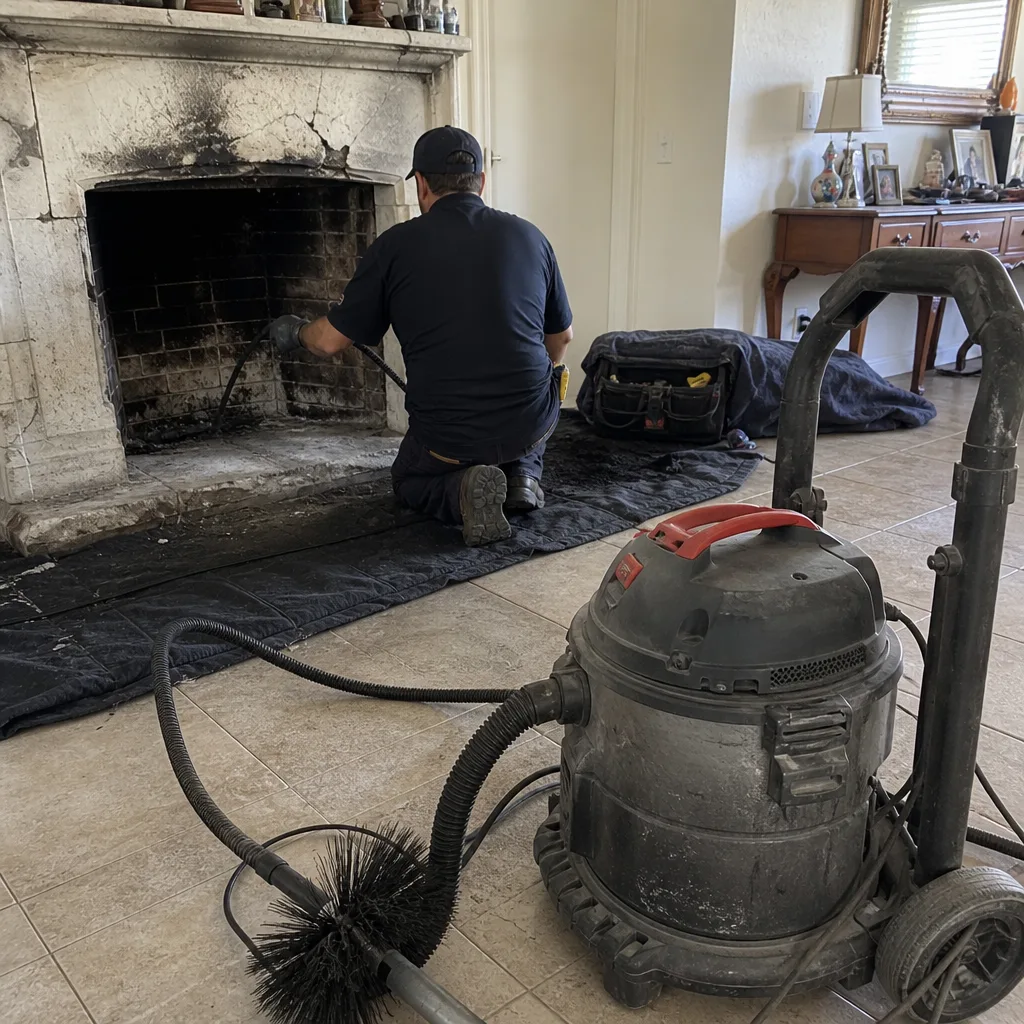 Before
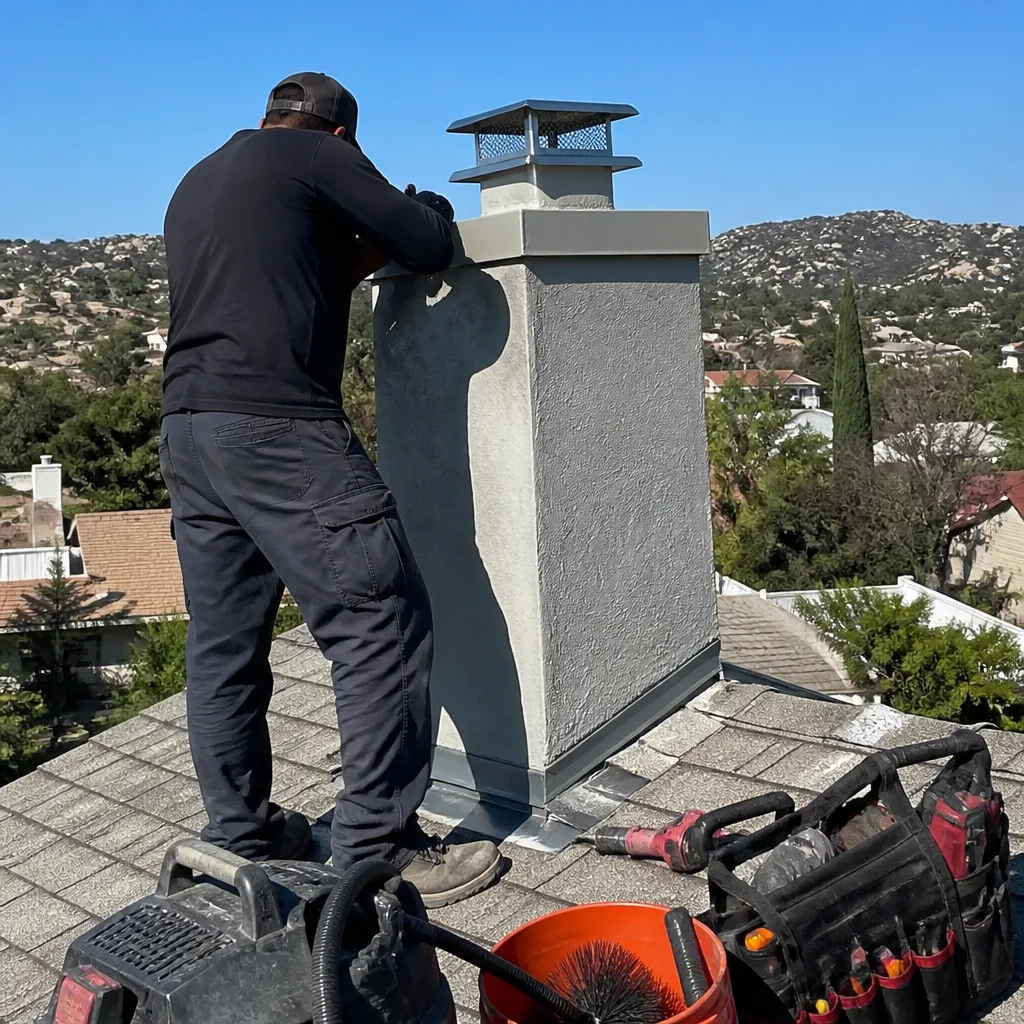 After
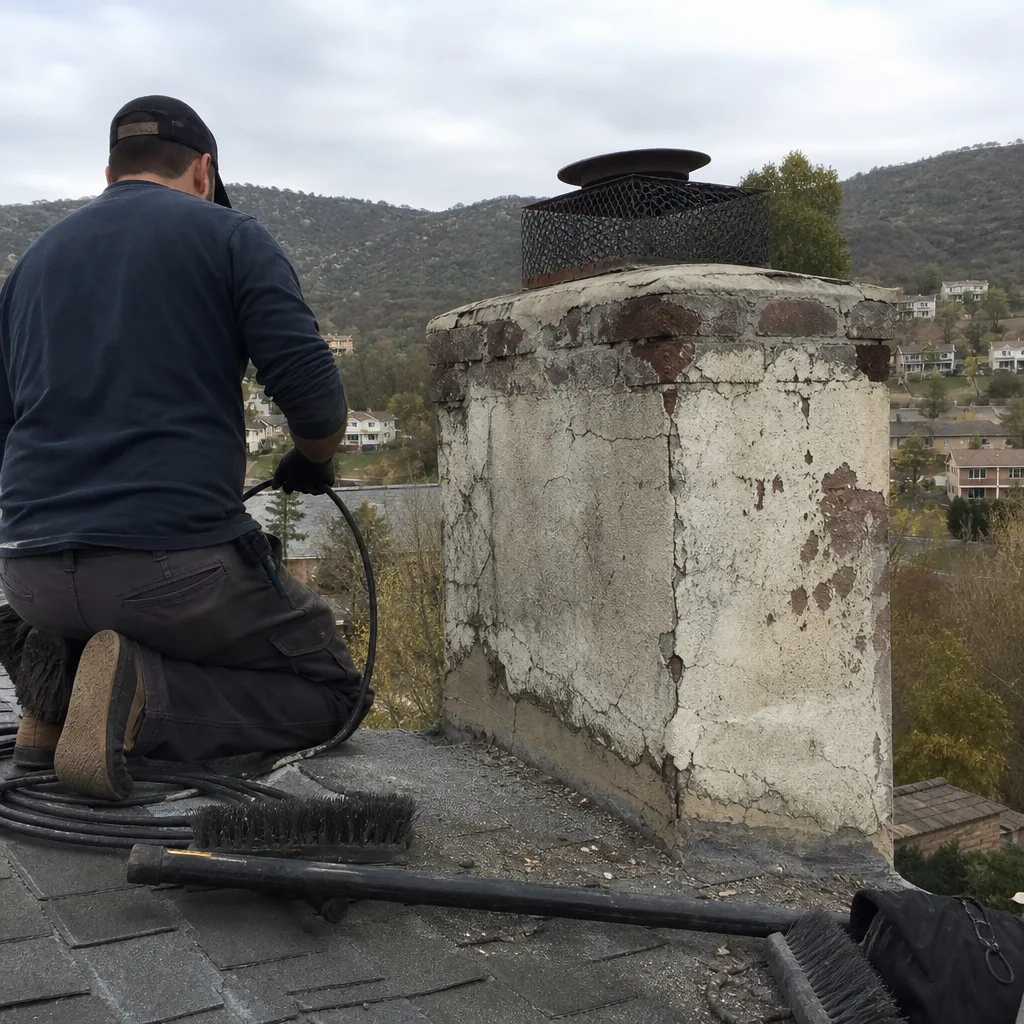 Before
 After
 Before
 After